
 |
Shipping faces a growing risk of being charged twice for the same emissions as EU and IMO carbon frameworks converge, according to emissions management firm EmissionLink, which is calling on regulators to provide clear, enforceable rules on how the two systems will interact.
The European Commission has committed to preventing shipping companies from facing duplicate carbon costs as the International Maritime Organization (IMO) advances its own global net-zero framework. EmissionLink says the principle is welcome, but warns that the practical reality is far more complex than the commitment implies.
The maritime sector is already operating under a crowded regulatory landscape. The EU emissions trading system (EU ETS) and FuelEU Maritime are both now in force, while the IMO is moving towards its own carbon pricing mechanism. Each framework carries a different scope, timeline, calculation methodology and commercial logic, EmissionLink notes.
A vessel trading into Europe may be exposed to all three sets of obligations simultaneously; however, EmissionLink points out that the party responsible for compliance will not always be the same under each scheme, that emissions data may not be calculated in the same way across frameworks, and that costs may not be recoverable under existing charterparty terms.
"The industry needs to know how EU and IMO obligations will be reconciled, how equivalent payments will be recognised, and what evidence shipowners will need to prove that the same tonne of emissions has not been penalised more than once," commented Philippos Ioulianou, managing director of EmissionLink. "This will determine whether carbon regulation is seen as a fair transition tool or simply another cost burden."
EmissionLink, which claims to have supported the delivery of FuelEU emissions data for more than 600 vessels, giving it direct insight into the compliance challenges faced across different vessel types and operating profiles, asserts that the risk for shipowners extends beyond paying twice for the same emissions. It also includes reporting twice, calculating twice and building parallel compliance processes — all of which increase cost, complexity and administrative burden.
"Every vessel has a different operating profile, every voyage has a regulatory consequence, and every compliance decision can affect cost exposure, penalties, pooling options, charterparty recovery and future planning," Ioulianou said. "The challenge is no longer simply submitting the right figure into the right system. It is understanding how current and future emissions schemes interact, how they affect the business, and how to avoid double penalties, duplicated processes and unnecessary costs."
EmissionLink also raised concerns about the use of revenues generated through EU ETS and FuelEU-related mechanisms. Speaking at a revent forum during Posidonia, Ioulianou argued that EU member states must set out a clear pathway for directing those funds back into maritime decarbonisation.
"These funds should be directed back into the maritime sector," he stressed. "They should not become a general revenue stream for governments. Demanding that shipping pays more while failing to invest in the infrastructure needed to make decarbonisation possible is not a transition strategy. It is taxation with a green label."
The emissions management specialist is calling for practical, transparent and enforceable rules that support compliance while helping the sector transition to lower-carbon operations.
"Shipping cannot decarbonise on promises alone," Ioulianou remarked. "The sector needs clarity, consistency and confidence that regulation will support the transition rather than simply adding cost and complexity."
|
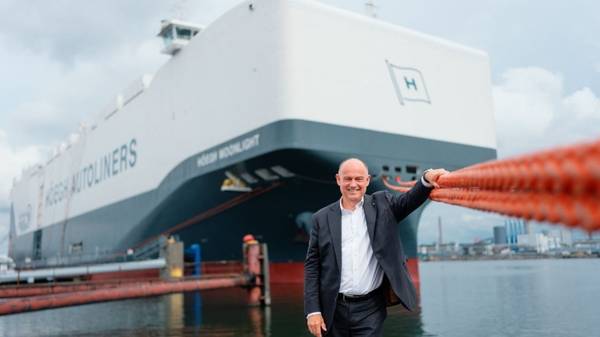
Höegh orders six LNG-fuelled Aurora-class vessels with future-fuel provisions
9,100-CEU ships equipped with ammonia- and methanol-ready notation and designed to operate on LNG and low-sulphur fuel oil. |
|
|
|
||

|
Puma Energy confirms bunkering operations in Puerto Rico
The development has been known to regional industry players for several weeks. |
|
|
|
||

|
Koch Minerals & Trading seeks bunker procurement intern in Singapore
Successful applicant to work under the mentorship of KM&T’s senior bunker procurement coordinator. |
|
|
|
||
|
Dan-Bunkering relocates Middelfart headquarters to Kabelbyen
Bunker firm moves to office complex connected to parent company USTC. |
|
|
|
||
|
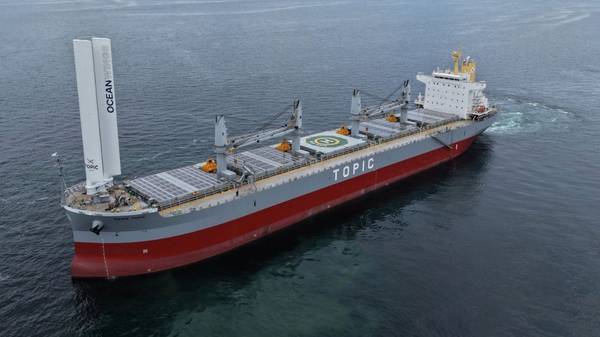
OceanWings and Tsuneishi Shipbuilding complete rigid wingsail retrofit on bulk carrier Maria Topic
Ultramax bulk carrier returns to commercial service fitted with a rigid, tiltable wingsail system. |
|
|
|
||

|
XPower Trading seeks senior bunker trader for 'newly established' Dubai role
Position requires at least five years' bunker trading experience. |
|
|
|
||

|
Petrobras resumes VLSFO sales at Itaqui as MGO supply disruption continues
MGO pipeline work at Brazil’s Port of Itaqui remains on track through 9 November. |
|
|
|
||
|
AEA qualifies global roster of auditors for ammonia certification system
Bureau Veritas, DNV, TÜV SÜD and three others cleared to verify low-emission ammonia credentials. |
|
|
|
||

|
IBIA early-bird registration deadline approaches for New York convention
Discounted rates available for members and non-members up until the end of August. |
|
|
|
||
|
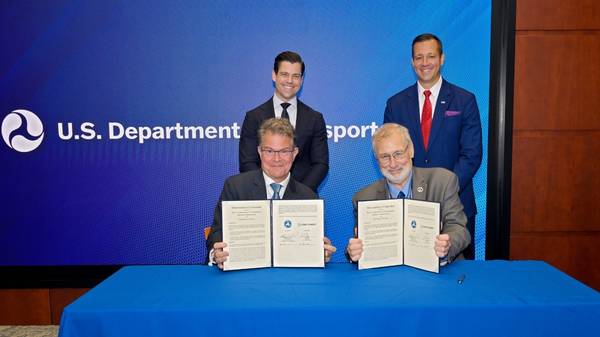
MARAD and Core Power sign cooperation framework to advance nuclear-powered merchant ships
Agreement targets first construction from 2028 as China accelerates its own nuclear shipping ambitions. |
|
|
|
||
| Clean Arctic Alliance warns of black carbon threat as container ships eye Northern Sea Route [News & Insights] |
| VPS to host Bergen seminar on marine fuel quality, lubricants and decarbonisation regulation [News & Insights] |
| VPS to host Bergen seminar on marine fuel quality, lubricants and decarbonisation regulation [News & Insights] |
| IMO seminar in Trinidad and Tobago trains Caribbean maritime educators for the alternative fuels era [News & Insights] |
| EmissionLink calls for fairer EU ETS expansion and greater reinvestment in maritime decarbonisation [News & Insights] |
