
 |
The Clean Arctic Alliance has raised concerns over a rise in commercial shipping interest in the Northern Sea Route (NSR), following reports that the Liberian-flagged container vessel Dubai Tower departed the Chinese port of Ningbo on 18 August, in an attempt to transit the Arctic passage from Asia to Europe.
According to media reports, the Dubai Tower, operated by Chinese company Sea Legend, is expected to arrive at the UK port of Felixstowe on 7 September, before proceeding to Hamburg, Germany, and Gdynia, Poland. Separately, South Korean shipping company PanStar has reportedly purchased a vessel for an imminent Arctic crossing.
Dr Sian Prior, Lead Advisor to the Clean Arctic Alliance, commented: “The Clean Arctic Alliance is seriously concerned about the interest in the Northern Sea Route as a regular trade route and the consequences for the Arctic, Indigenous communities and wildlife. Increased commercial shipping activity will lead to increased climate impacts, increased pollution and increased loss of biodiversity.”
A central concern raised by the alliance is black carbon — a short-lived climate pollutant produced by burning fossil maritime fuels. Dr Prior warned: “Emissions of black carbon… will result in further climate heating and speed up the melting and loss of both sea ice and land ice when it settles out of the atmosphere.”
The alliance also cautioned against LNG as a transitional fuel for Arctic shipping, with Dr Prior noting that methane emissions associated with LNG’s whole life cycle make it unsuitable. Other pollution concerns cited include oil and wastewater discharges and underwater noise, which the alliance says could impact Arctic ocean health and Indigenous communities who depend on Arctic resources for food.
Arctic sea ice extent is currently at the eighth lowest on record, according to the alliance, with approximately a month remaining before the autumn equinox.
Regulatory gaps at the IMO
The Clean Arctic Alliance acknowledged recent regulatory steps at the International Maritime Organization (IMO), including measures to reduce the use of heavy fuel oil (HFO) in the Arctic and the designation of the Northeast Atlantic emission control area (ECA), adopted on 1 May 2026. However, Dr Prior argued these fall short of adequately addressing black carbon emissions.
“Ships can still use traditional heavy fuel oils in the wider Arctic beyond the area covered by the Arctic HFO ban and in ECAs in combination with scrubbers or use ultra-low-sulphur fuel oils to comply with the sulphur requirements,” she said. “Both these regulations will not reduce black carbon emissions to the same low levels that using polar fuels can do.”
A proposal on polar fuels, co-sponsored by Denmark, Germany, France and the Solomon Islands, is currently before the IMO. The measure would require ships operating in the Arctic to use cleaner distillate fuels, such as marine gas oil (MGO), or emerging zero-carbon fuels, while prohibiting the use of ultra-low-sulphur fuel oils (ULSFOs) or HFOs in conjunction with scrubbers.
The Clean Arctic Alliance is calling on Arctic states and others to back the Danish-led proposal, and has urged that any resulting regulation be applied across the area defined by the Arctic Monitoring and Assessment Programme (AMAP) under the Arctic Council framework.
“It is important that the regulation is applied within the area used as the basis of the Arctic Monitoring and Assessment Programme by the Arctic Council — in order to maintain a level playing field across the whole Arctic since black carbon emissions can be transported hundreds to thousands of kilometres in the atmosphere and, when emitted further south, can still settle onto Arctic snow and ice,” Dr Prior remarked.
The Clean Arctic Alliance is a coalition of 24 not-for-profit organisations that campaigns for governmental action to protect the Arctic, its wildlife and its people. Members include Greenpeace, WWF, Transport & Environment, the Ocean Conservancy and Bellona, among others.
|
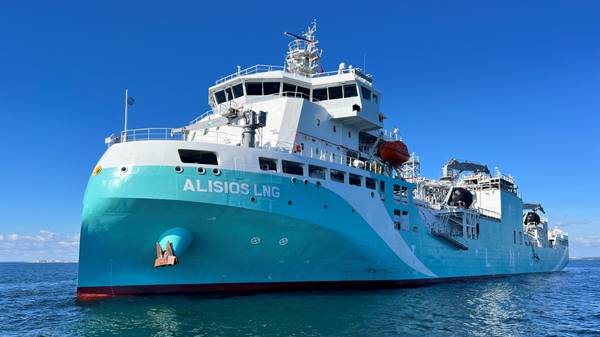
Axpo completes first LNG bunkering in Valencia, with over half bio-LNG
Ship-to-ship transfer to a container vessel makes Valencia the company's fourth Spanish port for LNG bunkering. |
|
|
|
||
|
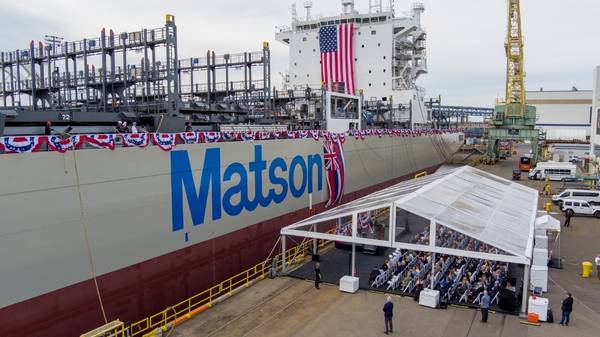
Matson christens Makua, first of three LNG-ready Aloha Class container ships
Dual-fuel vessel, due for delivery in early 2027, is the first of three ships worth around $1bn. |
|
|
|
||

|
CMB.Tech seeks Singapore-based ammonia operations manager for Asia Pacific
New hire will oversee ammonia chartering and bunkering and liaise with Far East partners. |
|
|
|
||
|
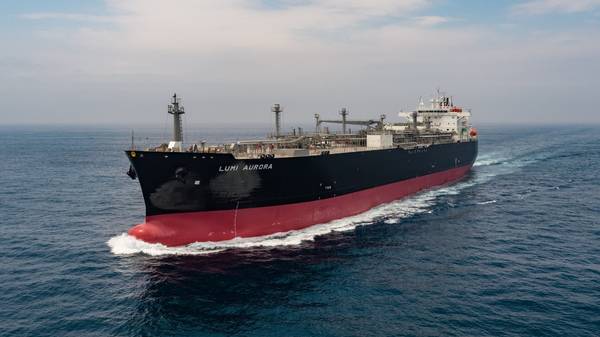
IINO Lines deploys first Ice Class IB VLGC on long-term charter to Borouge International
LPG-fuelled Lumi Aurora will carry North American gas to Borouge International's Porvoo plant in Finland. |
|
|
|
||
|
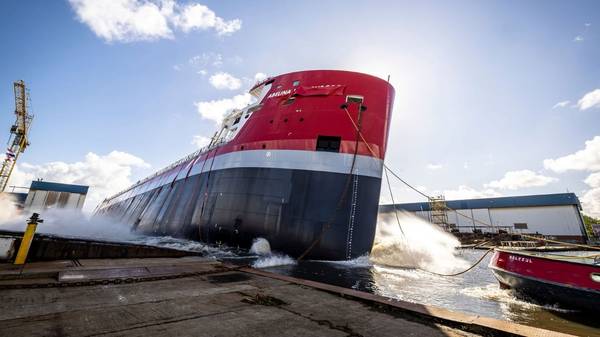
Wagenborg launches first EasyMax 2.0 vessel, prepared for methanol, ammonia and LNG
Abelina Wagenborg, built at Niestern Sander, is the first of a new generation designed for multiple alternative fuels. |
|
|
|
||
|
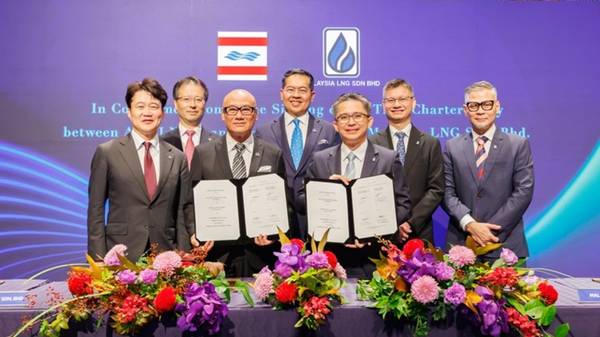
NYK–MISC joint venture signs charter for 18,700-cbm LNG carrier with Malaysia LNG
Asia LNG Transport will operate the dual-fuel diesel-electric newbuild, due from Hudong-Zhonghua in 2028, on routes to Japan. |
|
|
|
||

|
Study finds methanol dual-fuel retrofit of Kamsarmax bulk carrier would take about 75 days
Report by Mærsk Mc-Kinney Møller Center, involving Tsuneishi, puts conversion costs at 25–30% of the cost of a conventionally fuelled newbuilding. |
|
|
|
||

|
Lloyd's Register, Shell and GTT launch joint project on hybrid-electric 200,000-cbm LNG carrier
Partners to develop a concept combining hybrid-electric propulsion with GTT NEXT1 cargo containment technology for larger LNG carriers. |
|
|
|
||
|
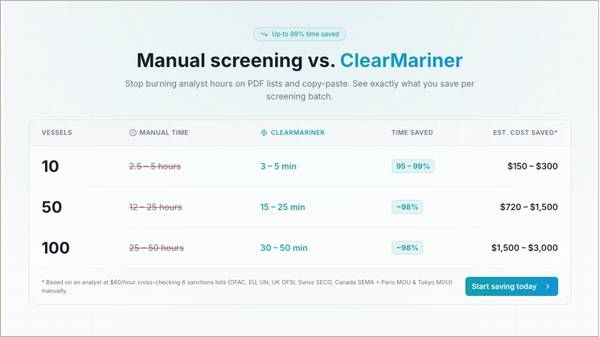
ClearMariner expands maritime sanctions screening with ESG, emissions and API support
Online service now combines sanctions checks with voyage CO₂, CII, EU ETS and FuelEU Maritime estimates. |
|
|
|
||

|
Flex Commodities adds Long Jing Xin to Singapore marine fuels team
Company appoints associate for marine fuels as part of plan for regional expansion. |
|
|
|
||
| SEA-LNG urges EU to protect mass-balance pathway for liquefied biomethane [News & Insights] |
| EmissionLink urges demand aggregation to unlock zero-emission fuel investment [News & Insights] |
| Nuclear-powered commercial shipping moves closer to reality after Washington summit [News & Insights] |
| DNV report warns regulatory uncertainty complicates fleet investment decisions [News & Insights] |
| EmissionLink calls for fairer EU ETS expansion and greater reinvestment in maritime decarbonisation [News & Insights] |
