
 |
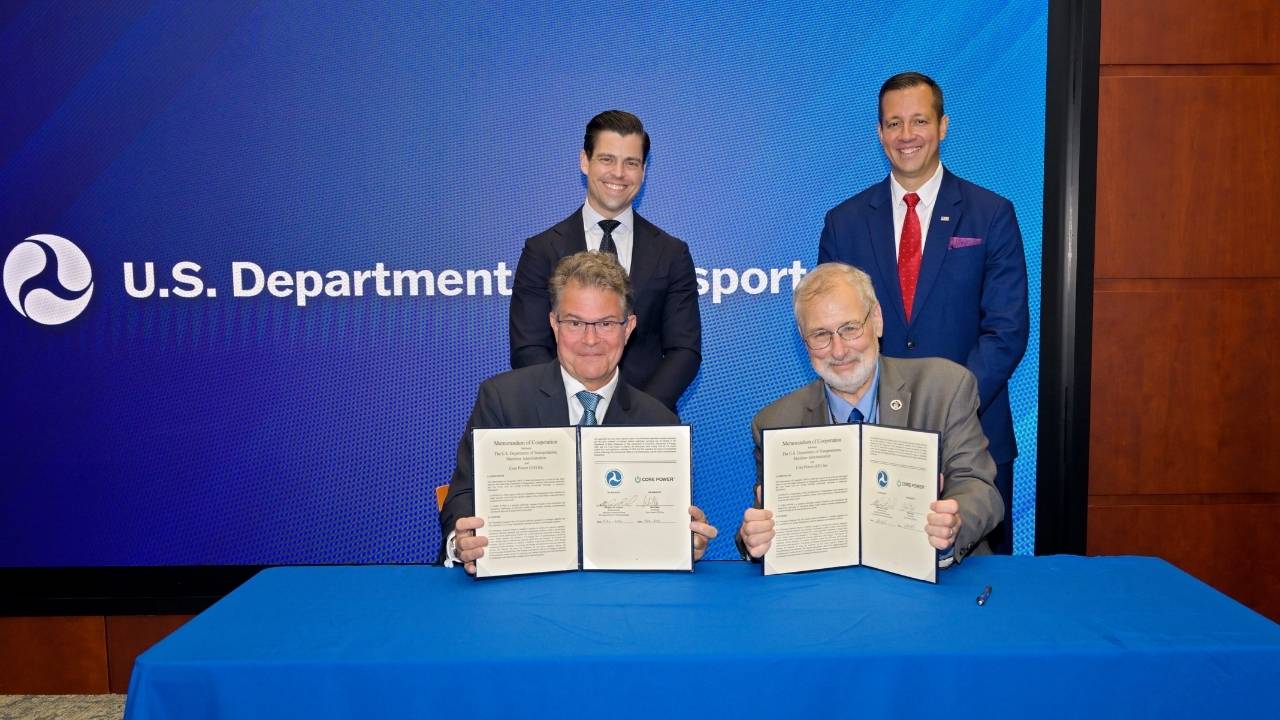
The United States Maritime Administration (MARAD) and Core Power (US) Inc. have signed a memorandum of cooperation (MOC) to develop a commercial, industrial and regulatory pathway for a future fleet of US-flagged nuclear-powered merchant vessels, the organisations announced on 24 August.
The agreement, formalised during a signing ceremony at the US Department of Transportation headquarters in Washington, D.C., is described as the first federal-private cooperation framework of its kind in the commercial maritime nuclear sector. Core Power is targeting first construction from 2028, though the company notes this timeline remains subject to regulatory, commercial, project and industrial readiness.
MARAD Administrator Stephen M. Carmel remarked: "This framework ensures that the United States leads the world with a secure US-flagged fleet. Nuclear propulsion is a serious commercial opportunity, but it must be approached as a complete system — safe, secure, licensable, and investable."
The MOC is intended to turn policy into an actionable commercial pathway. It establishes a forum for government, industry and other stakeholders to work through regulatory acceptance, port operations, workforce credentialing, fuel and lifecycle services, insurance and finance, industrial capacity and potential federal demand structures. Reducing uncertainty across these areas is intended to enable private capital to commit to ships, yards and supporting infrastructure.
China cited as spur to action
The announcement points to China's position in global shipbuilding as context for the initiative. China dominates global commercial shipbuilding and, Core Power notes, is actively developing nuclear-powered commercial shipping, with state-owned shipbuilders promoting nuclear-powered merchant vessel concepts and building relevant nuclear manufacturing capability.
Mikal Bøe, founder and CEO of Core Power, said: "China is already moving toward nuclear-powered commercial shipping. That should focus minds in Washington. America does not regain maritime strength by building a better version of yesterday's ship."
Bøe added that the company is not seeking further study periods: "We are not asking for another study. Core Power is targeting first construction from 2028. Government can set the direction and coordinate; private industry must move the money and the steel."
Industrial model
Under the framework, Core Power plans to develop a dedicated US nuclear-grade integration and lifecycle shipyard for nuclear installation, initial fueling, testing, commissioning, refuelling, defuelling and through-life support. Conventional hulls and marine systems would be constructed at commercial shipyards, with the company intending to leverage allied shipbuilding capacity — specifically citing Japan and South Korea — to accelerate conventional hull construction.
Bøe explained: "Japan and South Korea can accelerate conventional ship construction while America builds the specialist nuclear-grade integration and lifecycle capability at home — capability that can also strengthen the wider maritime industrial base."
A US nuclear shipyard of this type is also designed to expand the nuclear-qualified workforce, suppliers and heavy engineering capacity available to the broader US maritime industrial base.
The initiative follows MARAD's request for information, published in the Federal Register on 7 May 2026, titled 'Development of a Commercially Viable System-Centric Small Modular Reactor Concept for Deployment in the Marine Transportation System'. The comment period on that document closed on 5 August 2026.
Both parties note that nuclear propulsion eliminates emissions from propulsion and avoids dependence on conventional marine fuel supply chains, while enabling higher sustained speeds compared with conventionally fuelled vessels, adding that the commercial task as building a complete system that is safe, secure, licensable, insurable, financeable and operable at fleet scale.
The MOC is non-exclusive and is not a procurement contract, grant or commitment of federal funds, nor does it commit MARAD to acquire any vessel, technology or service.
The announcement comes ahead of the International Atomic Energy Agency's ATLAS — Atomic Technologies Licensed for Applications at Sea — launch forum, scheduled for 26 and 27 August in Washington, D.C.
|
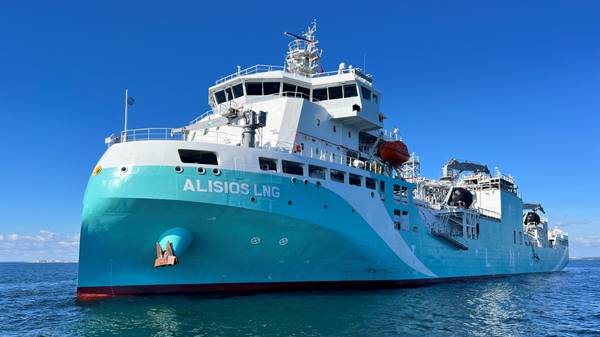
Axpo completes first LNG bunkering in Valencia, with over half bio-LNG
Ship-to-ship transfer to a container vessel makes Valencia the company's fourth Spanish port for LNG bunkering. |
|
|
|
||
|
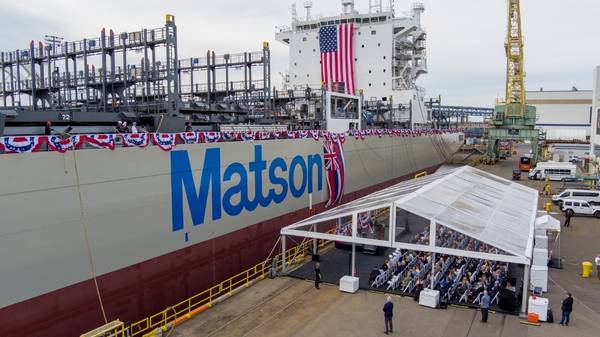
Matson christens Makua, first of three LNG-ready Aloha Class container ships
Dual-fuel vessel, due for delivery in early 2027, is the first of three ships worth around $1bn. |
|
|
|
||
|
CMB.Tech seeks Singapore-based ammonia operations manager for Asia Pacific
New hire will oversee ammonia chartering and bunkering and liaise with Far East partners. |
|
|
|
||
|
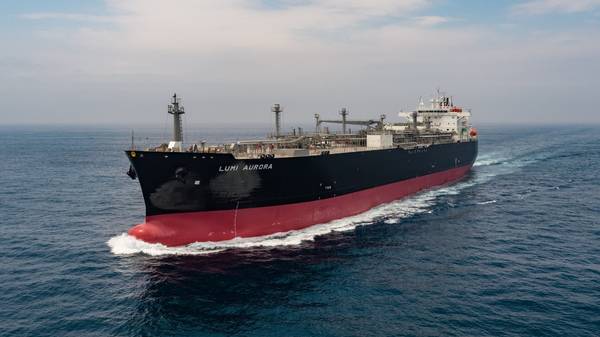
IINO Lines deploys first Ice Class IB VLGC on long-term charter to Borouge International
LPG-fuelled Lumi Aurora will carry North American gas to Borouge International's Porvoo plant in Finland. |
|
|
|
||
|
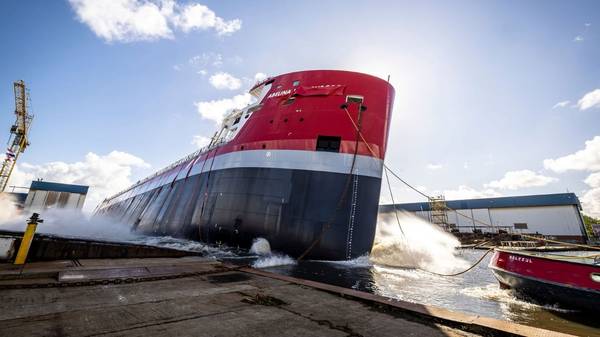
Wagenborg launches first EasyMax 2.0 vessel, prepared for methanol, ammonia and LNG
Abelina Wagenborg, built at Niestern Sander, is the first of a new generation designed for multiple alternative fuels. |
|
|
|
||
|
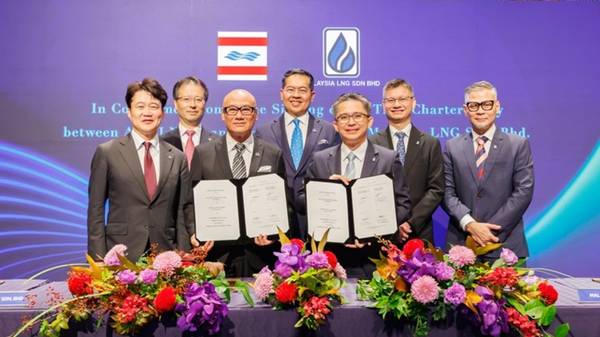
NYK–MISC joint venture signs charter for 18,700-cbm LNG carrier with Malaysia LNG
Asia LNG Transport will operate the dual-fuel diesel-electric newbuild, due from Hudong-Zhonghua in 2028, on routes to Japan. |
|
|
|
||
|
Study finds methanol dual-fuel retrofit of Kamsarmax bulk carrier would take about 75 days
Report by Mærsk Mc-Kinney Møller Center, involving Tsuneishi, puts conversion costs at 25–30% of the cost of a conventionally fuelled newbuilding. |
|
|
|
||
|
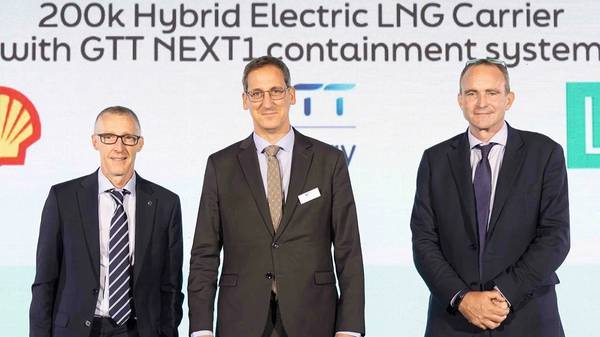
Lloyd's Register, Shell and GTT launch joint project on hybrid-electric 200,000-cbm LNG carrier
Partners to develop a concept combining hybrid-electric propulsion with GTT NEXT1 cargo containment technology for larger LNG carriers. |
|
|
|
||
|
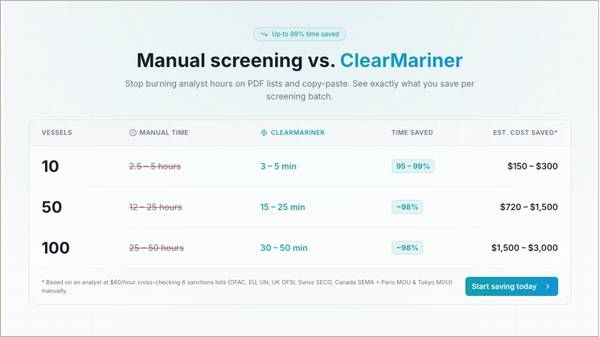
ClearMariner expands maritime sanctions screening with ESG, emissions and API support
Online service now combines sanctions checks with voyage CO₂, CII, EU ETS and FuelEU Maritime estimates. |
|
|
|
||

|
Flex Commodities adds Long Jing Xin to Singapore marine fuels team
Company appoints associate for marine fuels as part of plan for regional expansion. |
|
|
|
||
| Lloyd's Register, Shell and GTT launch joint project on hybrid-electric 200,000-cbm LNG carrier [News & Insights] |
| KEPCO E&C and Korean Register of Shipping to collaborate on marine SMR development [News & Insights] |
| India and EU sign letter of intent for green shipping corridor coalition [News & Insights] |
| RINA and Thailand’s PTT sign MoUs to collaborate on decarbonisation technologies [News & Insights] |
| ABS, HD KSOE and Siemens partner on digital twin technology for ammonia-fuelled ship safety [News & Insights] |
