Fri 17 Dec 2021, 16:43 GMT

BP and Maersk Tankers complete B30 biofuel trials


Ships sailing from Rotterdam to West Africa receive blend of VLSFO and 30% FAME.


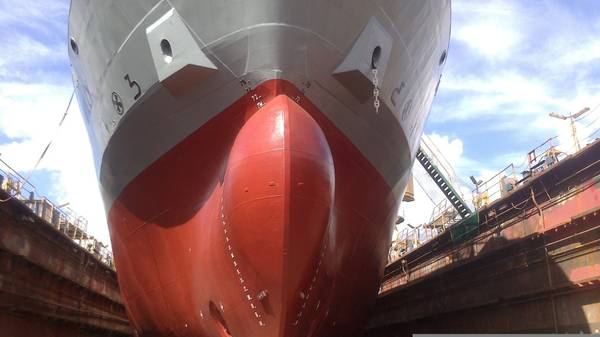
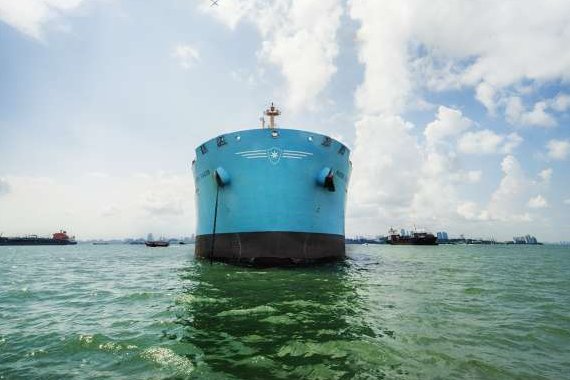
Image credit: Maersk Tankers
BP and Maersk Tankers, with support from the Danish Maritime Authority, report that they have successfully completed trials using biofuel-blended bunkers as a drop-in fuel for product tankers.

The trials were completed aboard the Maersk Cirrus and Maersk Navigator — product tankers on time-charter to BP from Maersk Tankers, with each vessel supplied with BP Marine B30 biofuel, consisting of 30 percent fatty acid methyl esters (FAME) blended with very-low-sulphur fuel oil (VLSFO).

FAME is a renewable alternative fuel largely produced from recycled cooking oils and renewable oil sources. It has physical properties similar to conventional diesel, and is also non-toxic and biodegradable. The origination and production of the feedstocks used to produce FAME is certified for its sustainability to internationally recognized standards.

The trials saw the vessels sail from Rotterdam to West Africa. Throughout the trials, tests were carried out to assess the reliability and performance of the B30 biofuel blend in each ship's main engine, auxiliary engine and boiler, and any impact on fuel tanks to determine the level of interchangeability with other fuel types.

No adverse effects to equipment or machinery were observed during or after the trials, the trial participants note. Also, no modifications to the engine or infrastructure are said to have been required, thus demonstrating the suitability of sustainable biofuels for use as a drop-in fuel.

Carol Howle, BP's executive vice president of trading and shipping, commented: "At any one time, BP has around 300 ships on the water moving our products around the world. With an ambition to be a net zero company by 2050 and help the world get there too, it's vital we help decarbonize this hard-to-abate sector. We're proud to be working with a partner like Maersk Tankers, to develop new alternative fuels and low-carbon solutions that will help accelerate the shipping industry's energy transition."

Christian M. Ingerslev, Maersk Tankers' Chief Executive Officer, said: "The need to cut emissions is one of the most important challenges facing shipping right now. We are only able to rise to this challenge if we do it in partnerships and explore a multitude of solutions. With BP, we are combining our expertise to play our part in testing and making alternative fuels available."

IBIA MFM bunkering training course graphic. IBIA announces new date for mass flow meter training course in Rotterdam  

Training scheduled for 12 May follows mandatory MFM implementation at Rotterdam and Antwerp-Bruges ports.

A Maersk vessel, pictured from above. Maersk and Hapag-Lloyd suspend Strait of Hormuz transits amid Middle East security crisis  

Container carriers reroute services around the Cape of Good Hope as military conflict escalates.

Map of Middle East. Operations continue as normal at most Middle East ports  

Most facilities operating normally, with exceptions in Bahrain, Oman and Saudi Arabia.

Photograph of the 93,000-cbm very large ammonia carrier (VLAC) Gaz Ronin. Naftomar takes delivery of 93,000-cbm dual-fuel ammonia carrier  

Gaz Ronin features a MAN dual-fuel engine with high-pressure selective catalytic reduction technology.

Aurora Botnia leaving harbor. AYK Energy completes world’s largest marine battery retrofit on Wasaline ferry  

Aurora Botnia receives 10.4 MWh battery system, bringing total capacity to 12.6 MWh.

Steel cutting ceremony for an LNG dual-fuel 307,000-tonne crude oil tanker with builder's hull no. 113. Dalian Shipbuilding begins construction on LNG dual-fuel crude tanker  

Development is one of a number of milestones reported by parent company over the past few days.

Photograph of Sallaum Lines' Ocean Breeze vessel with 'Introducing The Blue Corridor' overlaid text. Sallaum Lines launches Blue Corridor sustainability initiative for Europe–Africa ro-ro trade  

Company deploys LNG-capable vessels with AI routing and eco-speed protocols on new green shipping corridor.

The platform supply vessel Viking Energy. Eidesvik Offshore signs yard contract for ammonia retrofit of PSV Viking Energy  

Halsnøy Dokk to convert platform supply vessel as part of EU-backed Apollo project.

Vanquish tanker alongside Jette Theresa oil/chemical tanker docked at terminal. North Sea Port completes risk analysis for alternative fuel bunkering operations  

Port authority says LNG, hydrogen, methanol and ammonia can be safely refuelled across its facilities.

Container ship near a port. Ammonia emerges as most feasible alternative fuel for deep-sea shipping in 2050 emissions study  

Research combining expert survey and technical analysis ranks ammonia ahead of hydrogen and methanol.