The
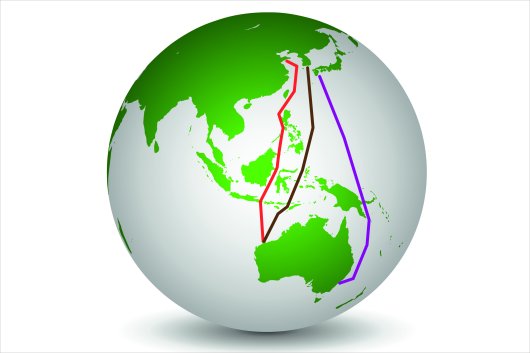
Green Corridor joint industry project (JIP) has concluded with a signing ceremony in Singapore after bringing together stakeholders in the iron ore and coal trades to develop LNG-powered vessels capable of operating in a 'green corridor' between Australia and China.
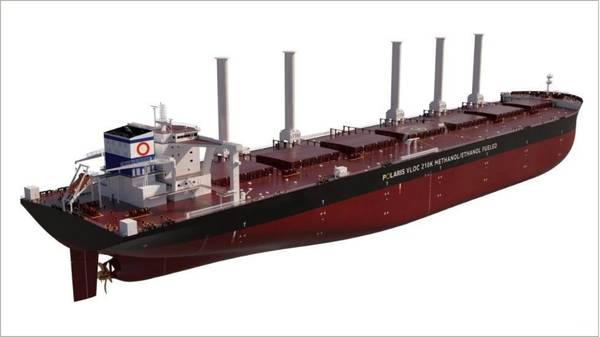
The project managed to deliver an LNG-fuelled Newcastlemax design for transporting iron ore and coal on the Australia-China route in Phase 1a; this was then upsized to the very large ore carrier (VLOC) class in Phase 1b.
Project summary
When the IMO confirmed the 2020 deadline for the 0.5 per cent global sulphur cap in 2016, key stakeholders serving the Australia-China iron ore and coal trade route - including major Australian miners BHP, Fortescue Metals Group and Rio Tinto; ship owners MOL and U-Ming; together with LNG supplier Woodside, ship designer SDARI, and class society DNV GL - decided to join forces to develop a suitable LNG-fuelled bulk carrier solution for the route. China Merchant Energy Shipping and Shell Eastern Petroleum joined the project in a later phase.
The result was a commercially viable and 210,000-deadweight-tonne (dwt), LNG-fuelled bulk carrier design. Approval in principle (AiP) for the Newcastlemax design was issued by DNV GL in 2017.
In Phase 1b, the project concluded work on a dual-fuel 260,000-dwt dedicated ore carrier design based on the same economical and technical principles.
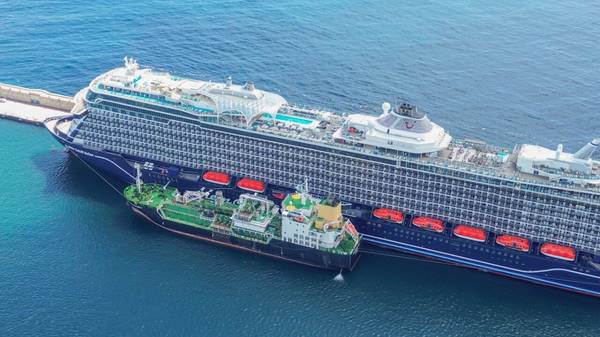
A key accomplishment of Phase 2 was to promote the development of optimized LNG bunkering supply chains to support efficient bunkering of bulkers along the trading route in order to give the industry the confidence to invest in LNG-fuelled bulk carriers. Woodside and Shell advised on LNG bunkering possibilities in Australia and the APAC region and the related supply chain costs.
Bunkering issues such as compatibility and safety studies for ship-to-ship bunkering were addressed, and the economic calculation updated accordingly to demonstrate a more robust business case for LNG as fuel.
Due to the rapid rise in crude oil prices over the past year, the price of low-sulphur marine fuel is now 50 percent higher than when economics were analysed for Phase 1a in early 2017, the project partners note.
U-Ming President,
C. K. Ong, commented: "U-Ming is very happy to have worked with like-minded partners to find smarter ways to look after the environment, and we will continue to invest to stay ahead of the technological developments. We look forward to the project results being put into action to ensure sustainability in the Australia-China Green Corridor for the coming decades."
Woodside Chief Operations Officer,
Meg O'Neill, said: "This collaborative project has demonstrated that there is a cleaner way to ship Australia's largest export commodities to market using LNG as a marine fuel. Woodside will continue to work with industry partners to develop this opportunity."
BHP stated: "This project demonstrates how greater connectivity in the maritime ecosystem allows us to resolve the big issues that impact the whole industry, such as higher safety standards and lower shipping emissions."