Tue 29 Jan 2013, 07:35 GMT

OW Bunker acquires vessels for physical supply


Newly-acquired vessels will operate in the Nordic region.


OW Bunker, one of the world's largest suppliers and traders of marine fuels and lubricants, today announced the acquisition of two bunker barges, OW Copenhagen and OW Aalborg.

Prior to the acquisition, OW Bunker operated both vessels on a bare-boat charter from international shipping company the Clipper Group.

OW Copenhagen and OW Aalborg are modern double-hulled 3,500dwt tanker barges, built in 2006 and 2005 respectively. Both vessels have a tank capacity of 4,260 cubic metres (cbm), fast pumping rates of up to 600 cbm/hour and are oil major approved.

As part of the company's strategy to develop the highest standards within its physical division, the vessels also have Coriolis flow meters to ensure customers receive the right quantity of product during supply.

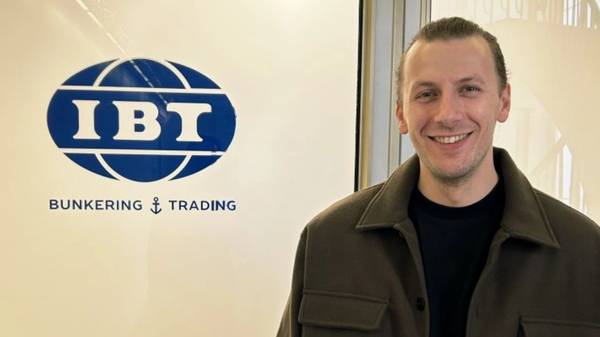
Jane Dahl Christensen [pictured], Executive Vice President, Physical Division, OW Bunker, commented: "Acquiring these state-of-the-art vessels is testament to our continued commitment to further strengthening our physical supply division in the Nordic region. Our focus is on providing our customers with the highest standard fuel supply solution, ensuring quality controlled products, in the right quantity and on the best possible terms."

"The move further strengthens OW Bunker's physical supply operations and demonstrates its commitment to customers within the Nordic region," the company added.

OW Bunker's physical supply division in the Nordic region spans Denmark, Sweden, Lithuania (Klaipeda), Faroe Islands, Norwegian Sea, Finland, Latvia, Estonia, Poland and the North Atlantic.

The operation uses seven state-of-the-art vessels, all with high pumping rates and mass flow meters. The company has bunkering capabilities in port and on the roads, as well as providing high seas and offshore services, an area where OW Bunker has specialist experience.

Image: Jane Dahl Christensen, Executive Vice President, Physical Division, OW Bunker.


Container ship near a port. Ammonia emerges as most feasible alternative fuel for deep-sea shipping in 2050 emissions study  

Research combining expert survey and technical analysis ranks ammonia ahead of hydrogen and methanol.

Cargo vessel at sea. EMSA study examines biodiesel blend spill response as shipping adopts alternative fuels  

Research addresses knowledge gaps on biodiesel-conventional fuel blends as marine pollutants and response measures.

BIMCO ETS BARECON clause 2026 graphic. BIMCO adopts ETS clause for bareboat charters, delays biofuel provision  

BIMCO’s Documentary Committee has approved an emissions trading compliance clause while requesting further work on a biofuel charter provision.

SALEFORM 2025 standard form graphic. BIMCO and Norwegian Shipbrokers’ Association launch SALEFORM 2025 ship sale contract  

Updated agreement addresses banking changes, compliance requirements and environmental regulations affecting vessel transactions.

Everllence H2 test engine. Everllence develops hydrogen test bench for marine engines  

German engine maker upgrades Augsburg facility under HydroPoLEn project backed by federal maritime research funding.

CMA CGM Osmium vessel. CMA CGM names 13,000-teu methanol-fuelled containership in South Korea  

CMA CGM Osmium to operate on Asia–Mexico service as part of the carrier’s decarbonisation strategy.

NorthStandard logo. NorthStandard publishes biofuel guide as marine insurance claims emerge  

White paper addresses quality issues and compliance requirements as biofuel testing volumes surge twelvefold.

Clean Maritime Fuels Platform (CMFP) logo. Maritime fuel platform calls for EU shipping ETS revenues to fund clean fuel deployment  

Clean Maritime Fuels Platform urges earmarking of national emissions trading revenues for renewable fuel infrastructure.

Seatransport 73m SLV Lloyd’s Register grants approval for hybrid nuclear power design for amphibious vessels  

Classification society approves Seatransport’s concept integrating micro modular reactors with diesel-electric systems.

Everllence ME-LGIE engine. Everllence and Vale partner on ethanol-powered marine engine development  

Brazilian mining company to develop dual-fuel ethanol engines based on ME-LGI platform.