Tue 15 Jan 2013, 14:57 GMT

OW reports 'successful' start in Gulf of Mexico


OW Bunker sells 40,000 tonnes of fuel oil in less than two months to clients in the Gulf of Mexico.


OW Bunker, one of the world's largest suppliers and traders of marine fuels and lubricants, today announced a successful start to its new physical operations in North America.

Operating offshore in the Gulf of Mexico lightering zones, 40,000 metric tonnes of fuel oil has already been sold to customers in less than two months, with continued demand forecast.

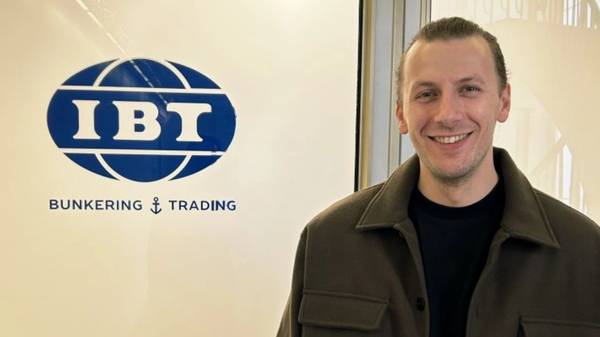
Commenting on the Gulf of Mexico supply operation, Adrian Tolson [pictured], Regional Manager, North America, Physical Division, OW Bunker, said: "OW Bunker has unrivaled experience in providing offshore supply services. Customers, particularly the many tanker fleets operating in the region, are realizing both the benefits of not having to deviate from trading patterns, but also the fact that it is often cheaper to buy offshore than in higher priced, more traditional US bunkering ports.

"On top of this, our bunkering vessel, Elisalex Schulte, is the most modern vessel in the region with outstanding pumping rates, frequently delivering fuel at an average rate of 700 metric tons per hour. This saves time for our customers and further increases their operational efficiencies, which we know is so important to them.

"We are pleased with the start we have had. We are seeing a continued demand from our customer base, and are focused on ensuring further supply flexibility to meet their increasing needs.”

OW Bunker launched its physical supply division in the US at the end of November 2012, operating in international waters in the Gulf of Mexico, off both the Texas and Louisiana coastlines.

Image: Adrian Tolson, Regional Manager, North America, Physical Division, OW Bunker.


Oriental Aquamarine vessel. HMM deploys Korea's first MR tanker with wing sail technology  

Oriental Aquamarine equipped with wind-assisted propulsion system expected to cut fuel consumption by up to 20%.

BC Ferries vessel render. ABB to supply hybrid-electric propulsion for BC Ferries' four new vessels  

Technology will enable ferries to run on biofuel or renewable diesel with battery storage.

Alternative marine fuels port graphic. LNG-fuelled boxships sustain alternative fuel orderbook share despite market slowdown  

Alternative fuels maintained 38% of gross tonnage orders in 2025, driven by container segment.

Conceptual diagram of the MOL–ITOCHU strategic alliance. MOL and ITOCHU sign MoU for cross-industry environmental attribute certificate partnership  

Japanese shipping and trading firms to promote EACs for reducing Scope 3 emissions in transport.

CPN as China's No. 1 marine biofuel supplier in 2025 graphic. Chimbusco Pan Nation delivers 170,000 tonnes of marine biofuel in China in 2025  

Supplier says volumes quadrupled year on year, with a 6,300-tonne B24 operation completed during the period.

V.Group and Njord logo side by side. V.Group acquires Njord to expand decarbonisation services for shipowners  

Maritime services provider buys Maersk Tankers-founded green technology business to offer integrated fuel-efficiency solutions.

Container vessel manoeuvring in port. Has Zhoushan just become the world's third-largest bunker port?  

With 2025 sales of 8.03m tonnes for the Chinese port, Q4 data for Antwerp-Bruges will decide which location takes third place.

Monjasa Oil & Shipping Trainee (MOST) trainees. Monjasa opens applications for global trainee programme  

Marine fuel supplier seeks candidates for MOST scheme spanning offices from Singapore to New York.

Singapore's first fully electric harbour tug. Singapore's first fully electric tug completes commissioning ahead of April deployment  

PaxOcean and ABB’s 50-tonne bollard-pull vessel represents an early step in harbour craft electrification.

Fuel for thought: Hydrogen report cover. Lloyd's Register report examines hydrogen's potential and challenges for decarbonisation  

Classification society highlights fuel's promise alongside safety, infrastructure, and cost barriers limiting maritime adoption.