Mon 8 Oct 2012, 15:34 GMT

Star Bulk receives carbon emissions management certificate


Shipping firm is awarded the first Certificate of Measurement from the Carbon Positive Programme for Ships.


Greek shipping company Star Bulk Carriers Corp. has been awarded the first Certificate of Measurement from the Carbon Positive Programme for Ships (CPPS) after successfully monitoring its emissions for 12 months.

Star Bulk’s commitment to a carbon emissions reduction plan and transparency of its carbon footprint has resulted in each vessel within the Starbulk fleet receiving the certificate, which follows a year-long comprehensive carbon emissions measurement process. This is phase one - 'measurement' - of the Carbon Positive Programme for Ships.

Star Bulk is one of the first shipping companies to proactively manage its carbon output and risk, and prepare for future regulation by embarking on an independent, phased approach to understanding the carbon footprint of its fleet. The intelligence generated provides the foundation for identifying opportunities for improvements that can generate cost benefits and commercial advantage.

Star Bulk conducted two full onboard energy audits to assess each vessel's operational pattern and identify potential energy-saving opportunities. Throughout the programme process, a combination of technical and operational measures to deliver optimum emissions reduction was also implemented. This included installing PBCF (Propeller Boss Cap Fins) and upgrading all the m/e by installing fuel valves and alpha lubricators.

Using an intelligent weather routing system, Starbulk says it is aiming not only for a shorter and safer route but also most energy efficient. A monitoring system has also been installed to demonstrate net energy delivered on the propeller.

Star Bulk is now in the second 'Reduction' phase of the CPPS, monitoring the effectiveness of these measures to eventually receive the Carbon Positive phase two 'Reduction' certificate. This phase is effectively building on Ship Energy Efficiency Management Plan (SEEMP) to create a 'SEEMP Plus' that puts this regulation into practice.

Spyros Capralos, Managing Director and CEO, Star Bulk, said: "We are very pleased to have received the first Carbon Positive certificate for phase one – Measurement, which reflects the commitment that we have made as an organisation to managing our carbon emissions risk and understanding our carbon footprint. Transparency is very important, not only to generate efficiencies as a company but to also communicate effectively with our key stakeholders, who are increasingly demanding this information. Now that we understand our carbon emission baseline and have an official record of this and the process that we have undergone, we look forward to progressing to the next stage of our carbon emission management programme and generating genuine emissions reduction and further efficiencies, which will benefit our customers, suppliers and the wider environment."

Helena Athoussaki, CEO, Carbon Positive, commented: "Measurement is fundamental to making progress on emissions reduction, particularly in light of the recent European Union statement announcing the upcoming Monitoring, Reporting and Verifying system. Star Bulk's achievement is an important industry milestone for carbon emissions reduction. Owners and operators that act now have a significant opportunity to not only reap commercial benefits for themselves in the short term and stabilise operations for the future, but to also contribute to shaping a workable regulation for shipping, grounded in actual data. Now that we have a clear picture of the company's carbon footprint and the appropriate measures have been implemented, we will continue to work with Star Bulk and progress to the next phase of the programme, Reduce."

Image: Star Gamma, a 53,098 dwt Supramax vessel


World Kinect Corporation logo. World Kinect marine segment posts record quarterly gross profit amid bunker price volatility  

Marine division delivers its best-ever quarterly result as the conflict in the Middle East drives bunker price swings.

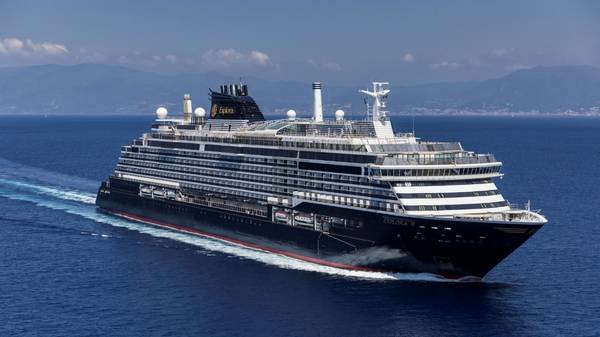
Explora III vessel. Explora Journeys takes delivery of first LNG-powered ship in its fleet  

Explora III, delivered by Fincantieri in Genoa, marks the brand’s first LNG-fuelled vessel.

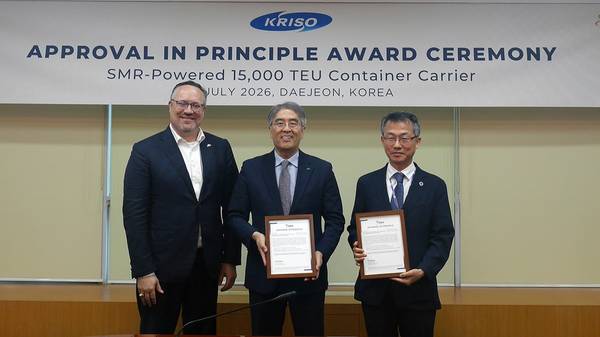
Patrick Ryan, Keyyong Hong and Jinyoung Cho. ABS grants approval in principle for nuclear-powered 15,000-teu containership concept  

The concept design, developed with two Korean research institutes, features a marine molten salt reactor.

Tsuneishi logo. T-SOL delivers first Japan-built methanol fuel supply system  

The system, which received ClassNK approval in principle in 2024, will be installed on a Kamsarmax bulk carrier.

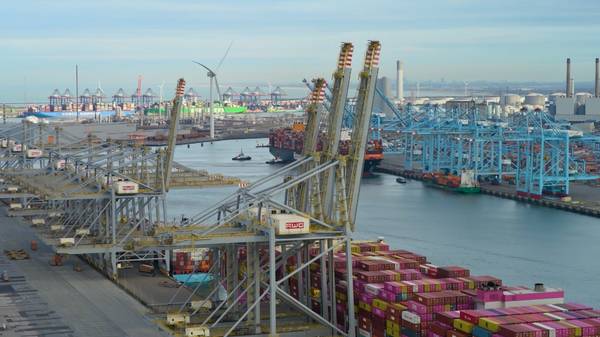
Port of Rotterdam. Rotterdam records 0.4% rise in total throughput for H1 2026  

LNG throughput up 1.7% to 6.4m tonnes, with exports increase attributed partly to greater use of LNG as a marine fuel.

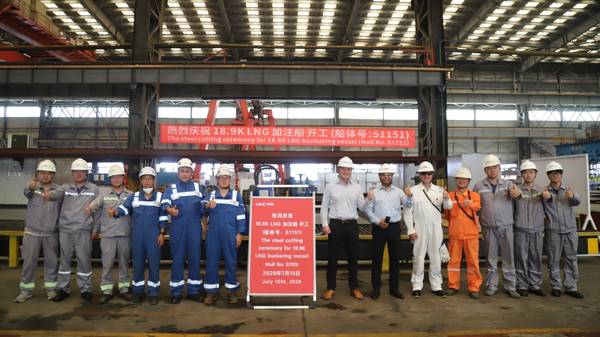
Steel-cutting ceremony of vessel with builder's hull no. S1151. Construction begins on LNG bunkering vessel for Shell  

Ceremony held for first of two 18,900-cbm vessels being built for Purus Marine.

Singapore skyline. Monjasa seeks supply trader in Singapore  

Role focused on developing and maintaining supplier relationships for the firm's back-to-back operations.

Panama City skyline. Monjasa hiring trader for Panama physical trading team  

Bunker firm looking for candidates with at least two years' experience in sales, trading, shipping, logistics, or similar commercial role.

CIMC SOE building. CIMC SOE and Sinopec Clean Energy sign contract for 12,000-cbm LNG bunkering vessel  

Vessel is scheduled for delivery in 2028 and will serve China’s coastal LNG bunkering network.

S-Oil B30 VLSFO supply launch. S-Oil begins supplying B30 VLSFO from Ulsan  

South Korean refiner S-Oil enters the bio-bunkering market with a vertically integrated Ulsan supply chain.