The French port of
Le Havre has announced that it has decided to reward shipping firms operating the most environmentally-friendly ships from next year.
From January 1st 2012, an "environmental reward" will be given to the 10 container or Ro-Ro shipping lines emitting the least air pollutants, thus making it possible for them to reduce their port dues on ships by up to a maximum of 10 percent.
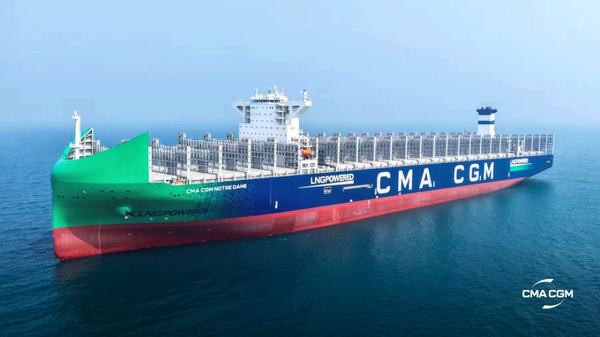
Launched as a trial for 2012 and as an initiative to support the the promotion of 'green calls', the new system will reward shipping companies whose vessles (containerships and ro-ro ships) emit fewer pollutants and less CO2 than the statutory norm.
Commenting on the new initiative, the port of Le Havre said: "Supporting the ESI (Environmental Ship Index) and promoting clean shipping was obvious for the Port of Le Havre. As a signing party for the World Port Climate Initiative Charter, the port of Le Havre has indeed contributed from the start to the definition of the ESI, the environmental index which gives a score to vessels."
In order to be able to participate in this initiative, shipping lines will be required to comply with the conditions required by the ESI and with the incentive framework set up by the port of Le Lavre.
Environmental Ship Index (ESI)
Last year, the World Port Climate Initiative introduced the Environmental Ship Index (ESI), under the auspices of the International Association of Ports and Harbors, in London.
The ESI was introduced on 1 January 2011. The index shows the environmental performance of ships in terms of the emission of air pollutants (NOx and SOx) and CO2. The ESI aims to provide an indication of the environmental performance of ocean going vessels and assist in identifying cleaner ships.
Ports and other nautical service providers all over the world can use the index to reward ships and, in this way, encourage sustainable behaviour in the shipping industry.
A total of 375 sea ships have now been recorded in the ESI, each scoring better than what is required under international law.
The Port of Le Havre was one of the 55 ports that signed the World Port Climate Initiative’s international charter in July 2008. The charter was established to help promote the mitigation of emissions throughout the shipping industry.
In addition to Le Havre, the ports of Rotterdam, Amsterdam, Antwerp, Hamburg, Oslo, Kiel, Bremen and the Green Award Foundation are using the ESI as a benchmark to reward clean ships.