
 |
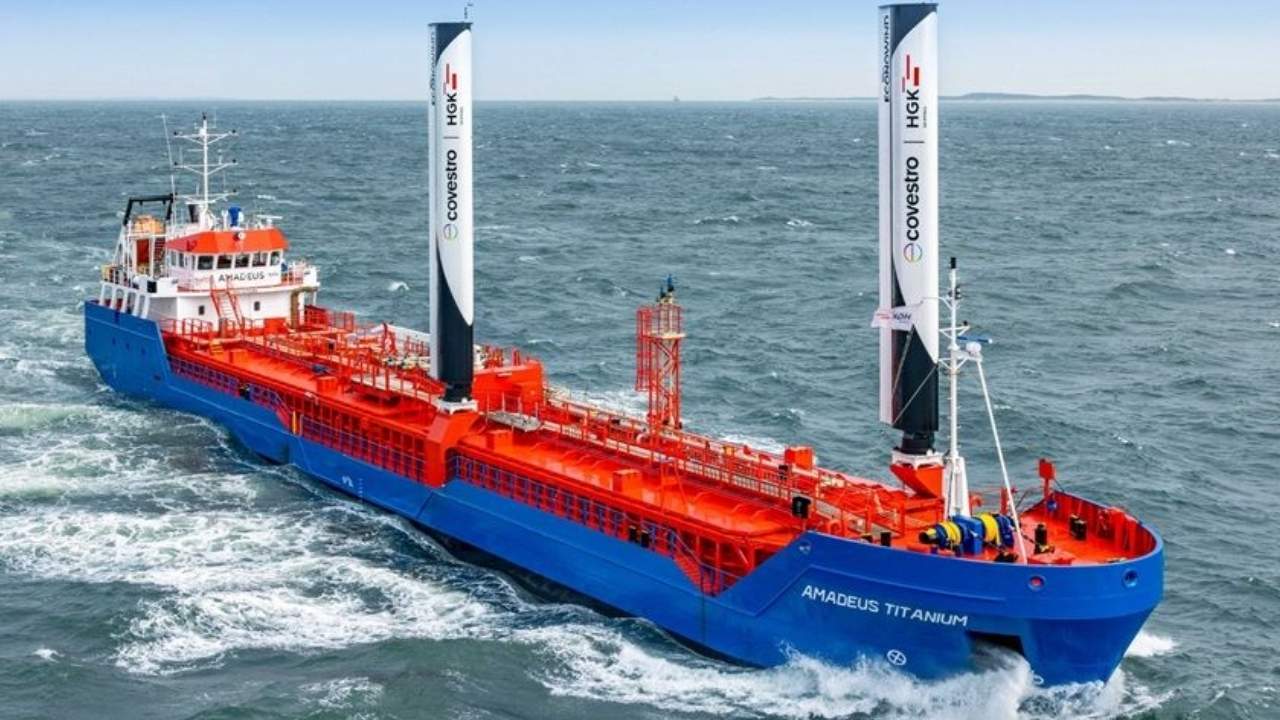
HGK Shipping has equipped the coastal vessel Amadeus Titanium with a wind-assist propulsion system aimed at cutting fuel use and emissions during transport operations for Covestro.
The vessel, which is operated by HGK Shipping subsidiary Amadeus Schiffahrts- und Speditions GmbH, was fitted with VentoFoils from Econowind at the Dutch port of Harlingen at the end of March 2026.
According to the company, the wind-assist system is expected to reduce fuel consumption by around 10% on average, with a corresponding cut in CO₂ emissions.
Wolfgang Nowak, Managing Director, Amadeus Schiffahrts- und Speditions GmbH, commented: “By using WAPS, i.e. so-called ‘wind assistance propulsion systems’ such as the VentoFoils from Econowind, we’re able to save fuel in our short-sea transport operations for Covestro. This brings with it both economic and ecological benefits.”
The installation forms part of HGK Shipping’s ongoing work with Covestro to improve the sustainability of short-sea transport operations.
Steffen Bauer, the CEO of the HGK Group and the CEO of HGK Shipping, stated: “Technological progress will create more options to complete transport logistics operations in the maritime sector and in the waterways system with lower emissions in future. Working with strategic partners such as Covestro, we’re seizing the opportunities that the market is opening up in the field of drive technologies, for example, or those that we’re developing for the design of vessels, often in conjunction with our customers.”
VentoFoils are non-rotating suction wings that use wind-assisted propulsion to generate auxiliary thrust, helping to reduce engine load, fuel consumption and emissions.
|
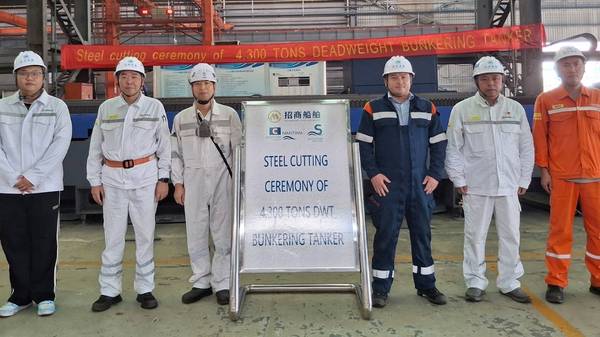
Maritima holds steel-cutting ceremony for Cap Morgiou, first of two Petroineos bunker vessels
Construction starts on bunker vessel able to carry conventional and low-carbon marine fuels, with delivery expected in early 2028. |
|
|
|
||
|
Singapore launches series of measures at SIBCON 2026
MPA announces LNG storage licences, digital bunkering grants and electric harbour craft incentives at 24th conference. |
|
|
|
||

|
VPS outlines marine fuel standards and quality data at SIBCON 2026
VPS's Rahul Choudhuri addresses Singapore's evolving fuel standards and the quality of conventional fuels and biofuels. |
|
|
|
||

|
Singapore launches ammonia bunkering code and new standards for fuel sampling and polymer testing
MPA and Enterprise Singapore introduce one standard and two technical references at SIBCON. |
|
|
|
||
|
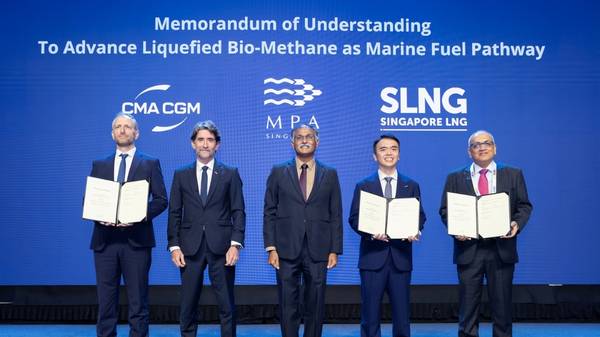
MPA, CMA CGM and SLNG sign MoU to explore liquefied biomethane as a marine fuel in Singapore
Three-way agreement will examine certification, supply and bunkering of LBM using Singapore's existing LNG infrastructure. |
|
|
|
||
|
ROC wins order for PSVs featuring replaceable containerised battery system
Nantong Rainbow Offshore secures 1+1 contract for 4,000 DWT platform supply vessels. |
|
|
|
||
|
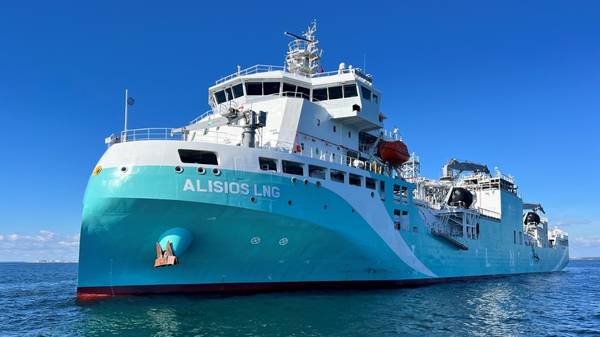
Axpo completes first LNG bunkering in Valencia, with over half bio-LNG
Ship-to-ship transfer to a container vessel makes Valencia the company's fourth Spanish port for LNG bunkering. |
|
|
|
||
|
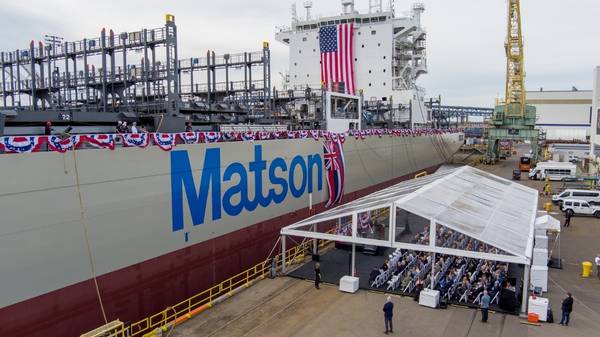
Matson christens Makua, first of three LNG-ready Aloha Class container ships
Dual-fuel vessel, due for delivery in early 2027, is the first of three ships worth around $1bn. |
|
|
|
||
|
CMB.Tech seeks Singapore-based ammonia operations manager for Asia Pacific
New hire will oversee ammonia chartering and bunkering and liaise with Far East partners. |
|
|
|
||
|
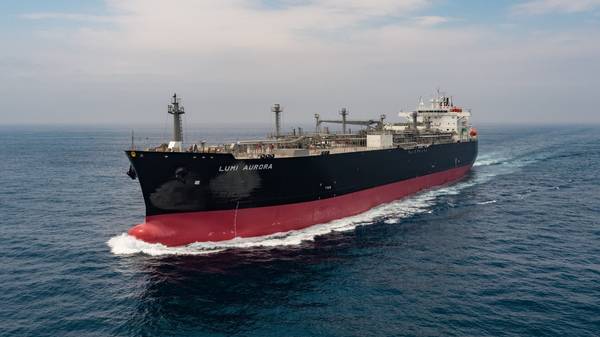
IINO Lines deploys first Ice Class IB VLGC on long-term charter to Borouge International
LPG-fuelled Lumi Aurora will carry North American gas to Borouge International's Porvoo plant in Finland. |
|
|
|
||
| ABB and Econowind combine wind propulsion with digital routing to cut ship emissions [News & Insights] |
| Econowind receives DNV type approval for VentoFoil 3-Series wind propulsion wing [News & Insights] |
| Chemship orders VentoFoils for two more chemical tankers after fuel savings of up to 15% [News & Insights] |
| Nissen Kaiun invests in wind-assist technology firm Econowind [News & Insights] |
| Uni-Tankers vessel gets wind-assisted propulsion [News & Insights] |
