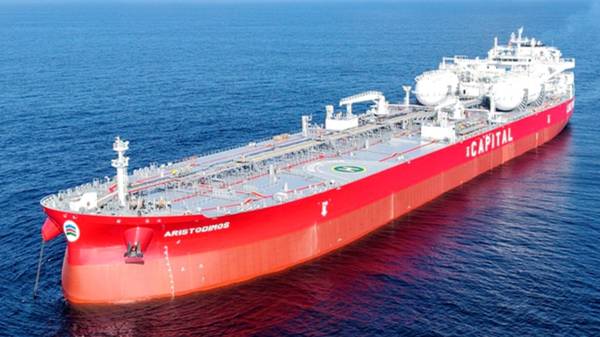
Barge operator
K-Sea Transportation Partners L.P. has announced operating results for the second fiscal quarter ended December 31, 2008.
For the three months ended December 31, 2008, the company reported operating income of $9.4 million, a decrease of $3.0 million, or 24 percent, compared to $12.4 million of operating income for the three months ended December 31, 2007. This decrease resulted from a $1.2 million write-down in the carrying value of the fuel inventory in the tanks of the company's tugboats, and $2.3 million of insurance expense due to an additional call by the Company's insurance carrier.
These items more than offset the impact of continued strong rates and solid vessel utilization, which was helped by a smaller number of scheduled drydockings compared to the prior year’s quarter. EBITDA decreased by $3.7 million, or 14 percent, to $23.0 million for the three months ended December 31, 2008, compared to $26.7 million for the three months ended December 31, 2007. The fiscal 2008 second quarter benefited from the non-recurring gain of $2.1 million from the settlement referred to above.
Net income for the three months ended December 31, 2008 was $3.6 million, or $0.22 per fully diluted limited partner unit, a decrease of $5.4 million compared to net income of $9.0 million, or $0.63 per fully diluted limited partner unit, for the three months ended December 31, 2007. The fiscal 2009 second quarter was adversely impacted by the $3.0 million decrease in operating income. Excluding the unusual and non-recurring items, net income for the three months ended December 31, 2008 was $7.1 million, or $0.44 per fully diluted limited partner unit. The non-recurring gain of $2.1 million increased net income per fully diluted limited partner unit by $0.14 for the three months ended December 31, 2007.
The company also announced that its Board approved a distribution to unitholders for the second quarter of $0.77 per unit, or $3.08 per unit annualized. The distribution will be payable on February 16, 2009 to unitholders of record on February 9, 2009.
Commenting on the results, President and CEO
Timothy J. Casey said, “When we exclude the unusual and non-recurring items in the quarters, our EBITDA increased from last year and from the immediately preceding quarter. We had previously indicated that if fuel prices remained low, we would likely face another negative adjustment for fuel and, while bothersome, it is more than offset by the longer term positive implications that lower fuel prices have for the economy and energy consumption.
"The additional insurance call received in December was unexpected and was caused essentially by falling investment returns at our insurer. The call is for payments over a period of time, and we may not be required to fund the entire call if investment income and underwriting results improve. Based on this latest call, we may have an additional future liability of approximately $1.0 million which would be paid in January 2010 and August 2010.
"We are mindful of conditions in the financial markets and will continue to be proactive in protecting our liquidity, balance sheet and capital. Accordingly, in late December, we completed a $34.4 million sale and leaseback of three barge units. We now operate these barges under 10-12 year leases, have repaid the relevant debt, and have the right to repurchase the units at various times. We will continue to be proactive and innovative to ensure the integrity of our balance sheet and cash flows.
"Our long term contract coverage is strong, with 81 percent of our units chartered for one year or more and with an average remaining term of close to 2.5 years. In addition, we have succeeded in keeping our spot market tonnage reasonably employed. We believe petroleum demand should be in the early stages of a recovery phase by the fourth calendar quarter of this year and, coupled with our strong competitive position, should bode well for fiscal 2010. In light of all these factors, management recommended, and the Board determined, to maintain our quarterly distribution at $0.77 per unit, or $3.08 annualized," said Casey.
For the six months ended December 31, 2008, the company reported operating income of $19.2 million, a decrease of $5.3 million, or 22 percent, compared to $24.5 million of operating income for the six months ended December 31, 2007. This decrease resulted from increased labor, insurance (including the $2.3 million of additional calls mentioned above), general and administrative expenses, and from higher depreciation and amortization expenses resulting from the acquisition of the Smith Maritime Group in August 2007, the delivery of six new-build tank barges since September 30, 2007, and the acquisition of eight tugboats in June 2008.
The company also had a negative swing, compared to last year’s first half, on the disposition of equipment. This was offset to some extent by increased average daily rates and vessel utilization as compared to the prior year’s period. EBITDA decreased by $3.3 million, or 7 percent, to $45.7 million for the six months ended December 31, 2008 compared to $49.0 million, including the $2.1 million non-recurring gain, for the six months ended December 31, 2007. Excluding the unusual and non-recurring items, operating income decreased to $23.5 million from $24.5 million and EBITDA increased to $49.9 million from $47.0 million.
Net income for the six months ended December 31, 2008 was $7.5 million, or $0.48 per fully diluted limited partner unit, a decrease of $7.5 million compared to net income of $15.0 million, or $1.20 per fully diluted limited partner unit, for the six months ended December 31, 2007. The fiscal 2009 first half was adversely impacted by the $5.3 million decrease in operating income and the $2.3 million negative swing in other expense (income), net.
Excluding the unusual and non-recurring items, net income for the six months ended December 31, 2008 was $11.8 million, or $0.76 per fully diluted limited partner unit. The non-recurring gain of $2.1 million increased net income per fully diluted limited partner unit by $0.15 for the six months ended December 31, 2007.