Wed 25 Jun 2008, 09:52 GMT

Hyundai to expand bunker-producing refinery


South Korean bunker supplier announces details of refinery expansion in Daesan.


South Korean bunker supplier and oil refiner Hyundai Oilbank Co. Ltd. is set to carry out a major grassroots expansion of its bunker-producing refinery in Daesan.

The expansion project will allow for conversion of high-sulphur fuel oil to higher value refining products while also upgrading the refinery to meet future fuel specifications in Korea.

US-based The Shaw Group Inc. has announced that its Energy & Chemicals Group has been selected by Hyundai Oilbank Co. Ltd. to lead a consortium that will provide professional services and procurement of critical equipment for the expansion project.

Shaw, along with consortium partner Hyundai Engineering Co. Ltd., will provide front-end engineering design for the integration of 15 refinery process units, including a 52,000 barrels per day residue fluidized catalytic cracking unit and a 66,000 barrels per day atmospheric residue desulfurization unit. The consortium will also provide front-end engineering design for associated utilities and infrastructure, procurement of critical equipment, as well as project management services.

The value of Shaw's contract, which will be included in the company's third quarter fiscal 2008 backlog of unfilled orders, was not disclosed.

Lou Pucher, President of Shaw's Energy & Chemicals Group said "This award further establishes Shaw as a leading technology integrator, as well as a leader in providing engineering, procurement and project management services in the expanding Korean refining market."

Shaw recently completed the integration of 14 process units and related services for the addition of a 60,000 barrels per day fluid catalytic cracking unit at a refinery in Ulsan, South Korea, for SK Corporation.

South Korea currently has five refineries with a total refining capacity of approximately 2.55 million barrels per day. The size of the country's bunker market is estimated to be in the region of 14 million metric tonnes per year with Busan taking around 8 million tonnes.

SK Corporation and GS Caltex are reported to be the market leaders in Busan, each with a 30 percent share of bunker sales. Hyundai Oilbank is said to have a 10 percent share of sales at South Korea's leading bunker port.


RINA employee on board vessel. RINA unveils Mermaid propulsion concept to navigate uncertain decarbonisation landscape  

Fuel-agnostic design claims savings of more than 1,000 tonnes per year in some applications.

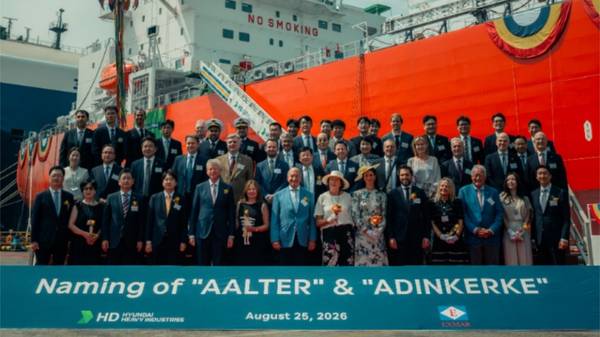
Adinkerke and Aalter naming ceremony. Exmar names third and fourth dual-fuel ammonia-powered vessels  

Midsize gas carriers Adinkerke and Aalter named at formal ceremony.

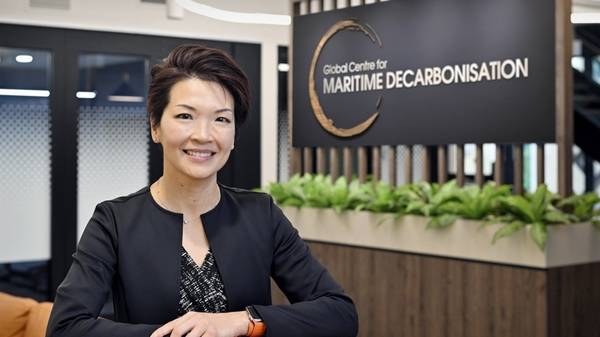
Professor Lynn Loo, GCMD. GCMD outlines practical approach to quantity assurance in marine biofuel supply chains  

New report addresses verification of both total fuel volume and renewable content in biofuel transactions.

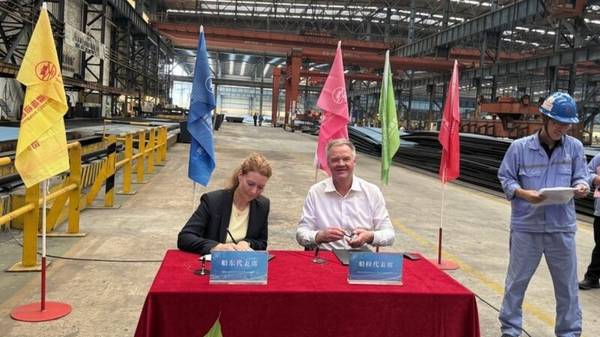
Steel-cutting ceremony of London Express class vessel. Hapag-Lloyd cuts steel for first vessel of new London Express class  

16,800-TEU LNG dual-fuel vessel is first of 12 newbuildings in the class.

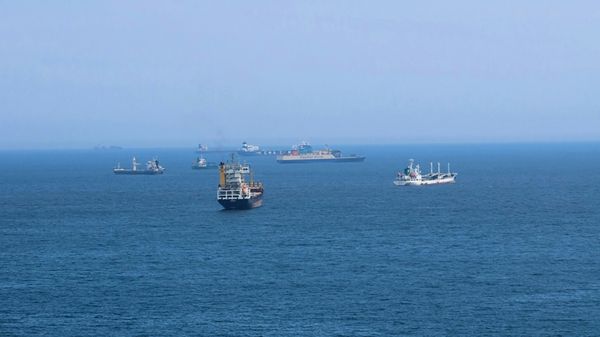
Vessels at sea. DNV report warns regulatory uncertainty complicates fleet investment decisions  

CEO urges greater clarity to provide the confidence needed for long-term investment.

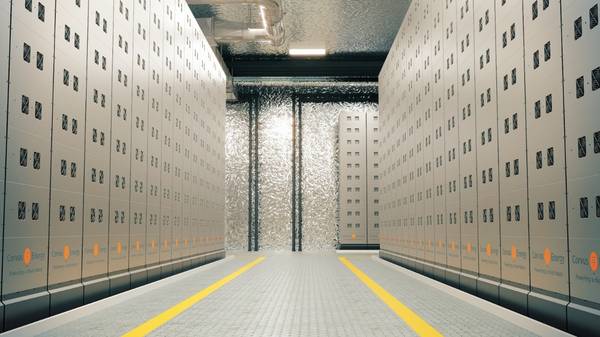
Blue Whale NxtGen Energy battery system. Corvus Energy launches LFP battery system developed with BYD Energy Storage  

Blue Whale NxtGen Power targets tugs, ferries and workboats with high power demand.

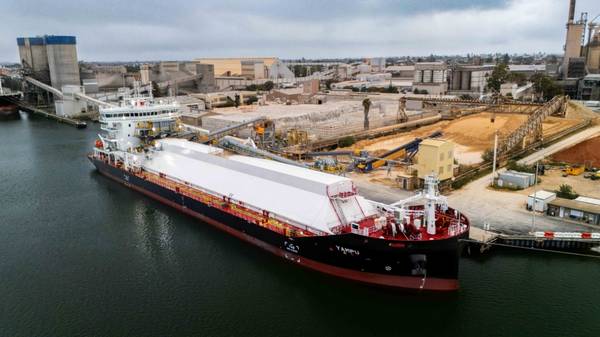
Welcome ceremony of Yampu vessel. World’s first battery-powered self-unloading bulk carrier enters service in Australia  

MV Yampu connects South Australia’s limestone trade with a battery-electric propulsion system.

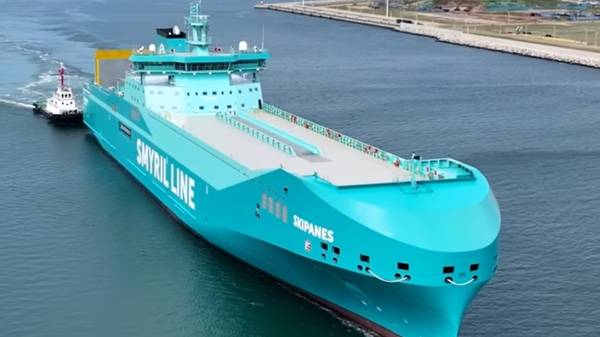
Skipanes vessel. E-methanol-ready ro-ro vessel delivered to Smyril Line  

190-metre vessel is built for year-round North Atlantic operations and designed for future e-methanol conversion.

Belgium flag. Sunoil Biodiesel secures approval to supply biofuels in Belgium  

Dutch biofuel supplier expands its European footprint with Belgian market entry.

Tacoma Maersk naming ceremony. Maersk takes delivery of dual-fuel methanol-capable Tacoma Maersk in China  

9,000-TEU vessel is one of six mid-sized dual-fuel ships joining Maersk's fleet.