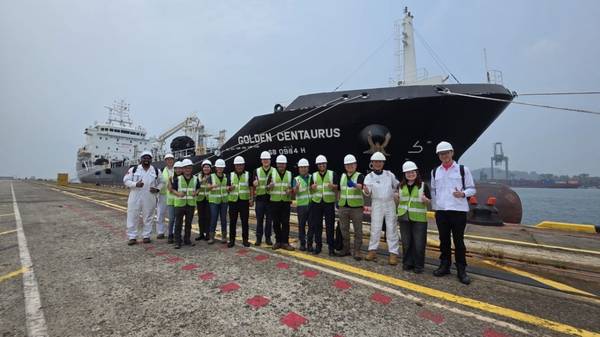
The board of directors of the
International Chamber of Shipping (ICS) met in
London on February 6th, where one of the key topics discussed was the reduction of CO2 emissions.
The ICS board reviewed the industry's position with respect to progress being made at IMO on further measures to reduce CO2 emissions from international shipping, including refinements to the
Energy Efficiency Design Index (EEDI) - which was adopted as part of the ground breaking international agreement reached at IMO in July 2011 and which will apply to new ships from 2013 - and discussions at IMO about possible
Market Based Measures (MBMs).
ICS also reviewed the operational and technical measures now being taken by existing ships, in support of the industry's target of improving efficiency per tonne/km by 20 percent by 2020. With respect to the EEDI, ICS confirmed its complete opposition to the application of the EEDI to existing ships.
"This is not what the EEDI was developed for, and the goals set for the design of new ships, and the complex formulae developed for them, are completely inappropriate for the existing fleet." said ICS Chairman
Spyros M Polemis [pictured]. "ICS will be making the industry's considered view on this clear at the next meeting of the IMO MEPC," he said.
ICS also confirmed its strong opposition to a proposal from the
Bahamas to IMO whereby governments would specify limits on the CO2 emissions of individual ships, as determined by fuel consumption, and which would subsequently be reduced over time.
"If a ship's CO2 allowance was exceeded during the time period specified, it would have to go off-hire and a second ship chartered as replacement. The problem is compounded by the reality that the fuel consumption of two identical ships can vary dramatically according to trading patterns and other variables such as weather. ICS members confirmed that such an approach was very worrying and should be firmly opposed." said Mr Polemis.
"The Bahamas' proposal has been made with the apparent intention of being an alternative to other Market Based Measures that have been proposed at IMO. ICS is concerned that some might see this as being a superficially attractive means of stopping the adoption of an MBM," ICS said.
Mr Polemis commented: "As well as being highly damaging to large parts of the industry, the Bahamas' proposal would alter the level playing field and distort competition."
The ICS board also discussed the outcome of the
UN Climate Change Conference in Durban, which has agreed to establish a
Green Climate Fund for developing countries, seeking $100 billion a year by 2020, and proposals by the
World Bank that shipping might be expected to contribute a quarter of this money.
Mr Polemis remarked: "The ICS Board agreed that many governments seemed more interested in how much money can be raised from shipping, rather than the progress we are already making in reducing our emissions through technical and operational measures. We have said it before, and we will say it again, shipping is not a cash cow and should never be seen as one. Any such notion will severely damage shipping's competitiveness and thus adversely affect the consumer greatly."
Mr Polemis added: "It is internationally accepted that IMO is the appropriate forum for discussion about further CO2 reduction measures by shipping, and it is counter-productive and will crucially affect the level playing field if the EU was to adopt a regional Emissions Trading Scheme for shipping. The focus must be on collective discussions about a global approach."