Tue 5 Apr 2011, 13:02 GMT

Study forecasts drop in fuel oil demand


Demand for residual fuel oil is predicted to fall over the next 10 years.


US-based energy consulting firm Purvin & Gertz has announced the release of the Global Petroleum Market Outlook 2011, where the company forecasts that demand for residual fuel oil will decrease over the next 10 years as a result of a shift to marine distillates within the bunker industry.

The study provides an in-depth analysis of global and regional markets for crude oil and refined products within a framework of world energy demand and economic activity up until 2030.

Supply forecasts are based on expected production levels of crude oil, natural gas, alternative fuels, and refining facilities in each country. The analysis considers the operating/commercial constraints of existing facilities, as well as capacity and start-up dates for new refining projects, in forecasting overall supply.

Demand for refined products is analysed and forecast in the context of emerging trends in biofuels, alternative fuels, vehicle preferences, and government mandates. The prospects for future world market developments are examined and the likely impact on crude oil trade, refined product trade, and pricing are assessed.

"As we publish this edition, a global economic recovery is well underway, but there are new areas of uncertainty to consider. Political turmoil in the Middle East and North Africa has appeared in the first few months of the year and has caused the threat of and some actual oil supply disruptions. A massive earthquake and tsunami has devastated northeastern Japan, inflicting painful loss of life and serious damage to nuclear power capacity and other energy infrastructure such as refineries and LNG receiving terminals. These negative factors are counterbalanced somewhat by the return of economic growth in many of the world's economies and by accelerating crude oil supply in countries outside of OPEC," Purvin & Gertz said.

Key conclusions of this year's analysis include:

* Residual fuel oil's share of demand will decline over the next 10 years as competition with natural gas intensifies in some regions and bunker fuel specifications favor a shift to marine diesel by 2015.

* Refined product demand increased by 2.0 million B/D in 2010 as most economies emerged from the 2009 recession. Demand growth was strongest in Asia, the Middle East and parts of Latin America. Purvin & Gertz's long term forecast for refined product demand growth has been updated to reflect the impact of higher long-term crude oil prices and more stringent conservation efforts. "The challenge to supply energy to a growing global population of expanding financial means is huge," Purvin & Gertz pointed out.

* Product demand in non-OECD countries will grow rapidly from the current level of 37.3 million B/D in 2010 to 59.6 million B/D in 2030. Of the expected 22.3 million B/D increase, China alone is expected to account for 43% of this increase. The combination of Brazil, India, Russia and the broader Middle East will account for almost 30 percent of the increase.

* Diesel fuel will increase its share of total demand as demand for other fuels grows at a slower pace. Gasoline's share of demand has been relatively stable for the last 20 years, but is expected to drop in the OECD countries as higher vehicle efficiency standards propagate through the fleet. However, gasoline demand will still continue to grow in many developing countries.

* Changes to established crude oil and product trade flows are expected to be seen in the coming years in order to accommodate a myriad of factors such as new crude oil streams, new refining capacity, and product demand shifts. Purvin & Gertz's forecast this year includes an in-depth analysis of crude oil production and trade in a companion study: Global Crude Oil Market Outlook.

* Despite the large refined product demand increase seen in 2010, a significant oversupply situation currently exists. The requirement to blend increasing volumes of ethanol and biodiesel into products is further adding to the product oversupply situation in the Atlantic Basin. A few weaker refineries have already shut down and more closures are expected. However, the survivors in some markets will have to operate at significantly lower rates until after 2015 unless further capacity rationalization corrects the capacity imbalance.

* Light/heavy price differentials and returns on capital investment declined rapidly in early 2009 as the global economy slowed. A modest recovery in conversion returns was experienced in 2010, but conversion returns are expected to weaken because new capacity will continue to come on line in the next few years.

* Worldwide refinery investments to 2020 are expected to cost approximately $275 billion which represents 18 percent of 2010 replacement costs. Additional investments in the range of $145 billion are expected up until 2030.


American Bureau of Shipping (ABS) logo. ABS introduces nuclear-ready notation for marine and offshore assets  

The classification society has released what it describes as an industry-first notation to support future nuclear conversion of vessels and offshore assets.

AiP handover ceremony for NEXTGEN Energy Hub (NGEH) design. ABS grants approval in principle for Seatrium’s NEXTGEN Energy Hub design  

The hub concept integrates ammonia bunkering, power generation and electric vessel charging in a single unit.

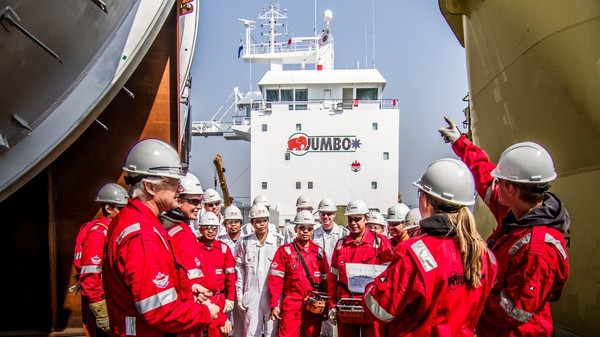
Jumbo Maritime crew aboard vessel. Jumbo orders two methanol-ready L-Class heavy lift vessels from Dajin Heavy Industry  

Dutch heavy lift specialist Jumbo signs newbuilding contract for two 25,000-dwt vessels.

China flag. Zhoushan completes first bonded bunker operation at Majishan port area  

The operation marks full fuel supply coverage across all general cargo terminals in Zhoushan's port system.

US dollar banknotes. Port of Long Beach launches $1m methanol bunkering challenge for oceangoing vessels  

A $1m prize aims to kick-start commercial methanol bunkering at one of North America's busiest ports.

Core Power, Athlos Energy, Deon Policy Institute and ABS logos. Greece floating nuclear study finds no fundamental barriers to implementation  

A PESTLE assessment of floating nuclear power plants in Greece identifies framework gaps, not feasibility barriers.

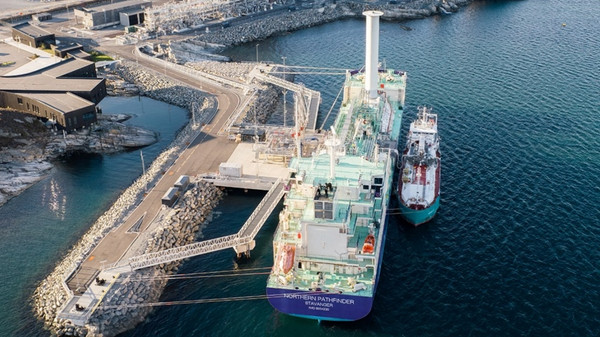
Northern Pathliner alongside Bergen LNG vessel. Molgas completes LNG cool-down and bunkering for Northern Pathliner at Northern Lights terminal in Norway  

Operation carried out at Øygarden facility, with K Line and Integr8 Fuels in the supply chain.

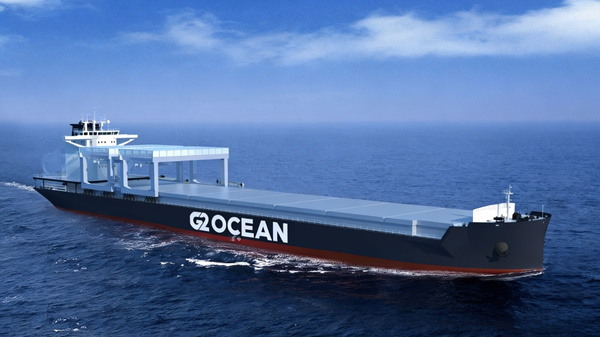
Rendering of a G2 Ocean OHGC vessel. G2 Ocean expands fleet with six future-fuel ready gantry crane vessels  

Open hatch specialist adds vessels and jet sail technology as part of a broad fleet renewal programme.

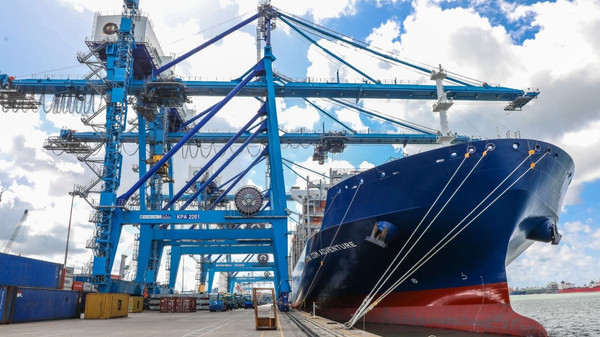
CMA CGM Adventure vessel at Port of Mombasa. LNG-powered CMA CGM Adventure makes first call at the Port of Mombasa  

Kenya Ports Authority receives its first large LNG-fuelled container vessel.

Liam Blackmore, Lloyd's Register. Maritime trio shapes IMO safety guidelines for ammonia as marine fuel  

Real-world operational experience feeds directly into new IMO ammonia fuel safety framework.