Wed 10 Nov 2010, 06:52 GMT

Maiden voyage for fuel-saving ship


Latest NYK Line vessel, NYK Altair, is said to consume less fuel than ships with conventional engines.


Nippon Yusen Kabushiki Kaisha (NYK Line) has announced the launch of its 'latest green vessel', the NYK Altair [pictured], which is said to consume less fuel than ships with conventional engines.

The ship recently made her maiden voyage to Europe, arriving in Hamburg at the end of October. NYK’s previous vessel named NYK Altair was launched in 1994. At the time, the ship's 4,743 TEU capacity made her the largest containership in Japan.

The new NYK Altair incorporates some innovative developments in engine design. She is fitted with a DU-Wartsila RT FLEX 96C propulsion engine. The environmental advantages of the engine are said to be:

* Lower fuel consumption than conventional engines
* Smokeless operation at all running speeds
* Reduced Nitrogen Oxide (NOx) emissions
* High-efficiency waste heat recovery

The launch of the NYK Altair follows the introduction of the award-winning Auriga Leader and the unveiling of the company’s concept ship, NYK Super Eco Ship 2030.

The solar-power-assisted Auriga Leader is the world's first ever cargo ship partly powered by solar energy. The vessel, which is equipped with 328 solar panels, was named the ship of the year at the 2009 Lloyd’s List Global Awards. It has been used to experiment with propulsion systems that run in part on solar power. The systems were jointly developed with Nippon Oil Corporation.

In a two-year experiment, which looked into how solar power can be used to assist with powering a vessel, solar power was able to provide 0.05 percent of the ship’s propulsion power and 1 percent of the electricity used on the vessel.

The NYK Super Eco Ship 2030 is a low emission container freight vessel that the company says it wishes to have in service by 2030.

The ship was designed in cooperation with the Monohakobi Technology Institute along with Garroni Progetti s.r.l, an Italian ship design firm, and Elomatic Marine, a Finnish marine-technology consultant.

The vessel will be powered by Liquid Natural Gas (LNG) fuel cells, solar cells, and wind power, all of which NYK says will lead to a CO2 reduction of 69 percent per container carried.

The design also features a bow-mounted bubble projector to reduce friction as the ship moves through the water and it is proposed that the vessel will actually break into segments in port so as to facilitate freight handling and thus aid efficiency. NYK also proposes to decrease the weight of the hull and therefore reduce water friction and the amount of power needed to propel the ship.

NYK says that it plans for its fleet to produce zero emissions by 2050.


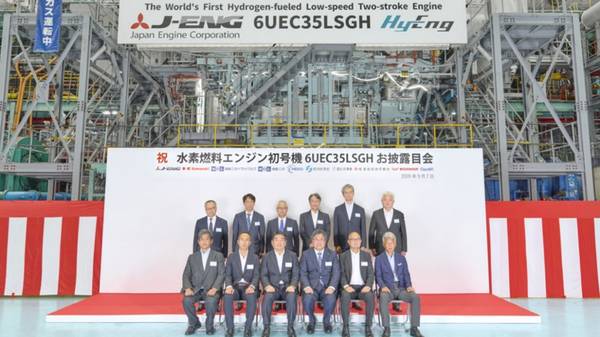
J-ENG 6UEC35LSGH hydrogen-fuelled engine unveiling. Japan Engine completes land-based testing of landmark hydrogen-fuelled engine for large vessels  

Hydrogen co-firing rate of at least 95% achieved during factory testing.

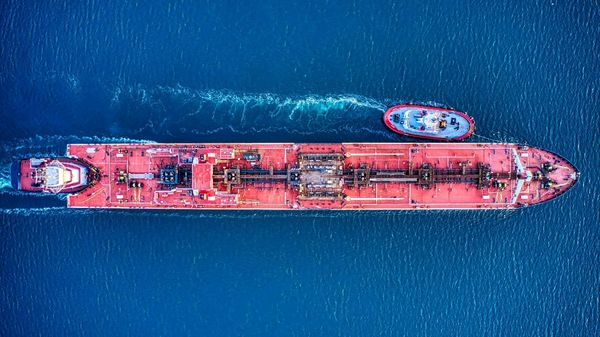
Aerial view of tanker vessel at sea. Ethanol edges into shipping’s fuel mix as methanol crossover eases adoption barriers  

Rising interest from cargo owners, shared technology with methanol and Brazilian production growth push ethanol beyond regional niche status.

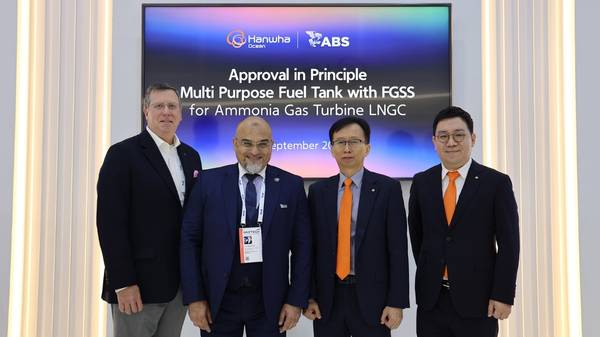
AiP award ceremony for multi-purpose fuel tank and FGSS design. ABS grants Hanwha Ocean approval for dual-fuel tank enabling LNG-to-ammonia switch  

In-principle approval awarded for fuel tank and supply system enabling LNG carriers to convert to ammonia without replacement.

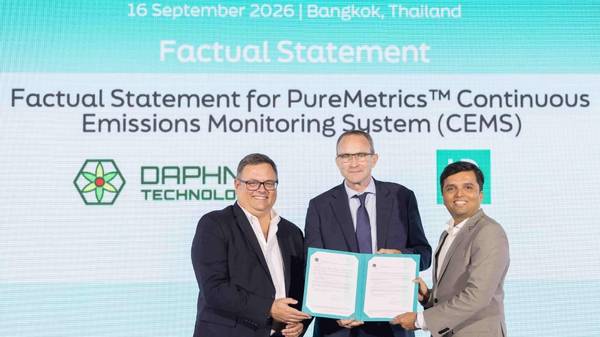
Lloyd's Register issues Factual Statement (FS) for PureMetrics CEMS. Lloyd's Register confirms suitability of Daphne Technology's emissions monitoring system  

Factual Statement validates the PureMetrics design for monitoring greenhouse gas emissions from marine engines.

IMO building with national flags. IMO issues shipboard biofuel blend checklist developed by IBIA  

Checklist for FAME-based biofuels formally incorporated into IMO document, supporting crews handling biofuel blends for the first time.

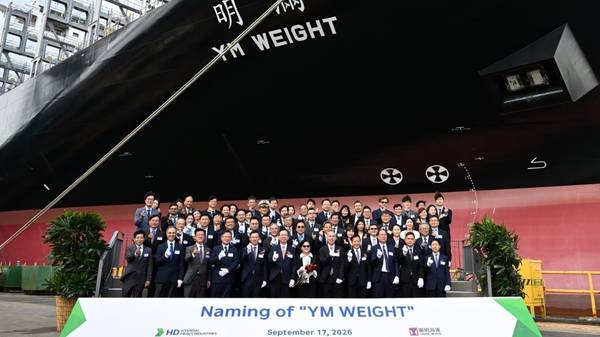
YM Weight naming ceremony. Yang Ming names fourth LNG dual-fuel container vessel YM Weight  

Newbuild features high-pressure dual-fuel main engines capable of running on either LNG or low-sulphur fuel oil.

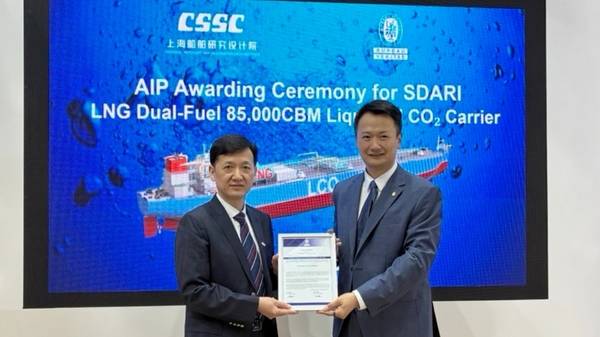
Bureau Veritas grants AiP to SDARI. Bureau Veritas grants AiP to SDARI’s LNG dual-fuel liquefied CO₂ carrier design  

Classification society approves 85,000-cbm vessel concept designed to support the growing carbon capture and storage sector.

Houston skyline at night. JuWonOil looking to strengthen with two Houston hires  

Texas-based firm is recruiting a marine lubricants sales executive and a marine fuels and distillates trader.

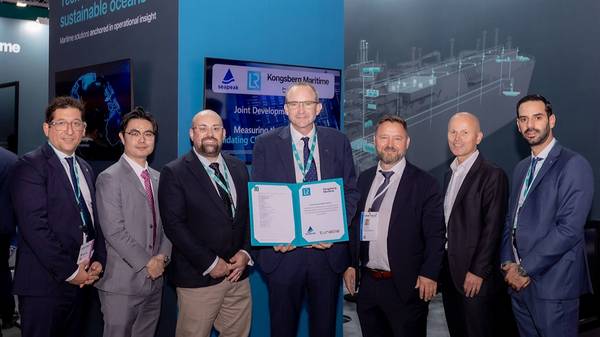
Lloyd's Register (LR), Seapeak, Kongsberg Maritime and Tunable JDP launch. Four firms partner to trial continuous emissions monitoring on LNG carrier  

LR, Seapeak, Kongsberg Maritime and Tunable will test onboard CO₂ monitoring against engine data and default emissions factors.

Bunker Holding logo. Bunker Holding reshuffles commercial leadership across brand portfolio  

Appointments announced across KPI OceanConnect, Glander International Bunkering and its digital sales operations.