Wed 10 Mar 2010, 10:22 GMT

Rotterdam fuel oil trade up in 2009


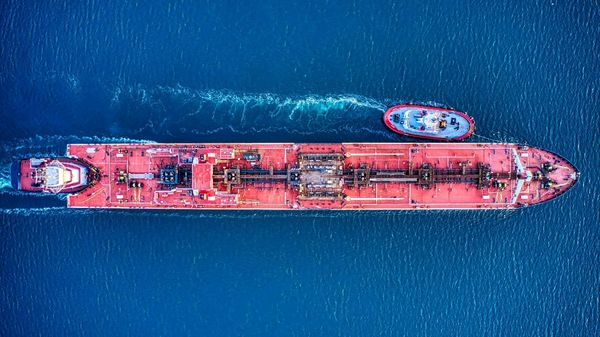
The number of VLCCs transporting fuel oil to the Far East increases in 2009.


VLCC’s found greater employment moving fuel oil from Rotterdam to the Far East in 2009 than in 2008, according to data released by the Port of Rotterdam.

In 2009, 17 VLCC’s are reported to have handled 4.0 million tons of fuel oil. By contrast, 14 VLCCs handled 3.7 million tons of fuel oil in 2008.

Neither year, however, was anywhere close to the 25 VLCCs employed in 2007 to handle 6.4 million tons of fuel oil.

Fuel oil often moves from Rotterdam to the Far East as a backhaul voyage on VLCCs that first discharge crude oil at Rotterdam. Underpinning the use of VLCCs and tankers of other sizes to haul fuel oil from Rotterdam is the spread in fuel oil prices between Northwest Europe and the Far East.

July was the busiest month in 2009, with the loading of three VLCCs with fuel oil. Meanwhile, two VLCC’s were loaded with fuel oil in June, August, and December.

The 17 VLCCs which sailed with fuel oil from Rotterdam to the Far East in 2009 were: Leo Star (January), Stena Victory (Feb.), Universal Peace (February.), Darab (April.), Nesa (May), Pisces Star (June), Hero 1 (June), Front Circassia (July), Hamoon (July), Hirmand (July), Kamakshi Prem (August), Dena (August), Front Chief (September) Mazyonah (October), Ocana (November) Damavand (December) and Kazimah III (December).

In contrast to the one VLCC which loaded at Rotterdam in January 2009, three VLCCs loaded in the corresponding month this year.

VLCCs can be loaded with fuel oil at Rotterdam from the port's terminals, refineries and an in-port transshipment facility.

The key terminals employed in loading VLCCs are Vopak's Europoort and Vitol's ETT. Fuel oil can also be loaded at the KPC and BP refineries.

The Port of Rotterdam's ship-to-ship in-port facility was inaugurated in June 2007. The facility, located at Calandkanaal, can handle chemicals and dry bulk as well as tankers. It has an LOA of 380 meters and maximum outgoing draft of 20.9 meters.

An alternative to loading VLCCs in Rotterdam is offshore ship-to-ship transfer of fuel oil in waters off the UK and Denmark.

Please find below an overview of VLCCs loaded at Rotterdam between 2006 and 2009.

Year No of VLCCs Fuel Oil Quantity (million mts)
2006 12 2.4
2007 25 6.4
2008 14 3.7
2009 17 4.0


Container ship near a port. Ammonia emerges as most feasible alternative fuel for deep-sea shipping in 2050 emissions study  

Research combining expert survey and technical analysis ranks ammonia ahead of hydrogen and methanol.

Cargo vessel at sea. EMSA study examines biodiesel blend spill response as shipping adopts alternative fuels  

Research addresses knowledge gaps on biodiesel-conventional fuel blends as marine pollutants and response measures.

BIMCO ETS BARECON clause 2026 graphic. BIMCO adopts ETS clause for bareboat charters, delays biofuel provision  

BIMCO’s Documentary Committee has approved an emissions trading compliance clause while requesting further work on a biofuel charter provision.

SALEFORM 2025 standard form graphic. BIMCO and Norwegian Shipbrokers’ Association launch SALEFORM 2025 ship sale contract  

Updated agreement addresses banking changes, compliance requirements and environmental regulations affecting vessel transactions.

Everllence H2 test engine. Everllence develops hydrogen test bench for marine engines  

German engine maker upgrades Augsburg facility under HydroPoLEn project backed by federal maritime research funding.

CMA CGM Osmium vessel. CMA CGM names 13,000-teu methanol-fuelled containership in South Korea  

CMA CGM Osmium to operate on Asia–Mexico service as part of the carrier’s decarbonisation strategy.

NorthStandard logo. NorthStandard publishes biofuel guide as marine insurance claims emerge  

White paper addresses quality issues and compliance requirements as biofuel testing volumes surge twelvefold.

Clean Maritime Fuels Platform (CMFP) logo. Maritime fuel platform calls for EU shipping ETS revenues to fund clean fuel deployment  

Clean Maritime Fuels Platform urges earmarking of national emissions trading revenues for renewable fuel infrastructure.

Seatransport 73m SLV Lloyd’s Register grants approval for hybrid nuclear power design for amphibious vessels  

Classification society approves Seatransport’s concept integrating micro modular reactors with diesel-electric systems.

Everllence ME-LGIE engine. Everllence and Vale partner on ethanol-powered marine engine development  

Brazilian mining company to develop dual-fuel ethanol engines based on ME-LGI platform.


 Recommended