
 |
SEA-LNG, the multi-sector coalition spanning the LNG value chain, has published its 2026 Mid-Year Market Review, pointing to continued growth in LNG-fuelled vessels, bunkering infrastructure and liquefied biomethane (LBM) production. The review coincides with the coalition's tenth anniversary and its receipt of provisional consultative status at the International Maritime Organization (IMO).
According to analysis of vessel orders from January to June 2026 by SEA-LNG member DNV, LNG dual-fuel orders stood at 73 vessels in the first half of the year, accounting for close to 90% of the alternatively fuelled order book when measured against ammonia, hydrogen and methanol orders. The LNG bunker vessel fleet now numbers 67 in operation, with a further 42 on order.
The LNG order book continues to be dominated by vessels serving liner trades, particularly container vessels and pure car and truck carriers (PCTCs). According to the World Shipping Council, LNG accounts for 58% of total tonnage ordered among container ship owners, compared with 36% for conventional fuels.
Global LNG bunker volumes reached around 770,000 cbm per month between January and May 2026, according to analysis cited by SEA-LNG — an increase of approximately 13% on the same period in 2025, driven by the entry into service of more LNG-fuelled vessels alongside favourable pricing conditions for LNG relative to conventional fuels.
The report also highlights growth in the biomethane sector. Data from the European Biogas Association show that biomethane production capacity reached 8.2 billion cubic metres (bcm) per year by the end of Q2 2026, an increase of 1 bcm — or around 14% — in a single year. The number of operational biogas plants rose from 1,678 to 1,975, supported by €36 billion in allocated capital investment. SEA-LNG notes that liquefied e-methane remains in development.
Steve Esau, SEA-LNG chief operating officer, stated: "Despite geopolitical and regulatory uncertainties in 2026, the industry is maintaining momentum on the methane decarbonisation pathway. This year's mid-year review confirms that methane is the practical and realistic solution for shipping decarbonisation. This is reflected in the growing numbers of LNG-fuelled vessels, LNG bunker vessels, and LNG bunkering volumes, as well as biomethane bunkering and production growth. As we look ahead, with e-methane also materialising, we are confident in the trajectory of the methane pathway to decarbonisation."
SEA-LNG was granted provisional consultative status at the IMO on 9 July 2026, enabling the coalition to engage directly with member states as it advocates for what it describes as practical and technology-neutral decarbonisation regulations. The organisation says its focus has shifted from raising awareness of LNG as a marine fuel to sharing technical expertise on areas such as well-to-wake emissions reductions and the scaling up of bio- and e-methane.
Founded on 12 July 2016, SEA-LNG now counts 37 members. Over the decade since its founding, the number of LNG-fuelled ships in operation and on order has grown from 81 to over 1,550, LNG bunker vessels have risen from 9 to 109, and LNG bunkering locations have expanded from 10 to 222 ports worldwide, SEA-LNG notes.
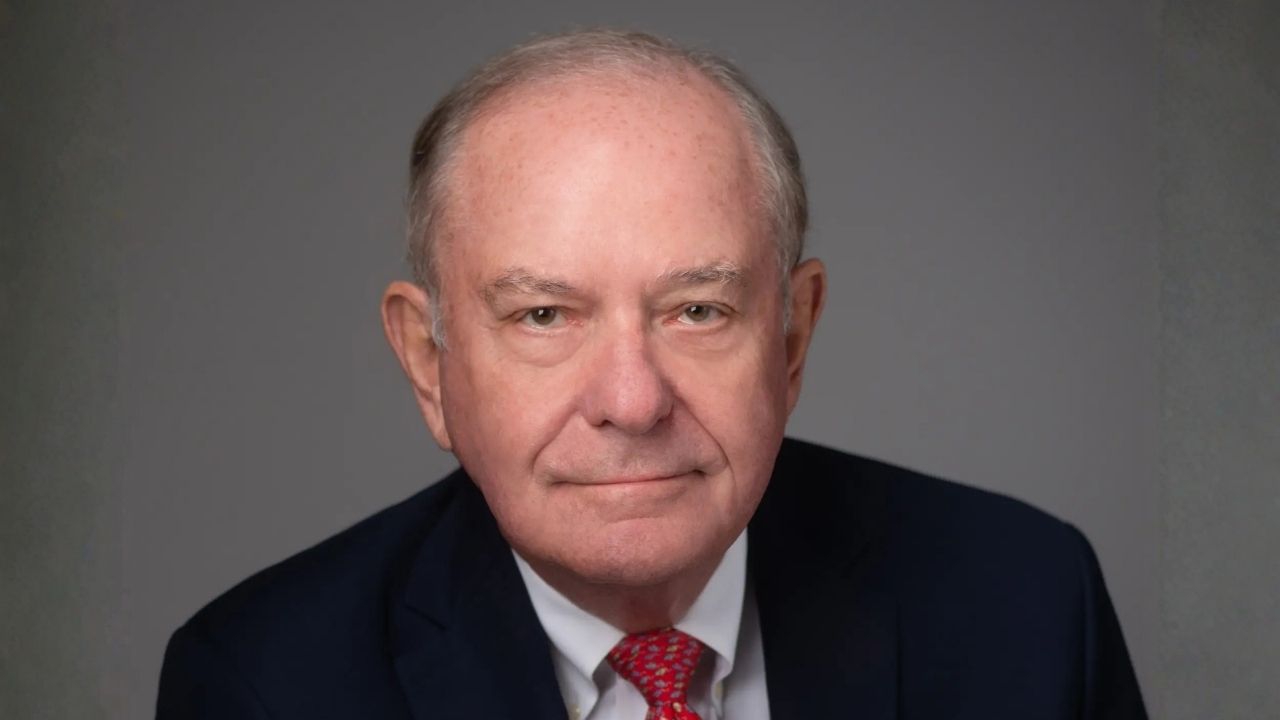
Peter Keller, SEA-LNG chairman, commented: "I have been with SEA-LNG since we founded it 10 years ago, and what strikes me is how methane has ramped up from a pathway to a clear runway for shipping decarbonisation. When building the first LNG-powered containership, I didn't imagine that within ten years over 10% of the global fleet by deadweight could be powered by methane. What started as a solution to reduce harmful local emissions has cemented itself as the practical and realistic option for reducing greenhouse gas emissions today and into the future."
|
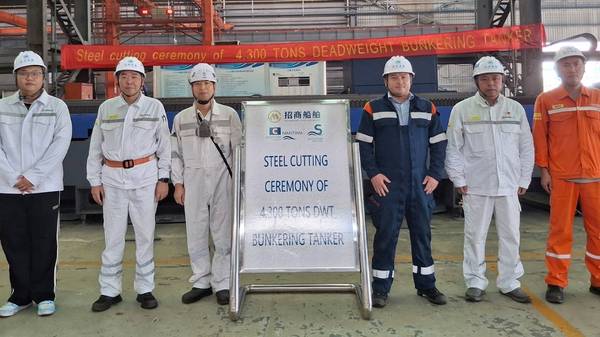
Maritima holds steel-cutting ceremony for Cap Morgiou, first of two Petroineos bunker vessels
Construction starts on bunker vessel able to carry conventional and low-carbon marine fuels, with delivery expected in early 2028. |
|
|
|
||
|
Singapore launches series of measures at SIBCON 2026
MPA announces LNG storage licences, digital bunkering grants and electric harbour craft incentives at 24th conference. |
|
|
|
||
|
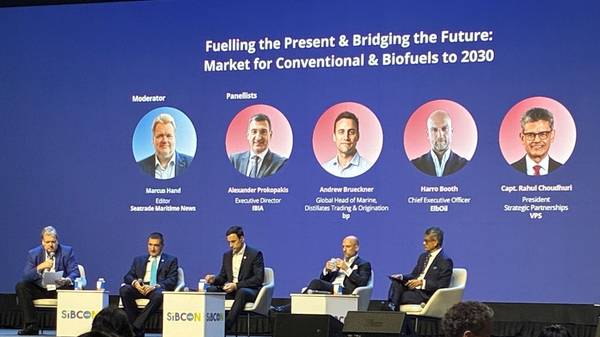
VPS outlines marine fuel standards and quality data at SIBCON 2026
VPS's Rahul Choudhuri addresses Singapore's evolving fuel standards and the quality of conventional fuels and biofuels. |
|
|
|
||
|
Singapore launches ammonia bunkering code and new standards for fuel sampling and polymer testing
MPA and Enterprise Singapore introduce one standard and two technical references at SIBCON. |
|
|
|
||
|
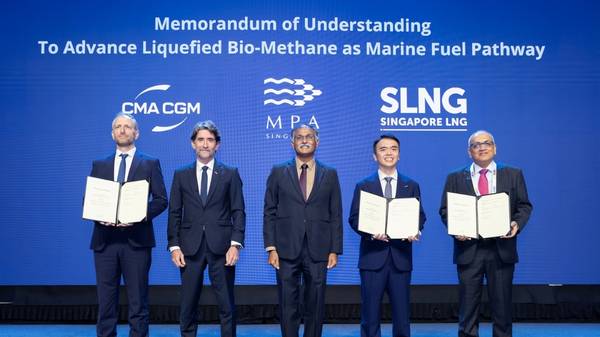
MPA, CMA CGM and SLNG sign MoU to explore liquefied biomethane as a marine fuel in Singapore
Three-way agreement will examine certification, supply and bunkering of LBM using Singapore's existing LNG infrastructure. |
|
|
|
||
|
ROC wins order for PSVs featuring replaceable containerised battery system
Nantong Rainbow Offshore secures 1+1 contract for 4,000 DWT platform supply vessels. |
|
|
|
||
|
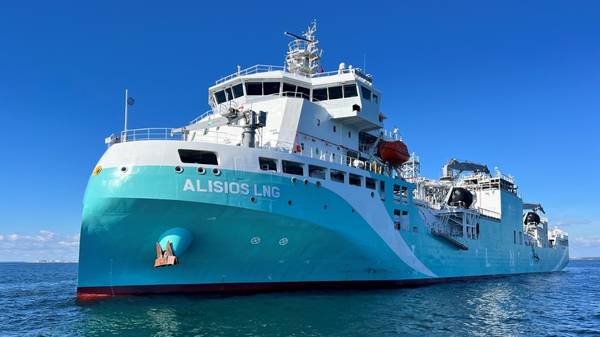
Axpo completes first LNG bunkering in Valencia, with over half bio-LNG
Ship-to-ship transfer to a container vessel makes Valencia the company's fourth Spanish port for LNG bunkering. |
|
|
|
||
|
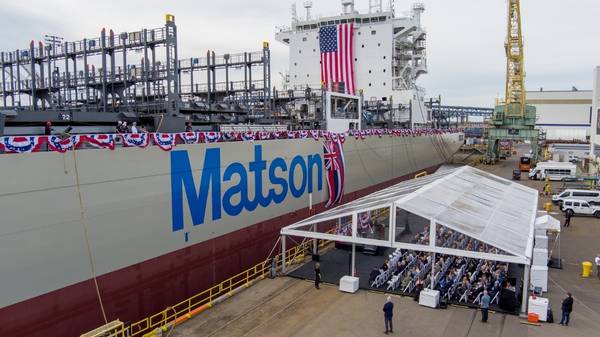
Matson christens Makua, first of three LNG-ready Aloha Class container ships
Dual-fuel vessel, due for delivery in early 2027, is the first of three ships worth around $1bn. |
|
|
|
||
|
CMB.Tech seeks Singapore-based ammonia operations manager for Asia Pacific
New hire will oversee ammonia chartering and bunkering and liaise with Far East partners. |
|
|
|
||
|
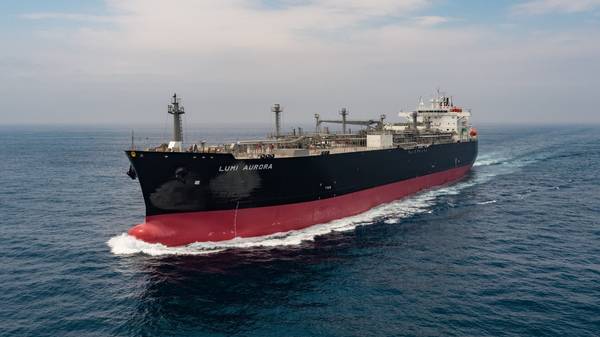
IINO Lines deploys first Ice Class IB VLGC on long-term charter to Borouge International
LPG-fuelled Lumi Aurora will carry North American gas to Borouge International's Porvoo plant in Finland. |
|
|
|
||
| Maritima holds steel-cutting ceremony for Cap Morgiou, first of two Petroineos bunker vessels [News & Insights] |
| Axpo completes first LNG bunkering in Valencia, with over half bio-LNG [News & Insights] |
| Matson christens Makua, first of three LNG-ready Aloha Class container ships [News & Insights] |
| Study finds methanol dual-fuel retrofit of Kamsarmax bulk carrier would take about 75 days [News & Insights] |
| LNG dual-fuel boxship handed over to Eastern Pacific Shipping [News & Insights] |
