
 |
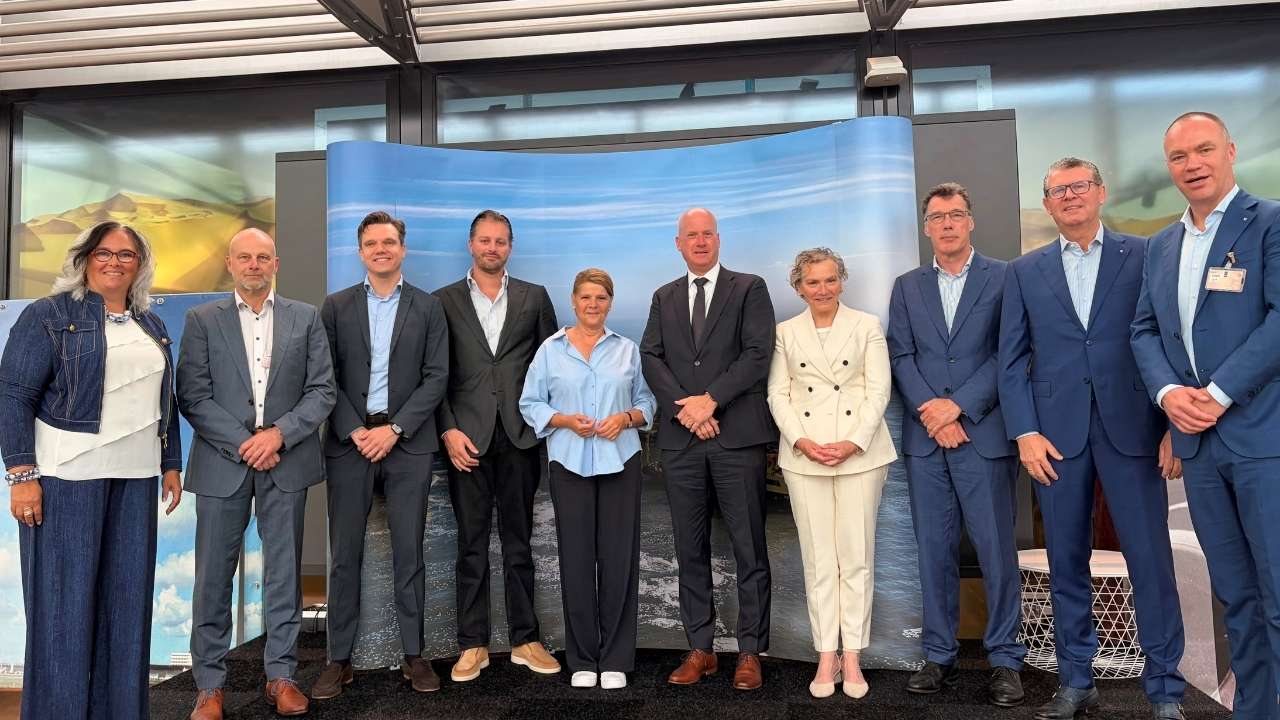
Dutch infrastructure authority Rijkswaterstaat has officially launched the research and development phase of its Power2Tow project, under which three separate consortia will work to develop near-zero-emission emergency response towing vessels (ERTVs) for deployment in the North Sea.
On 30 June, Rijkswaterstaat Director-General Martin Wijnen signed cooperation agreements with all three consortia in Utrecht, marking the start of a structured innovation partnership in which each consortium has been awarded both an assignment and funding to develop and refine its proposed solutions.
The three consortia selected for the R&D phase are: Kustkracht, comprising KOTUG International, IHC Defence, and Bluewater Energy Services; a second consortium comprising Multraship Ocean Towage, Damen Shipbuilding & Cooperation, and Stillstrom; and a third consortium comprising Smit Terminals Europe and Smit Salvage.
Under Power2Tow, the project calls for three electric ERTVs capable of recharging offshore using wind energy. According to Rijkswaterstaat, the vessels will operate electrically wherever possible, while e-methanol will serve as fuel during emergency towing operations. The project also encompasses the development of offshore and onshore charging infrastructure, as well as the provision of operational services over a 25-year period.
Among the stated purposes of the vessels is protecting offshore wind farms from collisions with ships in distress.
A notable feature of the Power2Tow structure is that all three consortia proceed through the R&D phase simultaneously, rather than a single provider being selected at the outset. Each consortium will develop, test and refine its proposed solutions — covering vessel design, charging infrastructure, and operational deployment — before one is ultimately selected to move forward into the construction and operational phase. This is designed to remove the need for a separate procurement procedure at that stage.
Power2Tow forms part of the Fleet Renewal Programme for the Rijksrederij, the Dutch government fleet, through which Rijkswaterstaat is working to modernise government vessels in line with sustainability targets. According to Rijkswaterstaat, the project is also intended to contribute to the maritime sector agenda titled 'No guts, no Hollands glorie!', which aims to give greater consideration to the strategic interests of the Dutch maritime manufacturing industry in government procurement.
The project is being carried out in collaboration with the Ministry of Infrastructure and Water Management, the Ministry of Economic Affairs and Climate, the Dutch Coast Guard, and the interdepartmental National Maritime Manufacturing Office.
|
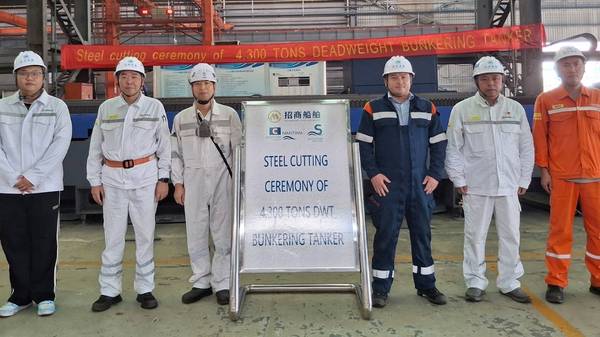
Maritima holds steel-cutting ceremony for Cap Morgiou, first of two Petroineos bunker vessels
Construction starts on bunker vessel able to carry conventional and low-carbon marine fuels, with delivery expected in early 2028. |
|
|
|
||
|
Singapore launches series of measures at SIBCON 2026
MPA announces LNG storage licences, digital bunkering grants and electric harbour craft incentives at 24th conference. |
|
|
|
||
|
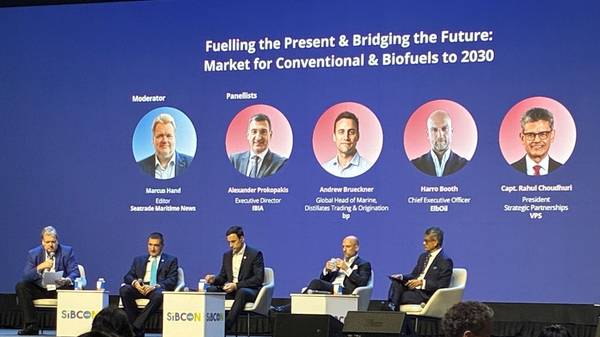
VPS outlines marine fuel standards and quality data at SIBCON 2026
VPS's Rahul Choudhuri addresses Singapore's evolving fuel standards and the quality of conventional fuels and biofuels. |
|
|
|
||
|
Singapore launches ammonia bunkering code and new standards for fuel sampling and polymer testing
MPA and Enterprise Singapore introduce one standard and two technical references at SIBCON. |
|
|
|
||
|
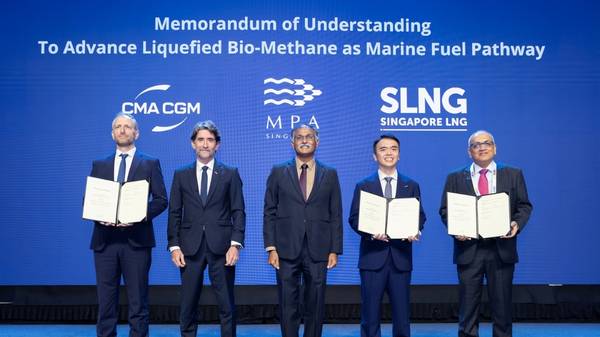
MPA, CMA CGM and SLNG sign MoU to explore liquefied biomethane as a marine fuel in Singapore
Three-way agreement will examine certification, supply and bunkering of LBM using Singapore's existing LNG infrastructure. |
|
|
|
||
|
ROC wins order for PSVs featuring replaceable containerised battery system
Nantong Rainbow Offshore secures 1+1 contract for 4,000 DWT platform supply vessels. |
|
|
|
||
|
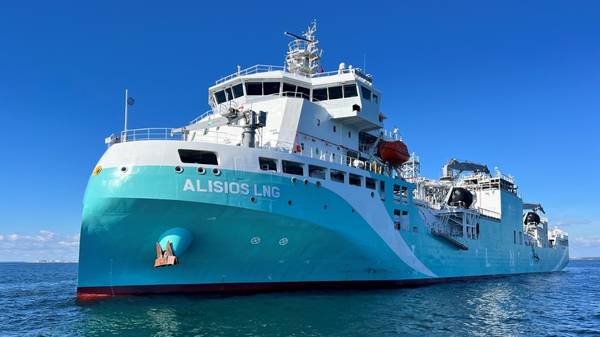
Axpo completes first LNG bunkering in Valencia, with over half bio-LNG
Ship-to-ship transfer to a container vessel makes Valencia the company's fourth Spanish port for LNG bunkering. |
|
|
|
||
|
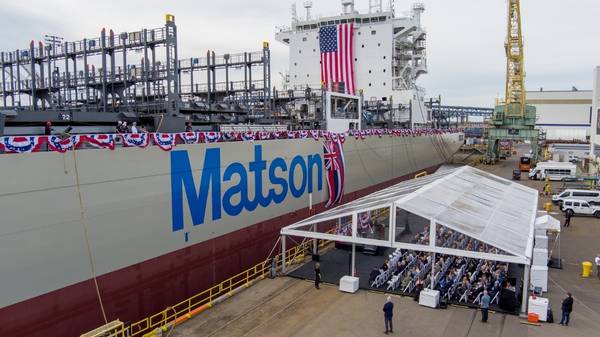
Matson christens Makua, first of three LNG-ready Aloha Class container ships
Dual-fuel vessel, due for delivery in early 2027, is the first of three ships worth around $1bn. |
|
|
|
||
|
CMB.Tech seeks Singapore-based ammonia operations manager for Asia Pacific
New hire will oversee ammonia chartering and bunkering and liaise with Far East partners. |
|
|
|
||
|
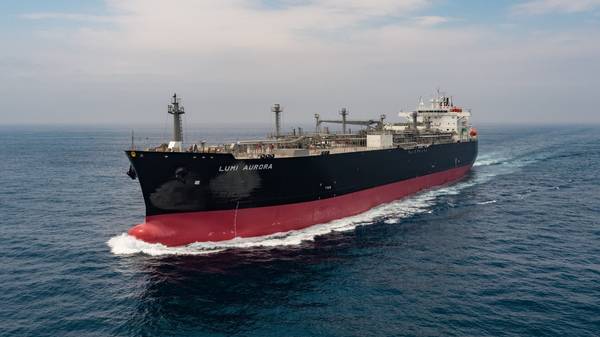
IINO Lines deploys first Ice Class IB VLGC on long-term charter to Borouge International
LPG-fuelled Lumi Aurora will carry North American gas to Borouge International's Porvoo plant in Finland. |
|
|
|
||
| Wagenborg launches first EasyMax 2.0 vessel, prepared for methanol, ammonia and LNG [News & Insights] |
| ClearMariner expands maritime sanctions screening with ESG, emissions and API support [News & Insights] |
| New Times Shipbuilding launches 299,500-DWT LNG dual-fuel crude oil tanker [News & Insights] |
| Changhong International launches fifth 115,000-tonne product tanker for Navios [News & Insights] |
| Pinnacle Marine launches B100-compatible harbour craft Baraka-9 for Trans Wave [News & Insights] |
