
 |
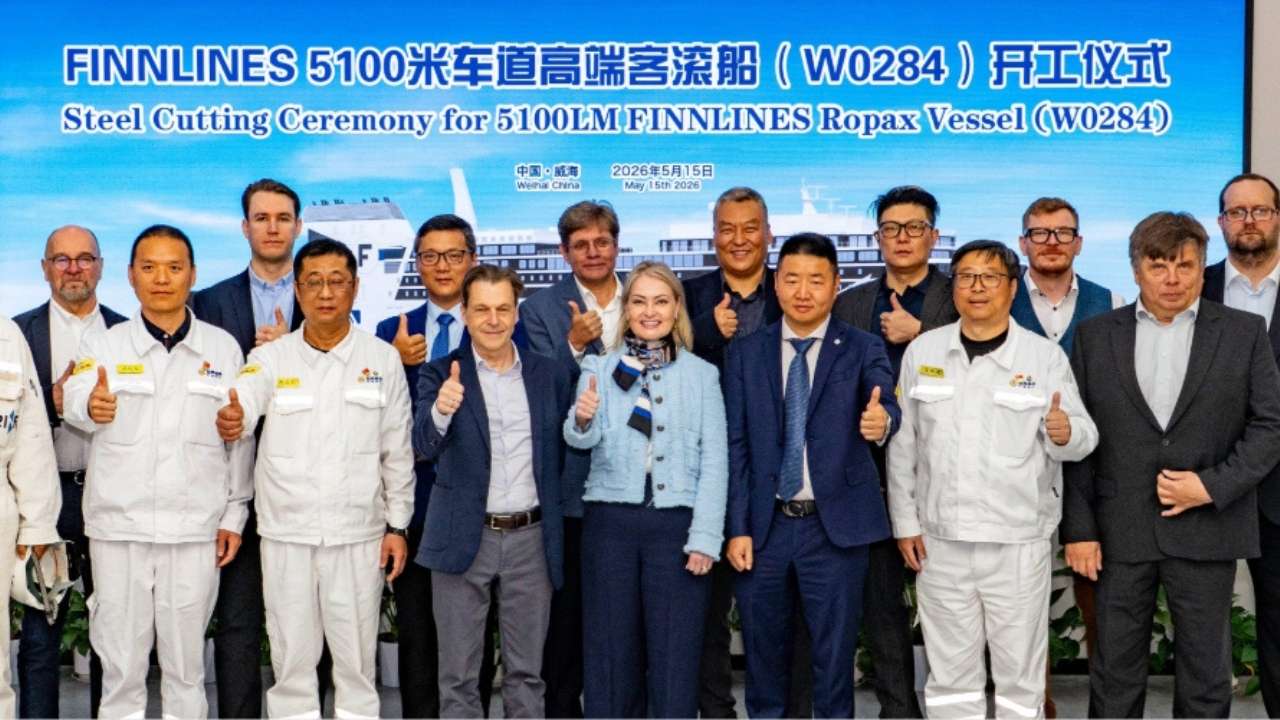
Construction has commenced on the first of three Hansa Superstar class ro-pax vessels ordered by Finnlines, a subsidiary of the Grimaldi Group, at the CMI Weihai Shipyard in China.
A steel-cutting ceremony on 15 May marked the start of work on the vessel, with Captain Juhana Nuru and Technical Superintendent Petri Leino initiating the automated panel line. The three ships represent a total investment of €500m, with the first vessel scheduled to enter service in summer 2028.
The dual-fuel ro-pax vessels will feature methanol-capable engines and are designed to operate on the route between Finland and Germany under the Finnish flag. According to Finnlines, the ships will utilise fossil-free methanol, optimised hull form and propulsion, air lubrication, waste heat recovery, heat pumps, battery banks and shore power to reduce carbon dioxide emissions compared to vessels currently operating on the route.
The vessels will measure approximately 240 metres in length and offer 5,100 lane metres of cargo capacity. They can accommodate up to 1,000 passengers across 321 cabins.
Thomas Doepel, Finnlines President & CEO, said: "With its new Superstar class vessels operating on the Naantali–Kapellskär route, Finnlines introduced the most innovative concept in the ro-pax sector and set a new benchmark for ro-pax traffic in the Baltic Sea. We're now taking this concept to the next level by commencing the construction of an even more versatile series of ships. Continuous investments in our fleet demonstrate our commitment to bringing to Baltic Sea traffic the most modern tonnage, equipped with the best available environmental technology."
Marco Palmu, Finnlines Head of Passenger Services, added: "The Hansa Superstar class vessels are designed to meet the growing transport needs of industry and trade as well as the expectations of passengers. A strong and reliable maritime link between Finland and mainland Europe is a vital element of security of supply and the smooth functioning of supply chains, while at the same time we aim to offer passengers an increasingly high-quality and comfortable travel experience."
The three Hansa Superstar class ships are part of Finnlines' 20-year development programme, which includes the acquisition and construction of 20 vessels. The remaining two vessels are scheduled to enter service in 2028 and 2029.
CMI Weihai Shipyard is part of China Merchants Group.
|
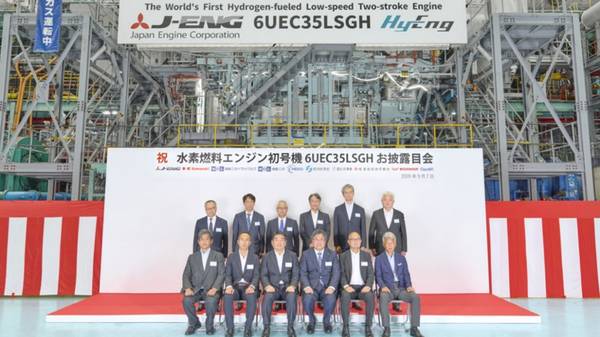
Japan Engine completes land-based testing of landmark hydrogen-fuelled engine for large vessels
Hydrogen co-firing rate of at least 95% achieved during factory testing. |
|
|
|
||
|
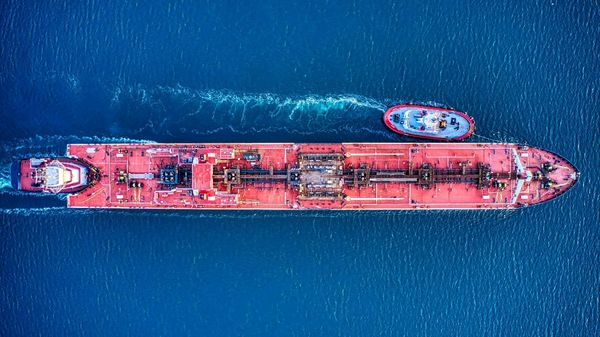
Ethanol edges into shipping’s fuel mix as methanol crossover eases adoption barriers
Rising interest from cargo owners, shared technology with methanol and Brazilian production growth push ethanol beyond regional niche status. |
|
|
|
||
|
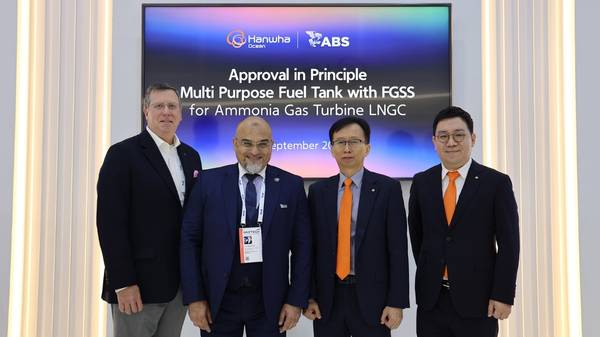
ABS grants Hanwha Ocean approval for dual-fuel tank enabling LNG-to-ammonia switch
In-principle approval awarded for fuel tank and supply system enabling LNG carriers to convert to ammonia without replacement. |
|
|
|
||
|
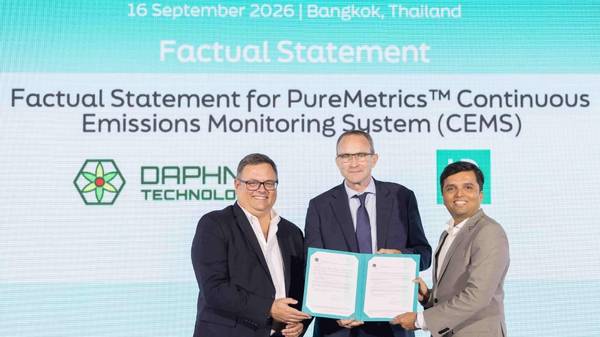
Lloyd's Register confirms suitability of Daphne Technology's emissions monitoring system
Factual Statement validates the PureMetrics design for monitoring greenhouse gas emissions from marine engines. |
|
|
|
||

|
IMO issues shipboard biofuel blend checklist developed by IBIA
Checklist for FAME-based biofuels formally incorporated into IMO document, supporting crews handling biofuel blends for the first time. |
|
|
|
||
|
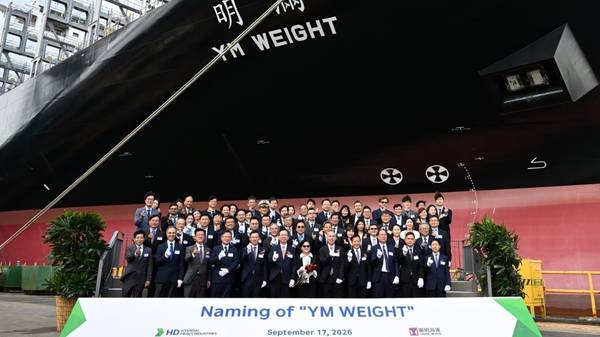
Yang Ming names fourth LNG dual-fuel container vessel YM Weight
Newbuild features high-pressure dual-fuel main engines capable of running on either LNG or low-sulphur fuel oil. |
|
|
|
||
|
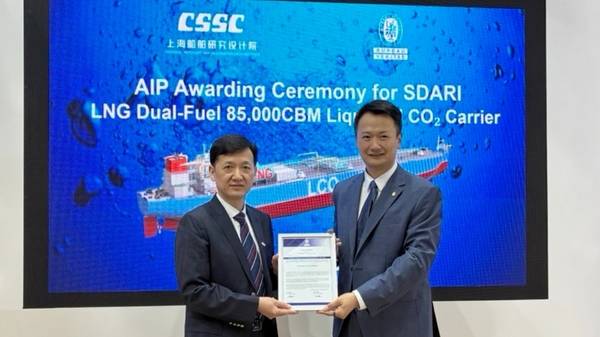
Bureau Veritas grants AiP to SDARI’s LNG dual-fuel liquefied CO₂ carrier design
Classification society approves 85,000-cbm vessel concept designed to support the growing carbon capture and storage sector. |
|
|
|
||

|
JuWonOil looking to strengthen with two Houston hires
Texas-based firm is recruiting a marine lubricants sales executive and a marine fuels and distillates trader. |
|
|
|
||
|
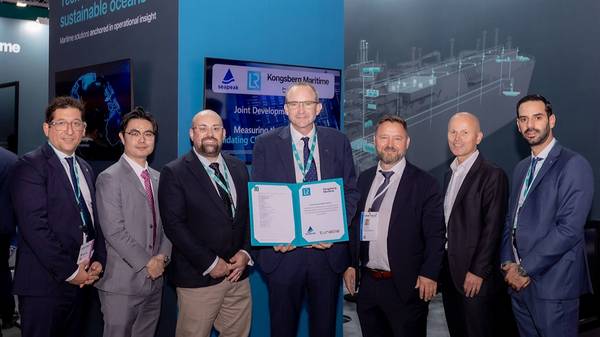
Four firms partner to trial continuous emissions monitoring on LNG carrier
LR, Seapeak, Kongsberg Maritime and Tunable will test onboard CO₂ monitoring against engine data and default emissions factors. |
|
|
|
||
|
Bunker Holding reshuffles commercial leadership across brand portfolio
Appointments announced across KPI OceanConnect, Glander International Bunkering and its digital sales operations. |
|
|
|
||
| Japan Engine completes land-based testing of landmark hydrogen-fuelled engine for large vessels [News & Insights] |
| Japan Engine completes land-based testing of landmark hydrogen-fuelled engine for large vessels [News & Insights] |
| Yang Ming names fourth LNG dual-fuel container vessel YM Weight [News & Insights] |
| Four firms partner to trial continuous emissions monitoring on LNG carrier [News & Insights] |
| TB Marine takes over technical management of methanol-ready tanker [News & Insights] |
