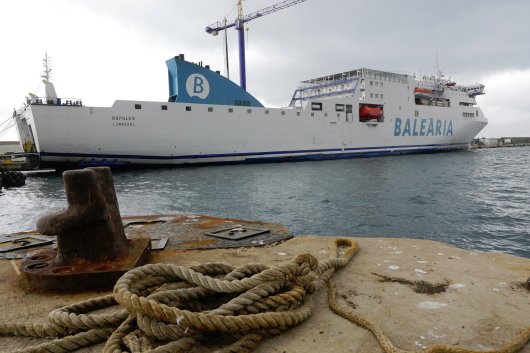
Balearia has commenced the first of
six planned retrofits to LNG propulsion, starting with the ferry
Naples.
The vessel arrived on Sunday at Gibdock shipyards in Gibraltar, where the modification of the engines and the installation of the LNG tank is to be carried out. Completion is scheduled for February 15.
The ship's two current MAN 9L48/60 engines are to be replaced by 9L51 / 60DF LNG engines. This, Balearia says, will result in an annual CO2 reduction of 9,113.45 tonnes and a decrease in NOx emissions of 871.37 tonnes per year.
With a
440-cubic-metre-capacity Wartsila LNG fuel tank, the Naples will be able to travel 1,200 miles without refuelling. The gas pipes are being supplied by Cryospain, while the engineering project has been led by Cotenaval.
The estimated cost of the Naples work is
EUR 12m, with approximately
20 percent funded via the European Union's Connecting Europe Facility (CEF). Overall, Balearia plans to spend EUR 72m on its LNG retrofits - EUR 11.8m of which will be financed by the EU.
In addition to the Naples, Balearia plans to change the engines of the
Abel Matutes,
Bahama Mama,
Martin i Soler and
Sicily, plus another unnamed ferry (without CEF funding).
As previously reported, Balearia is also building two new, dual-fuel, gas-powered ferries at the Cantiere Navale Visentini shipyard in Italy. The first is expected to be operational in the first quarter of next year.
And the LNG-fuelled ferry that was ordered in 2016 from Construcciones Navales del Norte SL (LaNaval) shipyard in Sestao, Spain, is scheduled to enter into regular service in 2019.
Balearia stated last month that it intends to have at least
half of its ferry fleet running on LNG within the next three years, and all of its ships using the gas fuel by
2028.