Tue 26 Jun 2018, 09:31 GMT

Skangas performs first ever LBG bunker delivery


Liquefied biogas supplied to the Fure Vinga in Gothenburg.


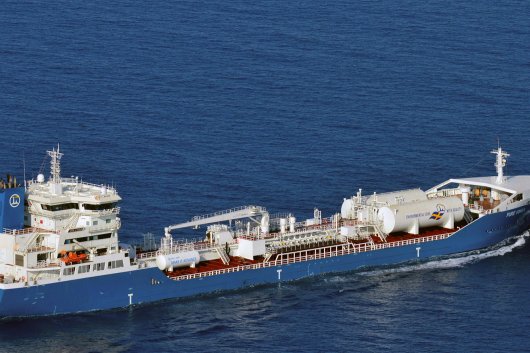
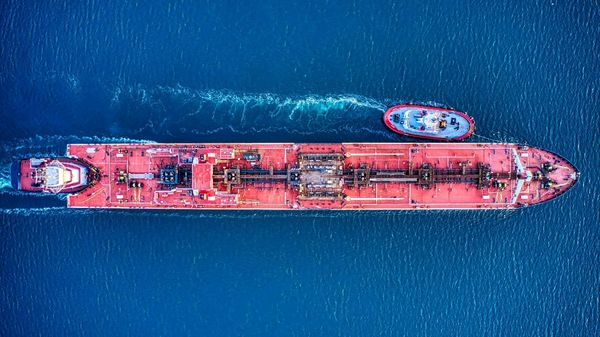
Furetank Rederi's newbuild chemical tanker, the Fure Vinga, is able to run on both liquefied natural gas (LNG) and liquefied biogas (LBG).
Image credit: Skangas
Skangas reports that it supplied Furetank Rederi's recently launched Fure Vinga with liquefied biogas (LBG) during the vessel's recent call to Gothenburg.

The LBG product was transported from the biogas facility of Skangas's parent company, Gasum, located in Lidkoping - aproximately 130 kilometres north-west of Gothenburg.

The Fure Vinga was supplied with LBG via a truck-to-ship operation.

In a statement, Skangas explained that, because both LNG and LBG mainly consist of methane gas, the existing LNG supply infrastructure can be used for the delivery of LBG without any modifications - meaning that the same trucks, ships, tanks and marine filling stations can be used for both products.

Lars Hoglund, CEO of Furetank, commented: "Running vessels on liquefied natural gas is our contribution to a more environmentally friendly environment. We will, however, contribute by increasing the sustainability. Using liquefied biogas was a natural step in this direction."

"No doubt LBG will be a clear option for us. It is proven by this operation that it can be available from our existing LNG supplier and not at least with the same quality as our current LNG fuel," Hoglund added.

Tommy Mattila, sales and marketing director at Skangas, said: "This is the first time we are supplying LBG to a marine customer."

"To be increasingly greener with renewable biogas is possible because we use the same infrastructure that we've built throughout northern Europe. This [means] that LNG and LBG will continue to walk hand in hand as the availability of LBG on the market is on the rise."

The Fure Vinga was delivered in April and bunkered with LNG for the first time in Europe on May 19 - at the Spanish port of Cartagena. The vessel's maiden LNG delivery in Amsterdam was recently performed by Titan LNG.

According to ship-tracking data, the Fure Vinga last departed from the port of Gothenburg during the early hours of June 26 and was heading for the Swedish port of Donso.

Map showing existing and planned Emission Control Areas (ECAs). IMO adopts Northeast Atlantic ECA covering waters from Portugal to Greenland  

New ECA to enter into force in September 2027, connecting existing European zones with Canadian Arctic waters.

Renewable and low-carbon methanol project pipeline chart as of April 2026. Renewable methanol project pipeline reaches 61 MMT as China groundbreakings accelerate  

GENA Solutions reports pipeline growth despite concerns over construction readiness for Chinese projects.

Rendering of a diesel-electric chemical tanker. Berg Propulsion to supply propulsion system for Akdeniz-built chemical tanker  

Turkish shipyard Akdeniz orders diesel-electric propulsion package for an 8,000-dwt vessel destined for Transka Tankers.

Ningyuan Diankun vessel. China Classification Society certifies 740-teu pure-electric container ship  

Ning Yuan Dian Kun features battery-swapping capability and is claimed to eliminate 1,462 tonnes of CO2 annually.

UK ETS and FuelEU Maritime event graphic. Lloyd’s Register to host UK ETS and FuelEU Maritime briefing in London  

Event on 12 May will examine maritime emissions regulations ahead of UK ETS expansion.

Ruri Planet vessel. Japanese shipbuilder delivers dual-fuel LNG bulk carrier Ruri Planet  

The 209,000-tonne Capesize vessel can run on heavy fuel oil or LNG.

L&T Energy GreenTech and Itochu agreement signing. L&T Energy GreenTech signs 300,000-tonne green ammonia supply deal with Itochu  

Indian firm to supply Japanese trading house from planned Kandla facility for marine fuel applications.

CMA CGM Iron vessel. Methanol-powered container ship is named CMA CGM D’Artagnan  

French shipping group adds vessel to methanol fleet as part of net-zero target.

Maersk Tahiti vessel. Bound4blue completes second suction sail installation for Maersk Tankers  

Four 24-metre eSAIL units fitted on Maersk Tahiti at Chinese shipyard in April.

Aerial view of Port of Yokohama. Asia-Pacific ports advance cross-sector hydrogen and e-fuel infrastructure  

Accelleron report highlights a coordinated approach combining energy, industry and shipping demand to stimulate market development.