K Line Group and
Uyeno Group of Companies have joined
SEA\LNG - the multi-sector industry coalition aiming to accelerate the widespread adoption of LNG as a marine fuel.
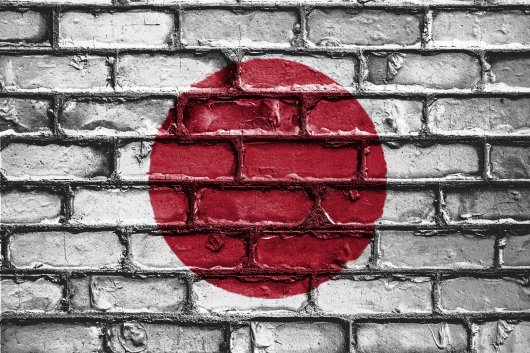
The two firms join a list of other Japanese businesses to form part of the LNG bunker coalition over the last nine months since
Marubeni Corporation was the country's first to become a member in May 2017.
Other companies now also forming part of the coalition include
Yokohama-Kawasaki International Port Corporation (YKIP), Mitsubishi Corporation, Mitsui & Co., NYK Line, Toyota Tsusho Corporation and Sumitomo Corporation.
Commenting on the news,
Peter Keller, SEA\LNG chairman and executive vice president, remarked: "Collaboration, demonstration and communication on key areas such as safety, regulation, emissions and the economic case for LNG are essential to strengthening the increasing confidence and demand required for an effective and efficient global LNG value chain by 2020. Our members in Japan are doing important work, both in the region and across the world, which contributes significantly to helping us achieve our mission."
SEA\LNG says it sees Japan as growing in importance as a location for LNG-fuelled shipping and bunkering.
Japan is the world's biggest importer of LNG, with 35 regasification terminals. In 2016, it accounted for approximately 34 percent of global LNG imports, representing some 86 million tonnes of LNG. As such, Japan, looks well placed in terms of both infrastructure and supply to become a key LNG bunkering hub.
K Line is an integrated logistics company which owns and operates various fleets tailored to worldwide marine transportation needs. In April 2017, the group launched a new business division devoted to the transportation of LNG and LPG to broaden its involvement in both the upstream and downstream business of the global energy value chain.
Satoshi Kanamori, general manager of liquefied gas new business group, K Line, commented: "We expect long-term global demand for LNG to grow as a clean energy resource. In addition to conventional LNG transport operation, our new division will also spearhead efforts to enter new business fields, such as floating storage and regasification units (FSRUs) which can cope with the needs of emerging economies that require shorter lead times. Working with SEA\LNG, we hope to collaborate with organisations from across the LNG value chain to improve bunkering infrastructure and stimulate demand for LNG across the Asia-Pacific region, and beyond."
Uyeno Group is a group of organisations which provides specialised logistics solutions for the storage and transportation of petroleum and petrochemical products. Established in Yokohama in 1869, the organisation expanded into South East Asia early in its lifespan and has a wealth of experience in the operation of bunker barges and shuttle tankers.
Kazutoshi Takao, executive managing officer, Uyeno Group, said: "As attitudes and regulations surrounding the marine and energy sectors transform with the times, Uyeno Group is diversifying its business offering into the clean energy business. We have a sound reputation in the safe and efficient storage and transportation of gas and petrochemical products; we look forward to engaging with Japan's growing LNG market and leveraging our decades of experience to further SEA\LNG's global mission."
The LNG bunker coalition said: "SEA\LNG remains committed to uniting knowledge and expertise from across the value chain, including shipping companies, ports, major LNG suppliers, classification societies, downstream companies, infrastructure providers, shipyards, and OEMs. The coalition's membership continues to be a strong voice advocating for LNG as a cost effective, safe, and more environmentally friendly long-term fuelling solution."