Tue 19 Apr 2016, 10:48 GMT

Genoil secures $5bn funding for desulphurization project


Goal is to develop 3.5 million bpd of desulphurization capacity at a total estimated cost of $35-50 billion.


Genoil Inc., a publicly traded clean technology engineering company for the petroleum industry, today announced, in conjunction with consortium partner Beijing Petrochemical Engineering Co Ltd (BPEC), the receipt of a $5 billion letter of intent (LOI) for the funding of a 500,000-barrel-per-day (bpd) desulfurization and upgrading project located in the Middle East. The project will see the implementation of Genoil's proprietary technology producing 500,000 barrels per day of low-sulphur crude oil.

According to Genoil, the funding from "one of the largest banks in China" cited in the LOI, will cover the project cost, and will be presented to "a major party in the Middle East".

For this project, the goal of the consortium is to develop 3.5 million bpd of desulfurization capacity at a total estimated cost of $35-50 billion. Financing will be subject to a number of conditions and approval of the contract terms by all parties.

The project comes at a time where there is concern of a pending shortfall of distillate fuel compliant with the current International Maritime Organization's (IMO) MARPOL Annex VI regional regulations, which specifies 0.1 percent sulphur as well as a proposed global cap of 0.5 percent, expected to be fully legislated by 2020.

Genoil is marketing its GHU technology to the shipping industry, where it is able to produce low cost compliant low-sulphur fuel oil (LSFO) from refinery residue without the need for blending, and to be priced much more competitively than marine gas oil (MGO).

Currently, almost all of the heavy fuel oil (HFO) contains high levels of sulphur and particulate matter (PM) emissions. While refineries are facing the considerable capital expenditure to produce more middle distillates, there are already suppliers in various ports around the world producing and selling blended 0.1 percent ultra-low-sulphur fuel oil (ULSFO) as an alternative solution at price levels on average between 10 and 15 percent lower than MGO. Genoil says its technology can produce unblended LSFO at up to 75 percent less cost.

Commenting on the development, Bruce Abbott, President and Chief Operating Officer, Genoil, said: "With Genoil's GHU technology we can take refinery residue and turn it into LSFO meeting 2020 legislation. With financial and engineering support from around the world, we are committed to developing sustainable sources that will help solve some of the energy challenges that we face today. The shipping industry is experiencing increased environmental regulation, and seismic change within the fuel supply chain. Genoil's ability to provide the industry with compliant products in time to meet 2020 regulations will go a long way to alleviating the pressure on refiners, charterers, ship owners, as well as fuel suppliers in having access to adequate, cost effective products."

Genoil added that another project for 1 million bpd is currently under consideration by a second national (unnamed) oil company. "Additional funding for future projects will be considered on a project-by-project basis," the company said.

ABB   BP   Deal   IMO   MGO   ULSFO   China 

Tangier Maersk vessel. Maersk completes first US ethanol bunkering of a deep-sea container ship  

Shipper tests US-produced corn ethanol as a marine fuel aboard the Tangier Maersk.

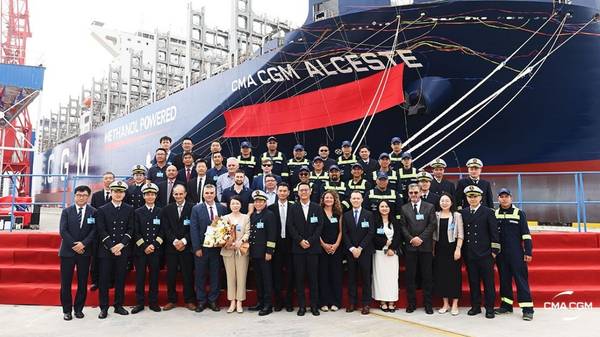
CMA CGM Alceste naming ceremony. CMA CGM names methanol-powered vessel after Molière’s Alceste  

Ship features a MAN B&W 8G85ME two-stroke engine configured to run on conventional marine fuel and methanol.

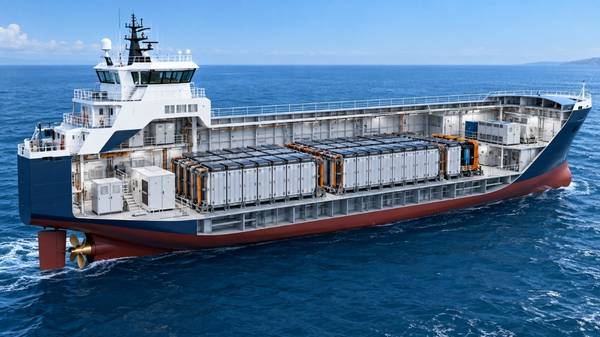
Cutaway illustration of a battery-electric ship. Why batteries still cannot power ships across oceans  

Battery-electric ships dominate short-sea routes, but energy-density and infrastructure constraints keep deep-sea propulsion out of reach.

VPS logo. VPS to run marine fuel management course in Singapore  

Two-day programme in November covers fuel handling, testing and decarbonisation rules, including a laboratory tour.

Rio de Janeiro aerial view. Petrobras launches HSFO bunker sales in Rio de Janeiro  

Brazilian supplier begins prompt HSFO deliveries in Rio, pricing the fuel more than $80 per tonne below VLSFO.

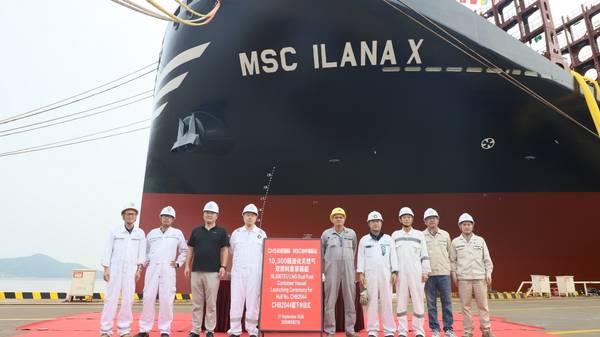
Launching ceremony of MSC Alina X. Changhong International launches eighth LNG dual-fuel container ship for MSC  

10,300-TEU vessel is designed to meet ammonia- and methanol-ready specifications.

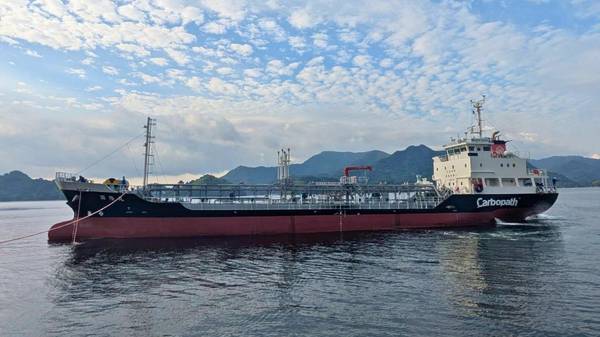
Kokuryu Maru vessel. Japan completes first methanol-fuelled coastal vessel and conducts inaugural bunkering  

Mitsubishi Gas Chemical, Kokuka Sangyo and Hanshin Diesel Works mark the completion of methanol-fuelled chemical tanker Kokuryu Maru.

Eleven Energy logo. Eleven Energy recruiting trader for new Singapore office  

Saudi bunkering firm looking to hire in Asian city-state ahead of planned January 2027 start date.

Singapore skyline. VPS advertises for bunker surveyor role in Singapore  

Testing and inspection firm seeks candidate to conduct bunker fuel surveys under Singapore Standards SS 648 and SS 600.

RCL vessels naming ceremony. RCL names first three of eight dual-fuel-ready 4,488-TEU vessels in China  

Regional Container Lines takes delivery of Anitta Bhum on day of naming ceremony.