Wed 21 Jan 2015, 13:03 GMT

ExxonMobil MGO now available at Le Havre


Oil major is now offering a dedicated MGO barge delivery service to clients at the French port.


ExxonMobil Marine Fuels & Lubricants has announced that it has expanded the availability of its marine gas oil (MGO) to include the French port of Le Havre.

In an emailed statement, the oil major explained that the expansion is designed to help vessel operators meet the Emissions Control Area (ECA) 0.10 percent sulphur limit, which came into force on January 1, 2015.

"ExxonMobil is the first supplier to make MGO available to vessel operators in Le Havre via dedicated barge delivery. This provides faster, more efficient refueling, when compared with truck deliveries, and ensures that the required fuel volumes are available for vessels with small and big stem sizes, starting from 40mt," the company said.

Luca Volta, general manager EAME, ExxonMobil Marine Fuels and Lubricants, remarked: "We have increased the availability of MGO to help marine operators comply with the new ECA legislation. In addition, by offering MGO at Le Havre via barge delivery, marine operators will benefit from a faster and more efficient fuel delivery process.

"ExxonMobil now supplies MGO at more than 40 ports worldwide, providing marine operators with our expertise, products and services on a Global level."

The expansion of MGO availability follows the recent launch of ExxonMobil Premium HDME 50, a new category of marine fuel that is said to contain a low sulphur content associated with MGO and the higher flashpoint and lower volatility properties typically found in heavy fuel oil (HFO).

"The new fuel has been formulated to meet the 2015 ECA sulphur limit and can help marine engineers to safely and efficiently operate their engines and boilers," ExxonMobil said, adding that it will continue to expand its ECA-compliant fuel offering throughout 2015.

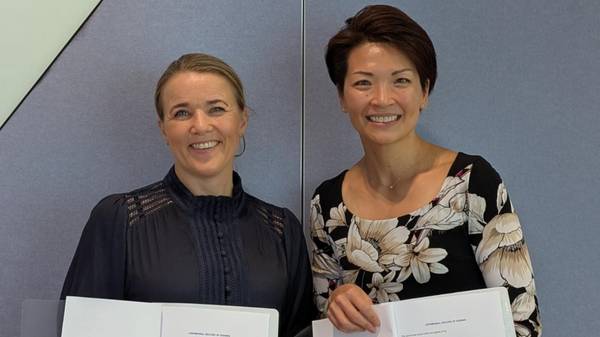
Tangier Maersk vessel. Maersk takes delivery of first methanol-capable vessel in 9,000-teu series  

Tangier Maersk is the first of six mid-size container ships with methanol-capable dual-fuel engines.

IBIA MFM bunkering training course graphic. IBIA to run surveyor training course for mass flow meter-equipped bunkering in Rotterdam  

One-day course scheduled for 19 February aims to prepare professionals for MFM-equipped bunkering operations.

CO2 carrier vessel aerial view. MOL secures two 12,000-cbm CO2 carriers for Northern Lights expansion  

Japanese shipowner to deliver vessels in 2028 for cross-border carbon transport and storage project.

MOL and ONGC VLEC long-term charter signing. MOL and ONGC sign 15-year charter deal for two ethane carriers  

Japanese shipowner expands fleet to 16 vessels with newbuildings scheduled for delivery in 2028.

Vessels at sea. Dual-fuel container ship and vehicle carrier fleet reaches 400 vessels  

World Shipping Council reports 83% increase in operational dual-fuel vessels during 2025.

Photograph of a blue cargo vessel. Lloyd’s Register publishes first guidance notes for onboard hydrogen generation systems  

Classification society addresses regulatory gap as shipowners explore producing hydrogen from alternative fuels onboard.

Erasmusbrug bridge in Rotterdam. Rotterdam bunker industry faces upheaval as new regulations drive up costs and shift volumes  

Red III compliance costs and a mass flow meter mandate are creating operational challenges across the ARA region.

Neil Chapman, VPS. VPS appoints Neil Chapman as managing director for the Americas  

Maritime services company names industry veteran to lead regional operations and client partnerships.

Oil refinery infrastructure. Maritime industry shifts towards LNG as alternative fuel enthusiasm stalls  

Geopolitical concerns drive shipping leaders to prioritise established fuels over newer alternatives, survey finds.

OceanScore logo. OceanScore reaches $5m annual recurring revenue as emissions compliance demand grows  

Hamburg-based firm supports compliance workflows for more than 2,500 vessels as regulations enter operational phases.