Thu 13 Nov 2014, 13:21 GMT

Matson-Horizon bunker surcharge war finally over


Horizon Lines reached agreements to sell its business to Matson Inc. and The Pasha Group earlier this week.


Horizon Lines, Inc. has this week agreed to sell its Alaska business to Matson Inc. in a deal worth $456.1 million. The US firm has also reached an agreement to sell its Hawaii operations to The Pasha Group for $141.5 million and confirmed that it will be closing down its Puerto Rico liner operations by the end of 2014 due to "continuing losses without the prospect of future profitability".

Following years of raising and lowering bunker surcharges in response to its main competitor in Hawaii, Matson, the deals with Matson - Hawaii's leading shipper - and The Pasha Group effectively mean that Horizon Lines' bunker surcharge war with its main rival in Hawaii is now over.

According to a Matson agreement, Matson will acquire all outstanding shares of Horizon Lines for $0.72 per share in an all-cash transaction. The acquisition price represents a premium of approximately 89% over Horizon's closing stock price on November 10, 2014.

In a statement, Horizon Lines said: "The Matson agreement has been unanimously approved by Horizon's Board of Directors and Horizon shareholders representing 55% of the fully diluted equity, which also represents 41% of the outstanding voting common stock on November 11, 2014, have agreed to vote their shares in support of the transaction."

Under a separate agreement with The Pasha Group - a family-owned global logistics and transportation company - Pasha will acquire Horizon Lines' Hawaii trade lane business, prior to closing of the Matson agreement, for approximately $141.5 million in cash.

"The proceeds from the Pasha transaction will reduce Horizon Lines' debt obligations prior to closing of the Matson transaction, at which time Matson will acquire all of the outstanding shares of Horizon Lines and repay the remaining debt outstanding at closing. The Pasha agreement has been unanimously approved by Horizon's Board of Directors," Horizon Lines said.

The two transactions taken together are valued at approximately $598 million on an enterprise value basis.

Matson said it will fund its transaction from cash on hand and available borrowings under its revolving credit facility. Pasha is to fund its transaction from a committed debt financing agreement. There are no financing conditions to either transaction.

David N. Weinstein, Chairman of the Board of Directors of Horizon Lines, Inc., commented, "These transactions will place our company in the hands of strong stewards with reputations for outstanding customer service. Matson has over 130 years of shipping experience and is guided by a rich history of integrity and innovation. Pasha is a third generation, family-owned business with a proud heritage of excellence and deep ties to the Hawaiian community. Both Matson and Pasha are well-positioned to serve our valued customers."

Steve Rubin, President and Chief Executive Officer of Horizon Lines, Inc., said: "Our Board and management team have been working diligently to improve Horizon Lines' financial and operational performance while continuing to provide superior service across all our trade lanes. These transactions are a direct reflection of those efforts, and will enable the proud heritage of Horizon Lines to be passed on to Matson and Pasha."

"This transaction provides value for our shareholders while upholding our financial commitments. We wish the Matson team continued success in their new Alaska trade and we look forward to working with them to close this transaction and provide a seamless transition for our customers," Rubin added.

"The acquisition of Horizon's Alaska operations is a rare opportunity to substantially grow our Jones Act business," remarked Matt Cox, President and Chief Executive Officer of Matson. "Horizon's Alaska business represents a natural geographic extension of our platform as a leader serving our customers in the Pacific. We expect this transaction to deliver immediate shareholder value through earnings and cash flow accretion via significant cost and operating synergies. We are also encouraged by the long-term prospects of the Alaska market, which mirrors Hawaii in many operational ways, despite different underlying economic drivers. Both markets depend on reliable, superior and timely container cargo service as part of vital supply lifelines – hallmarks of the Matson brand."


Christos Doulaveris, Flex Commodities. Flex Commodities appoints Christos Doulaveris as general manager for Greece  

Bunker trader strengthens its Greek operations with a new leadership appointment.

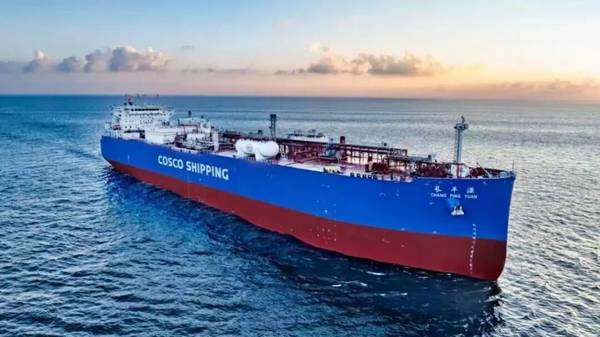
Chang Ping Yuan vessel. China delivers first domestically built VLGC under Chinese flag  

Cosco Shipping’s new 88,000-cbm gas carrier features an LPG dual-fuel main engine.

IMO, GreenVoyage2050 and Republic of Türkiye MoTI logos. Electric and hybrid ferries could cut Sea of Marmara emissions by 63%, IMO study finds  

A GreenVoyage2050 study finds that electrification could slash emissions, avoid €492 million in damage costs and support jobs.

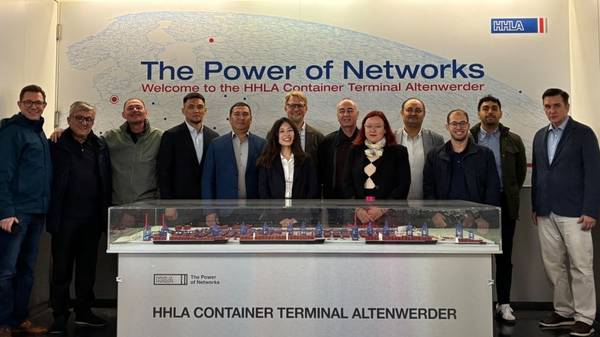
Study visit to Hamburg, Germany, on sustainable port development. Batumi Sea Port officials study decarbonisation practices in Hamburg  

Georgian port representatives visited Hamburg to study emissions accounting, hydrogen technology and automation ahead of their 2026 recertification audit.

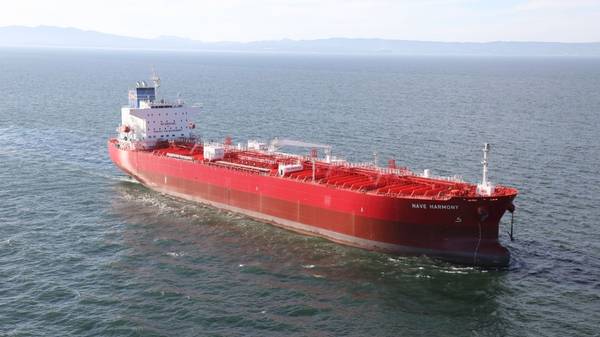
Nave Harmony vessel. Navios Partners takes delivery of methanol-ready MR2 tanker Nave Harmony  

Shipowner adds 49,998-DWT newbuild product tanker equipped with methanol-ready technology.

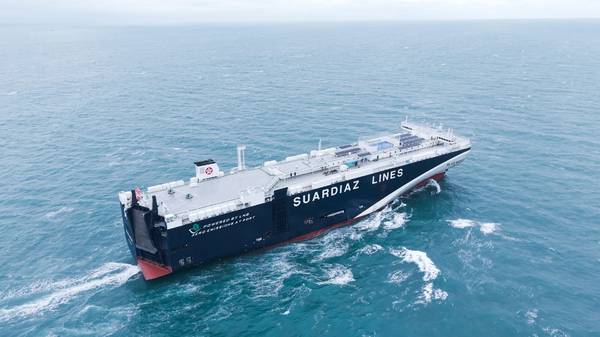
RS Atlantico vessel. Eastern Pacific Shipping delivers LNG dual-fuel PCTC to Suardiaz  

RS Atlantico is the first mid-sized 5,500-CEU car carrier built through the EPS–Suardiaz partnership.

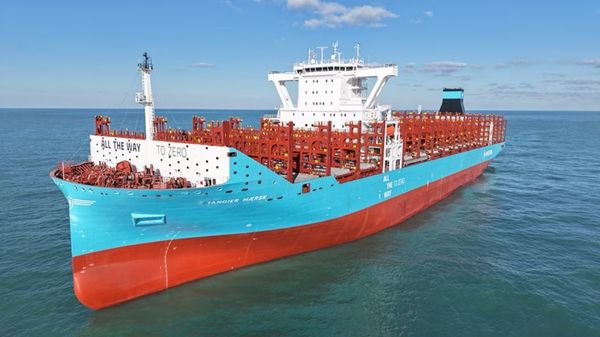
Tangier Maersk vessel. Maersk completes first US ethanol bunkering of a deep-sea container ship  

Shipper tests US-produced corn ethanol as a marine fuel aboard the Tangier Maersk.

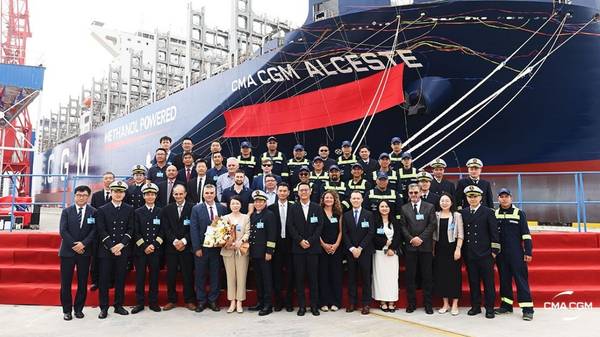
CMA CGM Alceste naming ceremony. CMA CGM names methanol-powered vessel after Molière’s Alceste  

Ship features a MAN B&W 8G85ME two-stroke engine configured to run on conventional marine fuel and methanol.

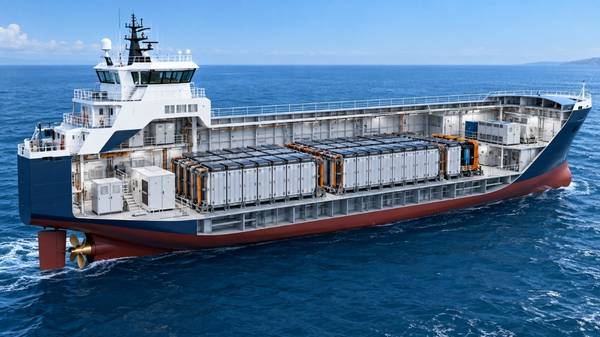
Cutaway illustration of a battery-electric ship. Why batteries still cannot power ships across oceans  

Battery-electric ships dominate short-sea routes, but energy-density and infrastructure constraints keep deep-sea propulsion out of reach.

VPS logo. VPS to run marine fuel management course in Singapore  

Two-day programme in November covers fuel handling, testing and decarbonisation rules, including a laboratory tour.