Mon 10 Sep 2012, 14:10 GMT

Matson raises bunker surcharge


Shipper cites the recent increase in bunker prices as the reason for its surcharge rise.


Shipping company Matson Navigation Co. has announced that it will be raising its fuel surcharge for shipments between the US mainland and Hawaii, Guam, the Commonwealth of the Northern Mariana Islands (CNMI) and Micronesia, effective Sunday, October 7.

Matson, Hawaii's largest ocean shipper, said that it will be increasing its fuel charge by 4.5 percentage points, from 39 to 43.5 percent, for its Hawaii service.

The new fee is the fourth to be implemented this year. It follows a 3 percent reduction in July, a 3.5 percent cut in June and a surcharge rise of 5 percentage points to 45.5 percent on February 26. That adjustment followed three consecutive decreases over a six-week period between August 28 and October 9 last year.

Matson will also be increasing its fuel surcharge for shipments to Guam, the Commonwealth of the Northern Mariana Islands (CNMI) and Micronesia by 4.5 percentage points from 35.5 to 40.0 percent.

"While we were encouraged by the moderation of bunker fuel prices earlier this year, that trend has been reversed in recent months," said Dave Hoppes, senior vice president, ocean services.

"Since announcing our last decrease in mid-July, bunker fuel prices have risen over 13%. As with all increases, Matson gives our customers 30 days advance notice prior to implementation. We will continue to monitor fuel prices and adjust the surcharge accordingly.”

Please find below a surcharge summary for Matson's Hawaii service since February 2008.

Feb 4, 2008 - 31.5%
Apr 6, 2008 - 33.75%
Jul 13, 2008 - 38.25%
Aug 31, 2008 - 42.25%
Sep 21, 2008 - 37.50%
Oct 12, 2008 - 33.0%
Oct 19, 2008 - 27.0%
Nov 2, 2008 - 25.0%
Nov 16, 2008 - 19.5%
Nov 30, 2008 - 15.0%
May 24, 2009 - 16.5%
Jun 21, 2009 - 20.0%
Jul 5, 2009 - 28.0%
Oct. 4, 2009 - 24.0%
Feb. 7, 2010 - 27.5%
Jul 18, 2010 - 25.5%
Sep 12, 2010 - 21.75%
Feb 27, 2011 - 26.5%
May 1, 2011 - 43.5%
Jun 12, 2011 - 47.5%
Aug 28, 2011 - 45.5%
Sep 25, 2011 - 42.5%
Oct 9, 2011 - 40.5%
Feb 26, 2012 - 45.5%
June 17, 2012 - 42.0%
Jul 15, 2012 - 39.0%
Oct 7, 2012 - 43.5%


Christos Doulaveris, Flex Commodities. Flex Commodities appoints Christos Doulaveris as general manager for Greece  

Bunker trader strengthens its Greek operations with a new leadership appointment.

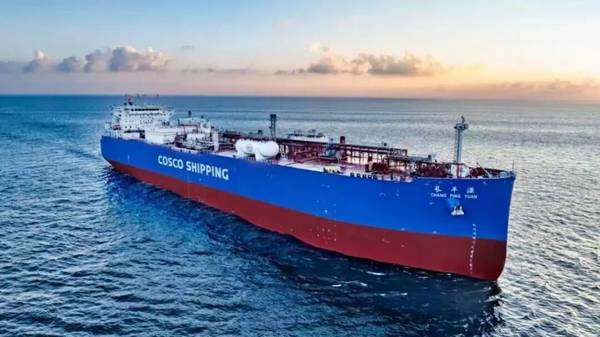
Chang Ping Yuan vessel. China delivers first domestically built VLGC under Chinese flag  

Cosco Shipping’s new 88,000-cbm gas carrier features an LPG dual-fuel main engine.

IMO, GreenVoyage2050 and Republic of Türkiye MoTI logos. Electric and hybrid ferries could cut Sea of Marmara emissions by 63%, IMO study finds  

A GreenVoyage2050 study finds that electrification could slash emissions, avoid €492 million in damage costs and support jobs.

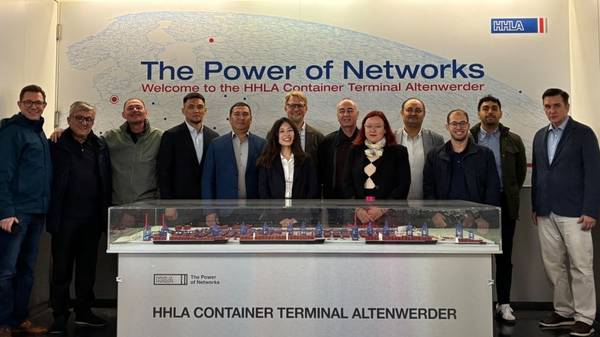
Study visit to Hamburg, Germany, on sustainable port development. Batumi Sea Port officials study decarbonisation practices in Hamburg  

Georgian port representatives visited Hamburg to study emissions accounting, hydrogen technology and automation ahead of their 2026 recertification audit.

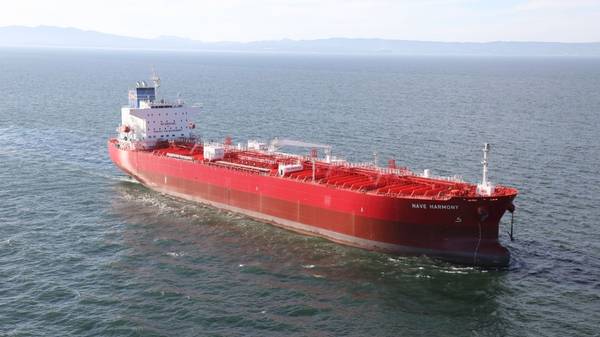
Nave Harmony vessel. Navios Partners takes delivery of methanol-ready MR2 tanker Nave Harmony  

Shipowner adds 49,998-DWT newbuild product tanker equipped with methanol-ready technology.

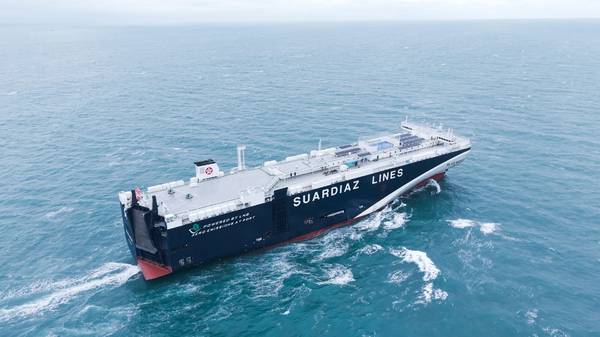
RS Atlantico vessel. Eastern Pacific Shipping delivers LNG dual-fuel PCTC to Suardiaz  

RS Atlantico is the first mid-sized 5,500-CEU car carrier built through the EPS–Suardiaz partnership.

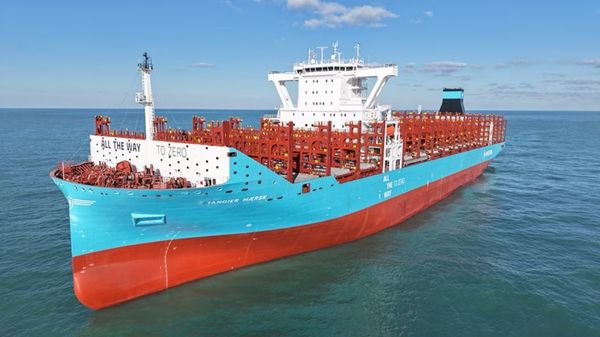
Tangier Maersk vessel. Maersk completes first US ethanol bunkering of a deep-sea container ship  

Shipper tests US-produced corn ethanol as a marine fuel aboard the Tangier Maersk.

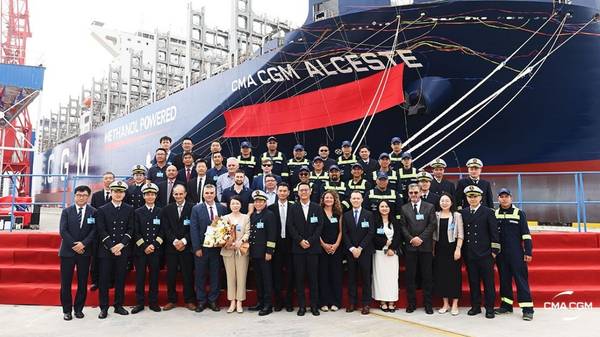
CMA CGM Alceste naming ceremony. CMA CGM names methanol-powered vessel after Molière’s Alceste  

Ship features a MAN B&W 8G85ME two-stroke engine configured to run on conventional marine fuel and methanol.

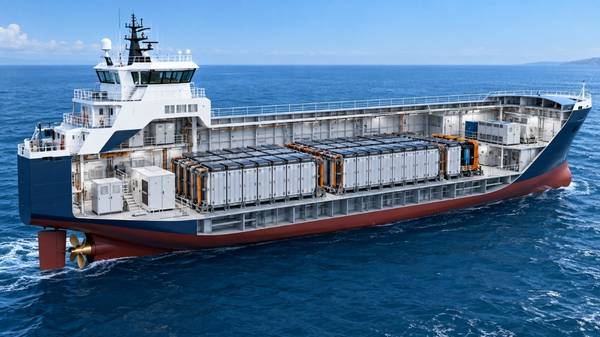
Cutaway illustration of a battery-electric ship. Why batteries still cannot power ships across oceans  

Battery-electric ships dominate short-sea routes, but energy-density and infrastructure constraints keep deep-sea propulsion out of reach.

VPS logo. VPS to run marine fuel management course in Singapore  

Two-day programme in November covers fuel handling, testing and decarbonisation rules, including a laboratory tour.