Tue 1 Jul 2014, 07:09 GMT

Møller: Urgent preparation needed now for 2015 sulphur regulations


Dynamic Oil Trading CEO calls on buyers to prepare now to ensure they are able to meet their supply requirements for ECA-compliant products.


With exactly six months to go until the 2015 ECA regulations take effect on 1 January next year, marine fuel trading company Dynamic Oil Trading has called on ship owners and operators to prepare now to ensure that they can still meet their supply requirements for compliant products within Emission Control Areas (ECAs), and to work collaboratively with their fuel suppliers in order to minimize the impact on their operations and profitability.

From 1 January 2015, all vessels sailing in the designated ECA zones in the Baltic Sea, the North Sea, the waters off the US and Canadian coastline and the US Caribbean Sea will be required to use fuel with a maximum sulphur content of just 0.1%, a significant reduction from the current ECA limit of 1%. This has prompted real concerns among owners and operators about the availability of sufficient fuel stocks and, in particular, the financial impact resulting from the requirement to buy more costly distillate products and how this will affect the profitability of operations, even calling into question the viability of certain routes.

Lars Møller, CEO of Dynamic Oil Trading, commented: "Whilst there are a number of compliance options available for vessels, neither scrubbers, nor alternative fuels such as liquefied natural gas (LNG), will be deployed in large numbers in the short term. This leaves most owners and operators looking at distillates as the most viable solution. Not only do these carry a significant price premium, but the implications of the new low sulphur rules on fuel availability are also unclear, given the uncertain impact on both fuel supply and demand.

"It is therefore vital that every operator with vessels travelling through ECAs prepares now in order to find the optimal fuel procurement strategy that ensures access to high-quality, on-spec fuel products and that also keeps their fuel bill down. Waiting until the last minute risks compromising on availability, quality and price."

In order to ensure continuity in fuel supply, greater certainty over operating costs and to keep fuel bills to a minimum, Dynamic Oil Trading has set out a series of recommended steps for fuel purchasers.

Møller said: "We are encouraging our customers to be proactive in mapping out the precise fuel requirements of their ECA operations, in order to secure the fuel they need on the best possible terms and in a way that meets their specific operational needs.

"Secondly, owners and operators must speak to their preferred fuel supplier now and get their advice on securing access to high quality, ECA-compliant products from trusted physical suppliers. A knowledgeable supplier will be able to advise on how best to secure the fuel that is required. There is no guarantee that all physical suppliers will be able to supply the compliant products that are needed, in the right place, and at the right time, as availability in some ports could be patchy. The only way to avoid the risk of an impact on operations or the risk of non-compliance with the 2015 ECA standards is to prepare now.

"Finally, we encourage all owners and operators to look at the price hedging tools that are at their disposal. There is an array of risk management strategies that operators can use to limit their exposure to fuel price fluctuations and to lock-in costs now, which not only helps to keep fuel bills as low as possible, but also provides greater certainty over costs. We can advise our customers on the most appropriate hedging instruments to employ, based on their commercial strategy, their appetite for risk and the anticipated price trends in the marine fuel market.

"There is uncertainty across the entire industry over the impact of the new sulphur regulations, but this can be managed and the costs can be mitigated through a proactive approach to planning ahead and by working with fuel supplies in order to adapt fuel procurement strategies for ECA voyages."

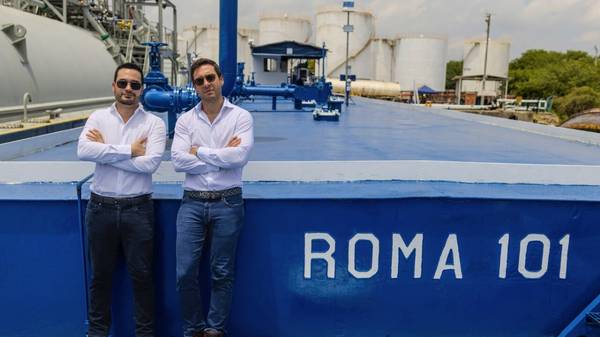
Image: Lars Møller, CEO, Dynamic Oil Trading.


WinGD methanol and ethanol webinar invitation. WinGD to host webinar on methanol- and ethanol-flexible fuel engine technology  

Engine manufacturer will discuss market outlook, regulations and operational experience with alcohol-based marine fuels.

Peninsula graduate programme group photo. Peninsula opens applications for 2026 graduate programmes in marine fuels trading  

Two-year scheme offers positions across six global locations starting in September, combining hands-on experience with structured development.

Collin She, Oilmar DMCC. Oilmar DMCC promotes Collin She to key account manager role  

She will lead strategic customer relationships and drive growth opportunities in Singapore and the wider region.

Areion vessel. Dorian LPG takes delivery of dual-fuel VLGC capable of carrying ammonia  

The 93,000-cbm Areion can run on LPG or fuel oil and transport ammonia cargoes.

FSRU Toscana alongside Green Zeebrugge vessel. RINA awards ISCC EU certification to OLT Offshore LNG Toscana for bio-LNG supply  

Certification enables bio-LNG use in the EU as a renewable fuel under RED II and RED III directives.

World Shipping Council at IMO meeting. WSC calls for safe maritime corridor as 20,000 seafarers remain trapped in the Persian Gulf  

Industry body urges IMO member states to establish safe passage and supply access.

Graphic promoting Auramarine webinar titled 'Sustainable Fueling Part 3: Ammonia - next alternative fuel in marine'. Auramarine to host webinar on ammonia as marine fuel in April  

Finnish firm will explore ammonia’s role in maritime decarbonisation at its third spring webinar.

Front cover of study by WinGD and Envision Energy titled 'Renewable Fuel Economics: An OPEX illustration based on current costs'. Green ammonia could reach cost parity with VLSFO and LNG by 2050, study finds  

WinGD and Envision Energy study projects green ammonia operational costs competitive with conventional marine fuels.

Elenger Marine's LNG bunkering vessel Optimus alongside Brittany Ferries’ Saint-Malo. Bureau Veritas verifies methane emissions on Brittany Ferries’ LNG vessels  

Verification enables ferry operator to report measured methane slip instead of regulatory default values.

Map showing existing and planned Emission Control Areas (ECAs). Alliance calls for urgent black carbon action as new Arctic emission control areas take effect  

Canadian Arctic and Norwegian Sea ECAs now in force, with compliance deadline set for March 2027.