GreenSteam, a technology company specialising in energy-saving solutions for commercial vessels, has today announced that, after testing and comparing different solutions for dynamic trim optimization, leading shipping and logistics company
DFDS has chosen to install GreenSteam fuel-saving solutions on around 20 vessels.
The vessels will be supplied with the on-board decision support solution,
GreenSteam Optimizer, which provides dynamic trim optimization. DFDS will also use the
GreenSteam Manager solution for performance monitoring of these vessels.
GreenSteam develops advanced fuel-saving systems that are designed to reduce a ship's fuel consumption by on average 4 to 5 percent. Its on-board solution, GreenSteam Optimizer, continuously collects a multitude of sensor readings of much higher frequency and quality than that obtained through so-called 'noon reporting'.
The relations between the vessel's speed and energy requirements, and the ever-changing internal and external conditions - like load, fuel flow, waves, wind and water depth - are analysed by sophisticated software with a specially developed mathematical model at its core. Trim and draft of the vessel are constantly optimized to give minimal propulsion resistance at all times.
The system guides the crew in real time through a touch screen console on the bridge. GreenSteam Optimizer is designed to react dynamically to changes in the ship's condition and environment, making it possible to maximize fuel efficiency. Additionally, the vessel’s and each mariner’s performance can be monitored remotely from shore by the fleet operator via the online browser-based tool GreenSteam Manager.
Daniel J Jacobsen, CEO of GreenSteam said: "We are delighted that DFDS has chosen our solution. At GreenSteam we firmly believe that fuel efficiency can be improved by pioneering digital technologies, and help companies in their pursuit of cost efficiencies and a greener approach to business."
GreenSteam has recently secured a $2million investment from
Castrol innoVentures, the strategic innovation arm of the leading lubricant supplier, part of the
BP Group, to reinforce and accelerate its growth, as well as further market penetration of their cutting edge systems.
About GreenSteam
GreenSteam is a technology company specialised in energy-saving solutions for commercial vessels. The vision of GreenSteam is to maximize the fuel efficiency of all vessels sailing our oceans.
GreenSteam fuel saving solutions are applicable to most vessel types and, based on experience from other customers, are said to typically generate annual savings of more than USD 100,000 per year per vessel.
Behind GreenSteam is a team of dedicated, highly educated engineers and scientists who have spent years of research to combine common-sense principles with advanced engineering to create a practical, simple-to-use energy saving system making it possible to reduce fuel consumption by 4-5% on average.
The company was founded by three M.Sc. candidates from the Technical University of Denmark in 2006 and is today based in the Faroe Islands in the North Atlantic as well as in Copenhagen, Denmark.
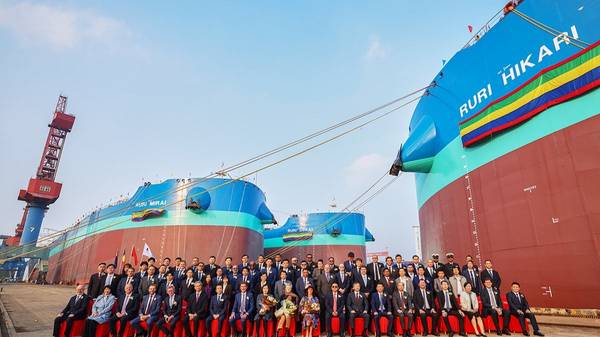
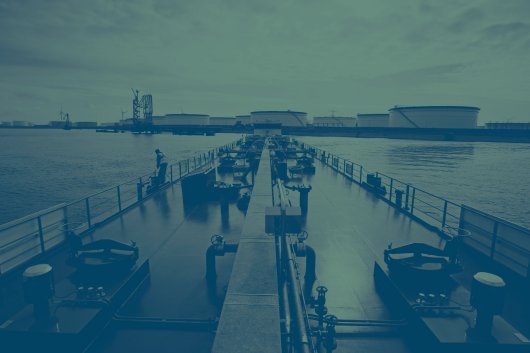
Image: Vicaria Seaways.