Cork-based product and chemical tanker specialist
Ardmore Shipping Ltd. has added
SkySails Performance Monitors across its fleet of ships in a bid to optimize fuel and operational efficiency.
The company operates seven vessels from 17,500 dwt to 50,000 dwt. It has recently taken delivery of the first of its newbuild series of four 49,999 dwt IMO 3 product and chemical tankers from
SPP Shipbuilding in Korea, which have been designed to deliver the highest standards of fuel efficiency and operational performance.
Numerous fuel-saving technologies have been integrated across Ardmore’s newbuild vessels, including larger and more efficient propellers,
Mewis Duct and propeller boss cap fin devices for improved propeller and hull form efficiency,
MAN B&W ME-B and ME-C electronic engines, as well as a high-performance hull coating. These technologies are anticipated to reap fuel savings of 10 to 15%. Each ship also holds voluntary EEDI certification by The
American Bureau of Shipping (ABS).
However, in order to manage vessel performance, one needs to be able to measure it. That is why Ardmore Shipping has also equipped its vessels with
Performance Monitor, a vessel performance monitoring system from German manufacturer SkySails - also known as the developer of the kite wind propulsion of the same name - to evaluate the effectiveness of the applied fuel-saving technologies and for operational optimization purposes.
SkySails' Performance Monitor is a sensors-based computer system continuously collecting and analyzing the ship's data and operating conditions. The technology is aimed at lending transparency to the interrelation between the various factors that determine the optimal settings for operating a vessel.
"By providing just the right amount of real-time onboard and onshore data and decision support, the SkySails Performance Monitor delivers the necessary insights for improving a ship’s operational efficiency. At the same time automated data collection, transfer and import routines free up time for more important tasks," SkySails said.
Stephan Wrage, CEO of SkySails commented: "A vessel’s fuel consumption heavily depends on a range of factors, including operating conditions such as waves, wind and load, which can change dynamically during sailing. Whether the master and owners are looking for the most profitable speed, the most economical speed or the ETA speed for just-in-time arrival, our Performance Monitor collects the data and provides the real-time analysis that helps them to find the optimal operational settings, such as speed and trim. With the daily bunker bill being such a high proportion of vessel operating costs, Performance Monitor performs a critical role in maximizing efficiency and profitability, on the bridge and on shore, for each vessel and across the fleet."
"Applying a new technology to improve fuel efficiency is one thing,” said Anthony Gurnee, CEO of Ardmore Shipping, “but there is also a lot to gain in terms of operational optimization. We believe that our seafarers and team ashore are the ones who drive operational excellence. With the SkySails Performance Monitor we now have the perfect tool in place to give them the critical data and decision support essential for their daily work."
The most recent vessel in Ardmore’s fleet to benefit from SkySails Performance Monitor is the
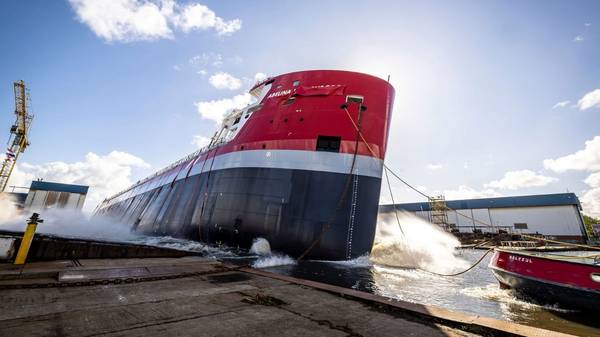
Ardmore Seavaliant [pictured], a 49,999 dwt IMO3 product and chemical tanker build by SPP Shipbuilding in Korea in accordance with SPP’s industry-leading design for this vessel class and delivered to Ardmore in March 2013.
The Ardmore Seavaliant has since been delivered on a 12-month charter arrangement to US transportation company
Cargill, an organisation known for its emphasis on chartering modern, fuel-efficiency vessels.