Aegean Marine Petroleum Network Inc. reports that net income fell US$8.8 million, or 73.3 percent, during the second quarter in a comparison with the same period last year.
Net income for the three months ended June 30, 2011 was $3.2 million, or $0.07 basic and diluted earnings per share compared to a net income of $12.0 million, or $0.25 basic and diluted earnings per share, in 2010.
Total revenues during the second quarter climbed 32.8 percent to $1,774.9 million compared to $1,336.6 million for the same period in 2010.
Sales of marine petroleum products increased by 32.6 percent to $1,766.3 million compared to $1,331.8 million for the year-earlier period.
Net revenue, which equals total revenue less cost of goods sold and cargo transportation expenses, rose by 2.5 percent to $70.0 million in the second quarter of 2011 compared to $68.3 million in 2010.
The volume of marine fuel sold between April and June declined by 7.0 percent to 2,635,881 metric tonnes compared to 2,825,046 metric tonnes in the year-earlier period.
Operating income for the second quarter decreased by $8.3 million, or 43.2 percent, to $10.9 million compared to $19.2 million for the same period in 2010. Operating expenses, excluding the cost of fuel and cargo transportation costs, increased by $9.4 million, or 19.1 percent, to $58.5 million, compared to $49.1 million for the same period in 2010. Aegean said the increase was principally due to an expanded logistics infrastructure during the second quarter of 2011 compared to the second quarter of 2010.
Commenting on the results,
E. Nikolas Tavlarios, President, commented, "Our results for the second quarter reflect an improved gross spread as management remains focused on strengthening Aegean's geographical sales mix and increasing operating efficiencies. While overall market conditions across the global marine fuel supply industry remain challenging, we continue to achieve notable progress implementing our strategy to enhance future performance. Specifically, we solidified our presence in the Canary Islands by establishing operations in Tenerife in the second quarter. This new and attractive market complements our presence in Las Palmas and provides our customers with greater flexibility in fulfilling their marine fuel needs. We also commenced physical supply and onshore storage operations in Panama as we intend to take advantage of the Panama Canal's projected expansion, which will significantly increase ship capacity.
"Complementing the growth in Aegean's integrated marine fuel logistics chain, we continue to take proactive measures to improve our cost structure, including the sale of non-core assets. During the second quarter, management continued to redeploy bunkering vessels from their existing locations to other markets within Aegean's global network to optimize performance and execute more profitable transactions with top counterparties."
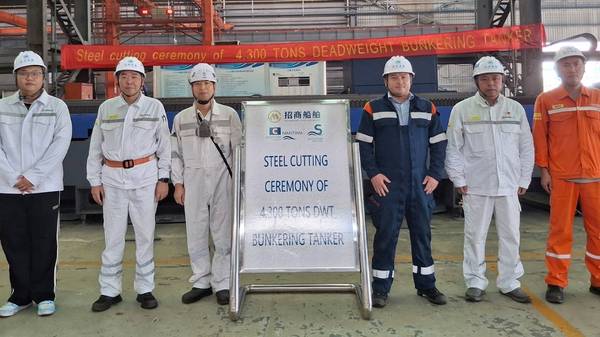
As of June 30, 2011, the company had approximately $274.3 million in available liquidity, which includes unrestricted cash and cash equivalents and available undrawn amounts under the company's short-term working capital facilities, to finance working capital requirements. Furthermore, as of June 30, 2011, the company had approximately $8.0 million available under its secured term loans to finance the construction of its new double-hull bunkering tankers.
Spyros Gianniotis, Chief Financial Officer, stated, "Our strong financial foundation continues to provide a distinct competitive advantage, particularly in a challenging market environment. With substantial liquidity highlighted by total working capital credit facilities of approximately $880 million and a net-debt-to-capital ratio of 56.2 percent at the end of the quarter, we remain well positioned to meet the intensive working capital requirements inherent in our industry as we further expand our global marine fuel platform for the benefit of the Company and its shareholders."