Tue 16 Nov 2010, 18:01 GMT

Project to investigate nuclear propulsion viability


Consortium to begin research into the commercial viability of nuclear-powered tankers.


A consortium of British, American and Greek interests has agreed to investigate the practical maritime applications for small modular reactors as commercial tanker owners search for new designs that could deliver safer, cleaner and commercially viable forms of propulsion for the global fleet.

The Strategic Research Group at Lloyd's Register, Hyperion Power Generation Inc, British designer BMT Nigel Gee and Greek ship operator Enterprises Shipping and Trading SA are to lead the research into nuclear propulsion, which they believe is technically feasible and has the potential to drastically reduce the CO2 emissions caused by commercial shipping.

"This a very exciting project," said Lloyd's Register CEO, Richard Sadler. "We believe that as society recognises the limited choices available in the low-carbon, oil-scarce economy and as land-based nuclear plants become commonplace we will see nuclear ships on specific trade routes sooner than many people currently anticipate."

The agreement for the joint industry project was signed on November 15th at the offices of Enterprises Shipping and Trading in Athens, Greece.

Enterprises' Victor Restis said: "Despite the fact that shipping contributes much less to the world's atmospheric pollution than other shore-based industries, we believe that no effort is too great when it comes to safeguarding a better world for future generations. We are extremely honoured and proud to be part of this consortium at this historic event, as we strongly believe that alternative power generation is the answer for shipping transportation."

The consortium believes that SMRs, with a thermal power output of more than 68 megawatts, have the potential to be used as a plug-in nuclear 'battery'.

The research is intended to produce a concept tanker-ship design based on conventional and 'modular' concepts. Special attention will be paid to analysis of a vessel's lifecycle cost as well as to hull-form designs and structural layout, including grounding and collision protection.

"We are enthusiastic about participating in the historic opportunity presented by this truly groundbreaking consortium," said John R. 'Grizz' Deal, CEO of Hyperion Power. "In addition to fitting the basic requirements as the model for studying the application of SMRs in commercial naval propulsion, the Hyperion Power Module [HPM] can also help to set new nuclear maritime standards. The HPM's design includes a non-pressurised vessel, and non-reactive coolant. These features, among others in the HPM, should encourage the industry to strive for even higher levels of inherent safety in their models."

"Nuclear propulsion offers the opportunity for an emissions-free alternative to fossil fuel, whist delivering ancillary benefits and security to the maritime industry," said Dr Phil Thompson, Sector Director Transport, for the BMT Group. "We look forward to using our wide range of maritime skills and expertise to identify the through-life implications, risks and potential for developing and using SMRs in the civilian maritime environment and to provide a framework for its safe and reliable introduction and utilisation."


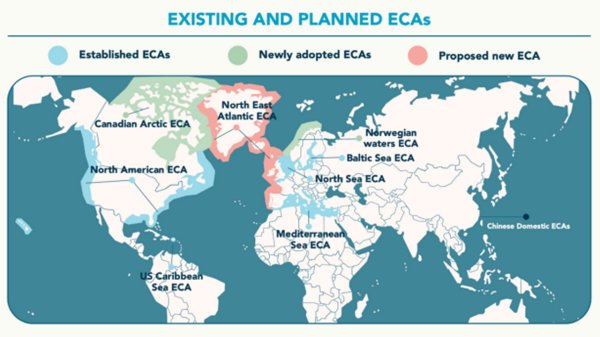
Map showing existing and planned Emission Control Areas (ECAs). IMO adopts Northeast Atlantic ECA covering waters from Portugal to Greenland  

New ECA to enter into force in September 2027, connecting existing European zones with Canadian Arctic waters.

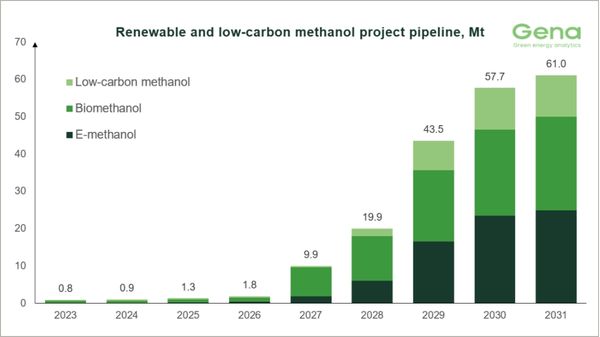
Renewable and low-carbon methanol project pipeline chart as of April 2026. Renewable methanol project pipeline reaches 61 MMT as China groundbreakings accelerate  

GENA Solutions reports pipeline growth despite concerns over construction readiness for Chinese projects.

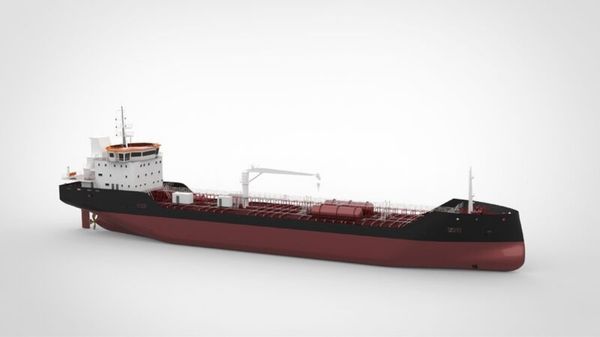
Rendering of a diesel-electric chemical tanker. Berg Propulsion to supply propulsion system for Akdeniz-built chemical tanker  

Turkish shipyard Akdeniz orders diesel-electric propulsion package for an 8,000-dwt vessel destined for Transka Tankers.

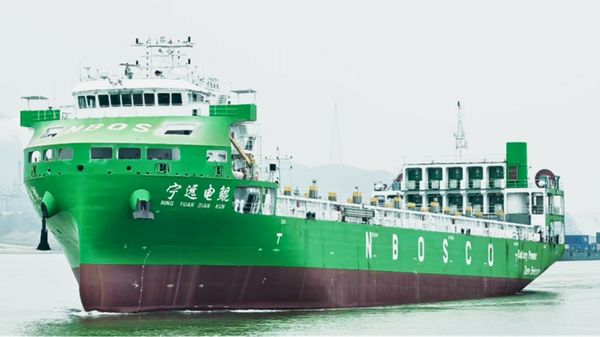
Ningyuan Diankun vessel. China Classification Society certifies 740-teu pure-electric container ship  

Ning Yuan Dian Kun features battery-swapping capability and is claimed to eliminate 1,462 tonnes of CO2 annually.

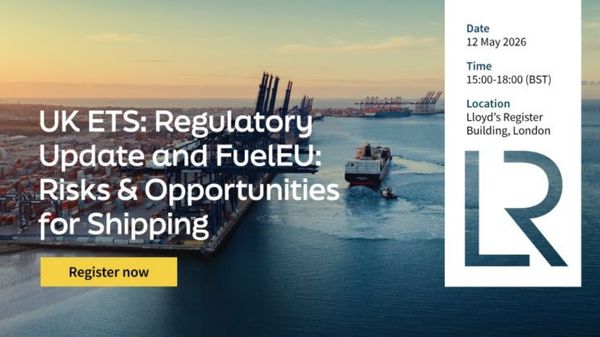
UK ETS and FuelEU Maritime event graphic. Lloyd’s Register to host UK ETS and FuelEU Maritime briefing in London  

Event on 12 May will examine maritime emissions regulations ahead of UK ETS expansion.

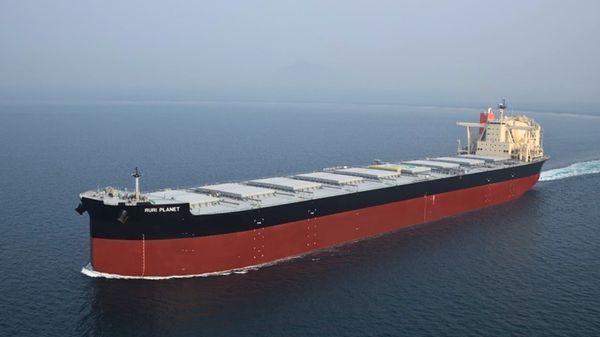
Ruri Planet vessel. Japanese shipbuilder delivers dual-fuel LNG bulk carrier Ruri Planet  

The 209,000-tonne Capesize vessel can run on heavy fuel oil or LNG.

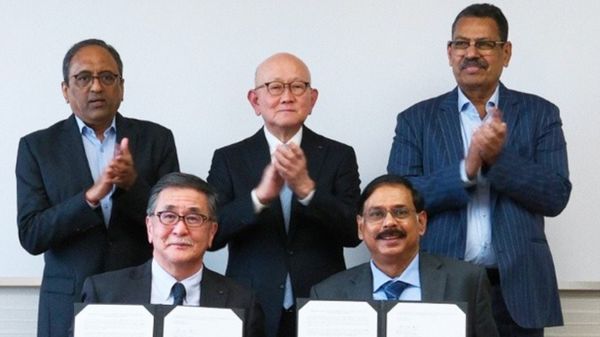
L&T Energy GreenTech and Itochu agreement signing. L&T Energy GreenTech signs 300,000-tonne green ammonia supply deal with Itochu  

Indian firm to supply Japanese trading house from planned Kandla facility for marine fuel applications.

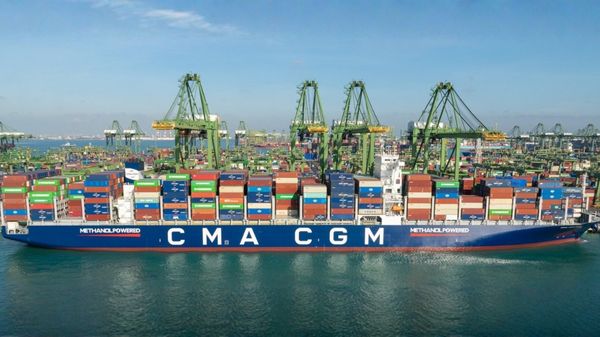
CMA CGM Iron vessel. Methanol-powered container ship is named CMA CGM D’Artagnan  

French shipping group adds vessel to methanol fleet as part of net-zero target.

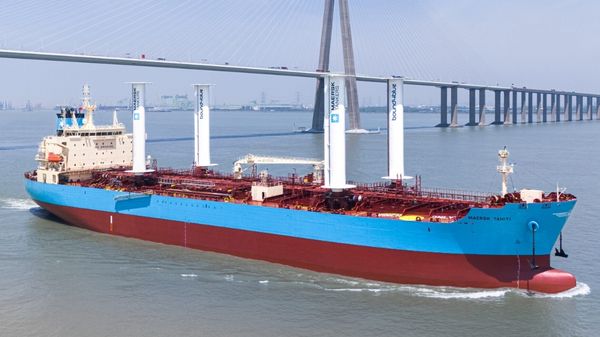
Maersk Tahiti vessel. Bound4blue completes second suction sail installation for Maersk Tankers  

Four 24-metre eSAIL units fitted on Maersk Tahiti at Chinese shipyard in April.

Aerial view of Port of Yokohama. Asia-Pacific ports advance cross-sector hydrogen and e-fuel infrastructure  

Accelleron report highlights a coordinated approach combining energy, industry and shipping demand to stimulate market development.