Tue 9 Nov 2010, 07:23 GMT

Seminar examines marine fuel options


Event looks at alternative fuels and crude oil prices in 2011.


Wilhelmsen Ships Service has highlighted the need for the international shipping industry to evaluate new propulsion fuels, driven by new regulations and emission controlled areas.

The company used its annual Bunker Oil and Energy Seminar, hosted by Wilhelmsen Premier Marine Fuels, to address these topics in front of shipping companies from a variety of market segments.

Vice President Per Brinchmann from Wilh. Wilhelmsen ASA painted a bleak picture for shipowners that were not already planning ahead for what is to come as he pointed out that, in 2015, sulphur limits in the so-called ECAs (emission control areas), will be reduced to 0.1%. As it is technically almost impossible to produce heavy fuel oil with less than 0.1% sulphur ships will have to run on alternative fuels such as marine gasoil or liquefied natural gas (LNG). Another option is to install scrubbers or other abatement technologies to reduce sulphur emissions.

"Whatever option is chosen, the result will be higher costs. Availability of compliant fuel worldwide could also be an issue," Wilhelmsen Ships Service said in a statement.

Aksel Skjervheim, head of fuel markets at GASNOR, a Norwegian provider, was optimistic about LNG. "LNG is commonly used in electricity production and is now accessible all over Europe for vessels who want to use this option as fuel," he pointed out.

Although LNG is still most commonly used on ferries and offshore vessels, global engine manufacturers like Wartsila, MAN, Rolls-Royce and Mitsubishi are developing duel-fuel engines that can run on LNG. A major challenge however is the price of conversion for older engines, as well as the storage of LNG onboard. Due to higher volumes, LNG tanks need to be four times as large as normal fuel oil tanks. On the positive side, the use of LNG will also remove NOx, and incentives by governments, such as the Norwegian NOx tax, aim to help the switch to LNG.

With the introduction of ECAs, MGO demand from shipping will increase. The cost implication of this will very much depend on the oil price development.

Commodity Strategist Sabine Schels from Bank of America Merrill Lynch presented the company's global energy outlook at the Wilhelmsen seminar. For 2011, Bank of America Merrill Lynch expects a second round of quantitative easing coupled with limited supply increases from OPEC to reflate oil prices, even if US demand stays weak.

The bank forecasts that the 2011 Brent crude oil average will reach $85/bbl. A combination of negative real interest rates, record capital flows to emerging markets and extremely high utilisation rates across the commodity sector are predicted to support prices.

A significant point made by Schels was that negative real interest rates, a direct consequence of money printing in the US, encourage immediate consumption and discourage future production of scarce commodities. The impact is already visible today: Brent crude oil prices are up 12 percent year over year while oil demand growth is exceptionally strong, driven by emerging markets.

While the bank still sees oil prices rising to $100/bbl in 2011, it only sees limited risk of a substantial rise in prices well above that level. OPEC has more spare capacity than it did in 2008 and refining capacity has increased considerably. It is also difficult to see how developed countries could cope with very high oil prices in 2011 given their weak economic recovery.

Looking beyond 2011, Schels did see oil prices moving towards previous highs again. "The commodity super-cycle is not over, it is just pausing", said the Merrill Lynch analyst.


American Bureau of Shipping (ABS) logo. ABS introduces nuclear-ready notation for marine and offshore assets  

The classification society has released what it describes as an industry-first notation to support future nuclear conversion of vessels and offshore assets.

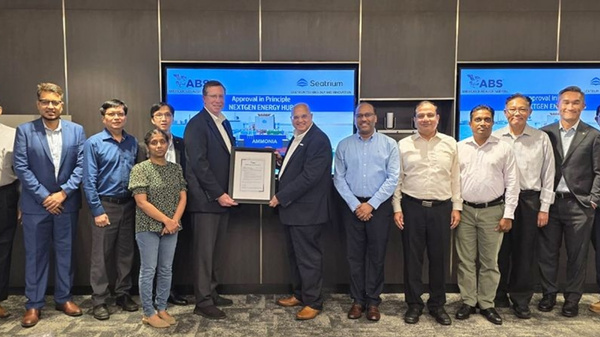
AiP handover ceremony for NEXTGEN Energy Hub (NGEH) design. ABS grants approval in principle for Seatrium’s NEXTGEN Energy Hub design  

The hub concept integrates ammonia bunkering, power generation and electric vessel charging in a single unit.

Jumbo Maritime crew aboard vessel. Jumbo orders two methanol-ready L-Class heavy lift vessels from Dajin Heavy Industry  

Dutch heavy lift specialist Jumbo signs newbuilding contract for two 25,000-dwt vessels.

China flag. Zhoushan completes first bonded bunker operation at Majishan port area  

The operation marks full fuel supply coverage across all general cargo terminals in Zhoushan's port system.

US dollar banknotes. Port of Long Beach launches $1m methanol bunkering challenge for oceangoing vessels  

A $1m prize aims to kick-start commercial methanol bunkering at one of North America's busiest ports.

Core Power, Athlos Energy, Deon Policy Institute and ABS logos. Greece floating nuclear study finds no fundamental barriers to implementation  

A PESTLE assessment of floating nuclear power plants in Greece identifies framework gaps, not feasibility barriers.

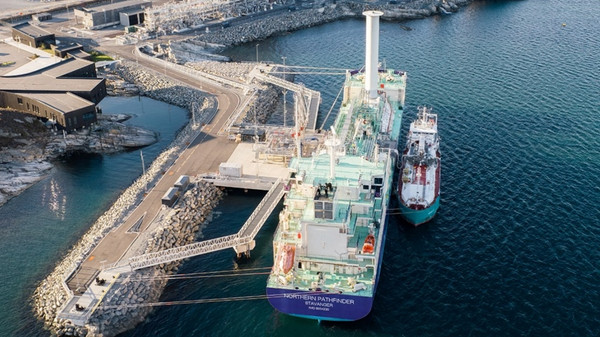
Northern Pathliner alongside Bergen LNG vessel. Molgas completes LNG cool-down and bunkering for Northern Pathliner at Northern Lights terminal in Norway  

Operation carried out at Øygarden facility, with K Line and Integr8 Fuels in the supply chain.

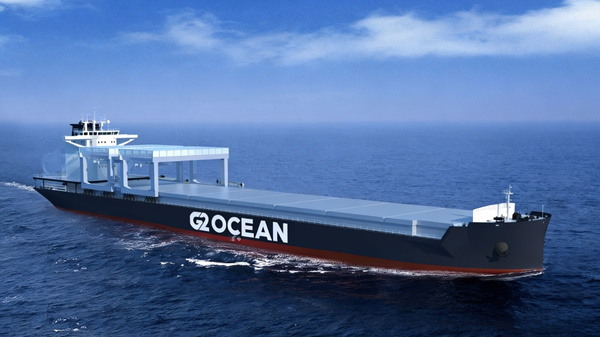
Rendering of a G2 Ocean OHGC vessel. G2 Ocean expands fleet with six future-fuel ready gantry crane vessels  

Open hatch specialist adds vessels and jet sail technology as part of a broad fleet renewal programme.

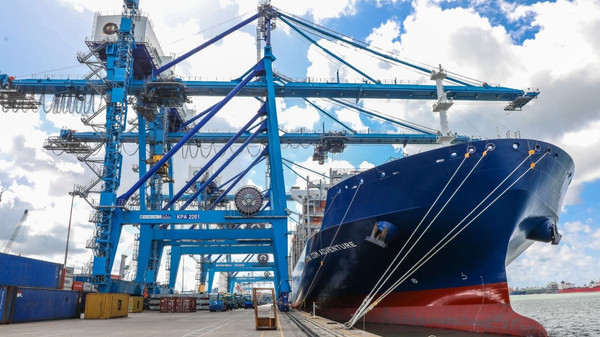
CMA CGM Adventure vessel at Port of Mombasa. LNG-powered CMA CGM Adventure makes first call at the Port of Mombasa  

Kenya Ports Authority receives its first large LNG-fuelled container vessel.

Liam Blackmore, Lloyd's Register. Maritime trio shapes IMO safety guidelines for ammonia as marine fuel  

Real-world operational experience feeds directly into new IMO ammonia fuel safety framework.