Wed 24 Mar 2010, 13:18 GMT

Study says EEDI baseline should represent entire range


Energy Efficiency Design Index baseline should represent full range of ship sizes and types, says report.


With the IMO's Marine Environment Protection Committee (MEPC) meeting this week to discuss the development of technical and operational measures to reduce CO2 emissions from ships, including the Energy Efficiency Design Index (EEDI), a study by class society ABS and Herbert Engineering Corporation (HEC) has evaluated the index with proposed baselines providing additional data for the committee's deliberations.

The MEPC released the "Interim Guidelines on the Method of Calculation of the Energy Efficiency Design Index for New Ships" in July of last year to encourage implementation and testing of the methodology. The aim was for the industry to develop lessons learned so further refinements could be made to the guidelines.

The joint ABS/HEC studies "An Evaluation of the Energy Efficiency Design Index (EEDI) Baseline for Tankers, Containerships and LNG Carriers" and "Influence of Design Parameters on the Energy Efficiency Design Index (EEDI)" were presented in February at the Society of Naval Architects and Marine Engineers & Marine Board of the National Academies Symposium, Climate Change and Ships Increasing Energy Efficiency.

As a result, two papers (MEPC 60/4/33 and MEPC 60/4/34) have been submitted by IMarEST for consideration at MEPC 60.

In the study, ABS and HEC developed ‘standard' ship designs for tankers, containerships and LNG carriers in a range of sizes in order to calculate their ‘attained EEDI' numbers and to compare them to the proposed baselines. All designs were developed as ‘well performing' current vessels in each category.

The designs considered panamax, aframax, suezmax and VLCC tankers and containerships in 1,000, 4,500, 8,000 and 12,500 TEU size ranges.

Six standard designs of LNG carrier were developed: three single screw with dual fuel diesel-electric (DFDE) propulsion of 150,000 m3, 180,000 m3 and 215,000 m3, and three slow speed diesel with reliquefaction (DRL) propulsion of 180,000 m3, 215,000 m3 and 265,000 m3.

"The study found that the attained EEDI for the panamax, aframax and suezmax tankers fell slightly below the EEDI baselines, indicating that the proposed baseline represented well the performance of the existing fleet," observed Kirsi Tikka, ABS Vice President of Global Technology and Business Development who leads the organization's environmental programs.

However, the attained EEDI for the standard VLCC design fell above the baseline figure. Compliance could be achieved by reducing the design speed from the assumed 15.8 knots to 15.1 knots. A further study of the baseline curve indicates that the proposed exponential curve for the baseline does not have a good fit in the VLCC size range.

For containerships, all designs evaluated fell considerably below the baseline, appearing to reflect that standard, modern designs have good performance characteristics relative to the available historical data.

For LNG carriers, the proposed baseline is based on data that includes a large number of steam powered ships, whereas many current ships have either dual fuel diesel electric or slow speed diesel with reliquefaction propulsion. The historical data also does not include the larger LNG ships that have been recently delivered or are still under construction.

"On the influence of the design parameters on the EEDI, the study confirmed the outcome by others that the index is very sensitive to speed," said Tikka. The power is proportional to the cube of the speed and therefore a relatively small reduction in the speed has a significant effect on the required main engine power, which dominates the EEDI value. Reducing the speed is the easiest way to lower the power requirement. Other factors such as reduction in steel weight have a minor impact on the index.

The study also investigated the influence of changing the ship principle dimensions to achieve a slender hull form and less required power and it found that the gains on the EEDI were moderate.

The investigation into the correlation of the EEDI with the CO2 production indicated that the index generally tracked well with changes in CO2 production. However the index does not give credit to the efficient utilization of the vessel when comparing a standard panamax ship with beam limitation to a new baby post panamax ship that can operate with less ballast.

"It is important that the baseline be a proper representation over the entire range of sizes and types, so that one particular size or type of vessel is not unduly impacted," said Tikka. She further pointed out that the use of historical data does not always reflect modern practice. For instance, LNG carriers have in recent years increased by more than 60% and moved from steam to DFDE and DRL propulsion.

"We support wholeheartedly the efforts of the IMO to develop technical and operational measures to manage greenhouse gas emissions from shipping. From a class society perspective we look forward to a robust discussion of the issues surrounding the EEDI and a positive outcome to MEPC 60 so that the industry can move forward on this instrument with confidence," said ABS.

Founded in 1862, ABS is a leading international classification society devoted to promoting the security of life, property and the marine environment through the development and verification of standards for the design, construction and operational maintenance of marine-related facilities.


TMS Tankers logo. Lloyd’s Register delivers fleet-wide energy transition roadmap for TMS Tankers  

LR Advisory maps vessel-level compliance risk and decarbonisation pathways across the Greek owner’s tanker fleet.

Dr Prapisala Thepsithar, GCMD. GCMD shares biofuel assurance and green finance insights at Hong Kong shipping decarbonisation forum  

The Global Centre for Maritime Decarbonisation presented pilot findings on biofuels and energy efficiency financing.

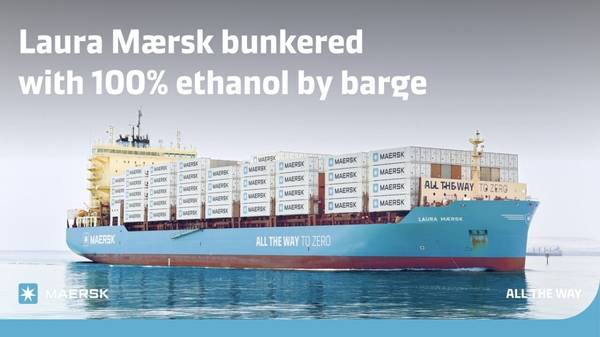
Laura Maersk ethanol bunkering graphic. Maersk conducts large-scale ethanol bunkering trial on Laura Maersk in Rotterdam  

A.P. Moller – Maersk has conducted a barge-delivered ethanol bunkering operation as part of ongoing fuel trials.

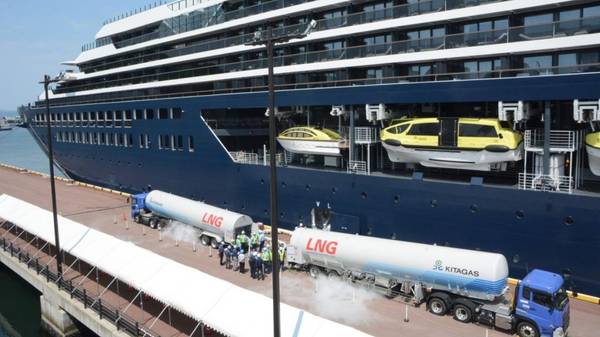
Luminara vessel truck-to-ship bunkering. MOL Techno-Trade completes first LNG bunkering for international cruise ship in Hokkaido  

Truck-to-ship LNG operation at Hakodate marks first such supply to an international cruise vessel in Hokkaido.

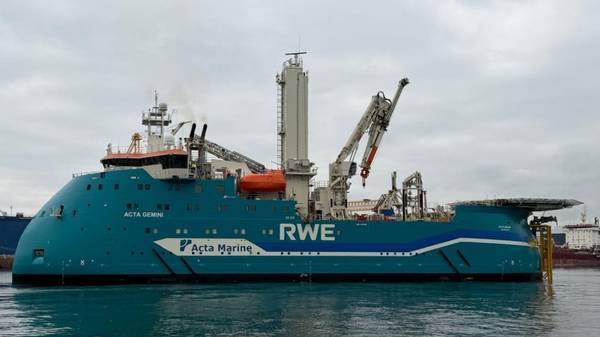
Acta Gemini vessel. Acta Marine takes delivery of methanol dual-fuel CSOV Acta Gemini for RWE wind farm charter  

The vessel will support operations at the Sofia Offshore Wind Farm at Dogger Bank.

Yeva Wood and Kirsten Møller Jørgensen. Malik Supply expands Danish team with bunker trader and finance hire  

Danish bunker supplier Malik Supply adds two new staff across its Fredericia and Aalborg offices.

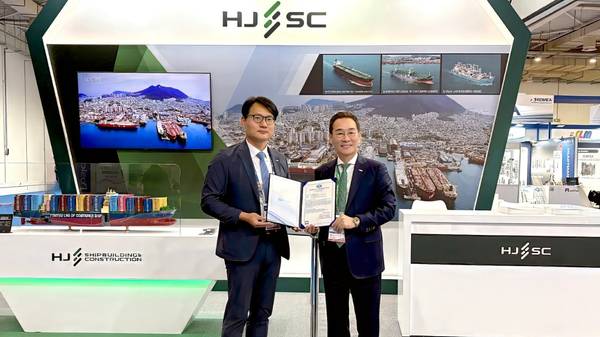
AiP award ceremony for a 10,000-teu biofuel-powered container ship. HJSC wins AiP for 10,000-teu biofuel-powered container ship design  

South Korean shipbuilder HJ Shipbuilding & Construction receives classification society approval for its biofuel vessel design at Posidonia.

Active vessel. Capital Clean Energy Carriers takes delivery of LNG carrier and dual-fuel gas carrier, secures five new charters  

Athens-based CCEC expands its fleet and pushes contracted revenue backlog to $3.1bn.

VPS logo. Fuel quality management for vessels in extended idle: Arabian Gulf, Gulf of Oman and adjacent anchorages | Rahul Choudhuri, VPS  

Managing fuel quality deterioration following the closure of the Strait of Hormuz.

Person signing a document. Agastya Green Fuels signs 250,000 t/yr e-methanol offtake deal with Sri Lanka’s SAR Group  

Indian producer and Sri Lankan maritime firm agree long-term green methanol supply partnership.