
 |
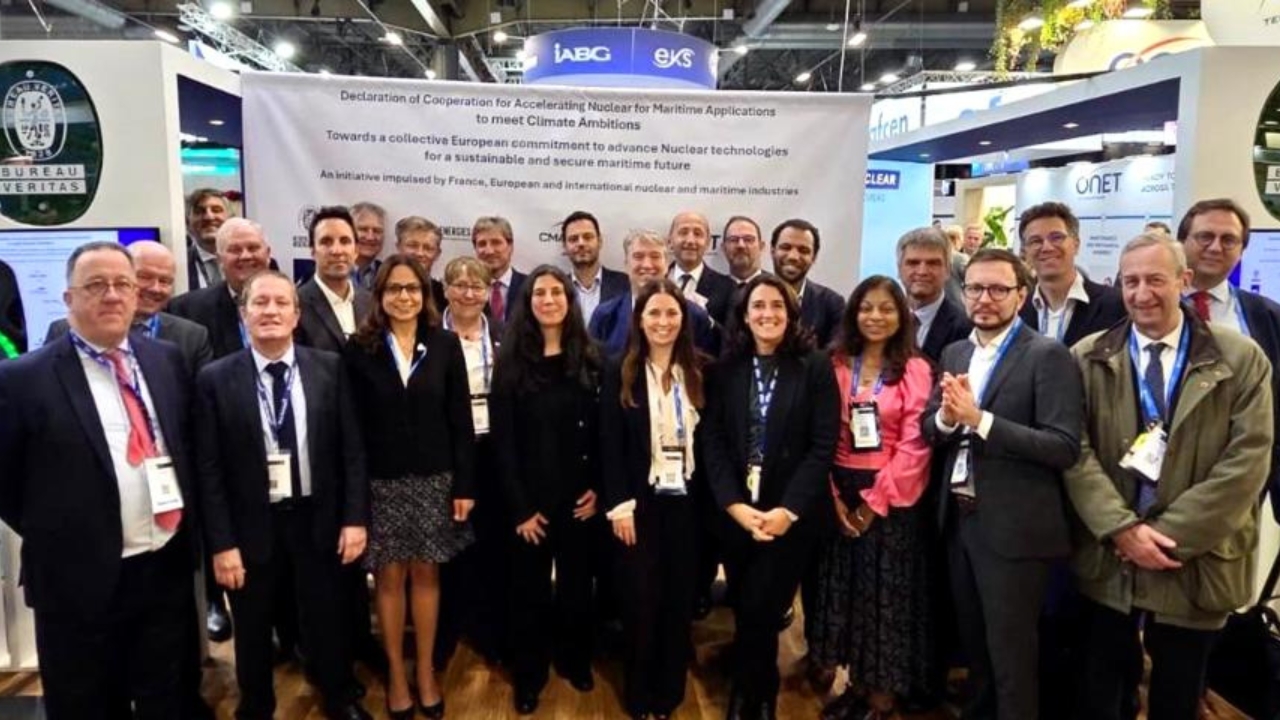
A declaration of cooperation aimed at accelerating nuclear technologies for maritime applications has been signed by more than 30 European companies from the nuclear and maritime sectors at the World Nuclear Exhibition in Paris.
The declaration, signed during the exhibition held from November 4–6, represents an initiative uniting stakeholders across the nuclear, maritime, research, financial, and regulatory communities to advance the use of nuclear technologies for maritime decarbonisation.
According to the declaration, small modular reactors (SMRs) have the potential to become a solution for maritime and port energy systems. The signatories committed to advancing innovation in line with the France 2030 Investment Plan, which allocates €1 billion to the development of nuclear technologies, including SMRs.
The signatories have committed to collaborative efforts to address technological, regulatory, and societal challenges, and to identify pilot projects to test nuclear-powered solutions. The declaration emphasises transparent communication on nuclear safety to build public understanding and trust.
The participants encourage administrations to develop a European ecosystem to facilitate the development of nuclear technologies in maritime operations, to strengthen international collaboration with the International Atomic Energy Agency (IAEA) and the International Maritime Organization (IMO), and call on governments and institutions to provide regulatory clarity, equitable access to climate finance, and harmonised safety standards. Progress will be reviewed annually to ensure transparency and alignment with global climate and energy transition targets.
Christine Cabau Woehrel, executive vice president assets & operations at CMA CGM, and chair of the steering committee of the New Energies Coalition, commented: "The role of nuclear energy in the decarbonisation of maritime and port environments is emerging with both promise and responsibility. By joining forces with Bureau Veritas, Onet, Bessé, and our international partners, we are taking an initial yet determined step toward exploring how advanced nuclear technologies — such as SMRs — can contribute safely and sustainably to the energy transition of the maritime sector in the long run. Collaboration, transparency, and scientific rigor will guide our path forward for port electrification and maritime decarbonisation."
Matthieu de Tugny, executive vice president, industrials and commodities at Bureau Veritas, said: "This declaration marks an important milestone in aligning nuclear and maritime expertise to accelerate decarbonisation and support the long-term sustainability of global shipping. The integration of nuclear technology into maritime operations represents a transformative opportunity, but it must be built on the foundations of safety, transparency, and international cooperation. With recognised competences in both the maritime and nuclear sectors, Bureau Veritas is uniquely positioned to help ensure that innovation advances responsibly and sustainably."
Émilie de Lombarès, chairwoman of the executive board at Onet Group, stated: "This declaration of cooperation emphasizes the need for coordinated international efforts to address the technological, regulatory, societal, and financial challenges associated with integrating civil nuclear power into the maritime sector. Given Onet Group has supported the French nuclear sector for around 50 years, our long-standing presence has given us a unique, hands-on understanding of the industry's evolution. We are actively supporting several innovative projects for decarbonisation, involving SMRs because we think the SMR approach is a new opportunity to re-evaluate the potential of nuclear energy for the maritime industry. That is why we joined forces with Bureau Veritas, CMA CGM, Bessé, as well as other international partners to invite all stakeholders in the nuclear and maritime sectors to join this collective movement to build a sustainable, secure, and resilient maritime future, showcasing French and European leadership."
The New Energies Coalition was formed in 2019 by CMA CGM and has previously published research examining nuclear power's potential role in maritime decarbonisation.
|
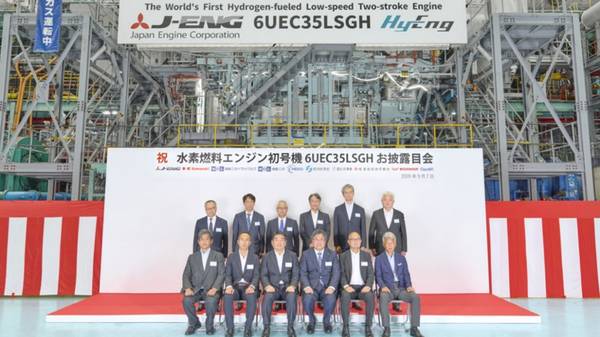
Japan Engine completes land-based testing of landmark hydrogen-fuelled engine for large vessels
Hydrogen co-firing rate of at least 95% achieved during factory testing. |
|
|
|
||
|
Ethanol edges into shipping’s fuel mix as methanol crossover eases adoption barriers
Rising interest from cargo owners, shared technology with methanol and Brazilian production growth push ethanol beyond regional niche status. |
|
|
|
||
|
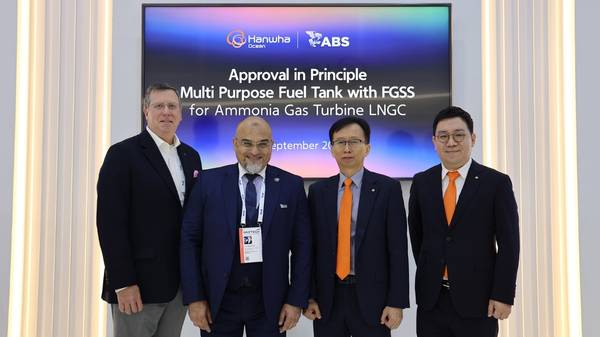
ABS grants Hanwha Ocean approval for dual-fuel tank enabling LNG-to-ammonia switch
In-principle approval awarded for fuel tank and supply system enabling LNG carriers to convert to ammonia without replacement. |
|
|
|
||
|
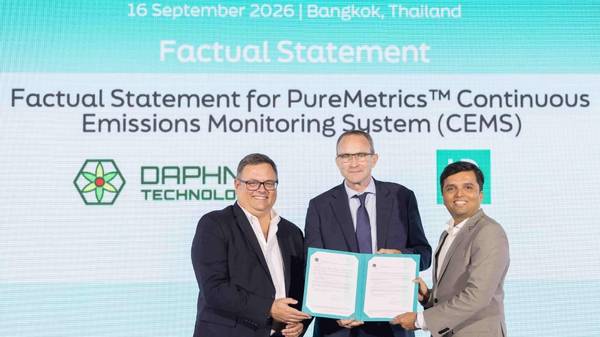
Lloyd's Register confirms suitability of Daphne Technology's emissions monitoring system
Factual Statement validates the PureMetrics design for monitoring greenhouse gas emissions from marine engines. |
|
|
|
||

|
IMO issues shipboard biofuel blend checklist developed by IBIA
Checklist for FAME-based biofuels formally incorporated into IMO document, supporting crews handling biofuel blends for the first time. |
|
|
|
||
|
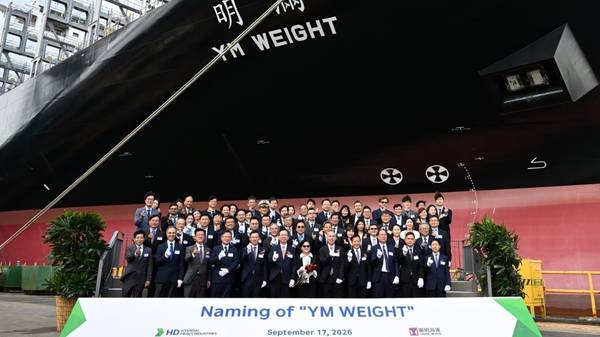
Yang Ming names fourth LNG dual-fuel container vessel YM Weight
Newbuild features high-pressure dual-fuel main engines capable of running on either LNG or low-sulphur fuel oil. |
|
|
|
||
|
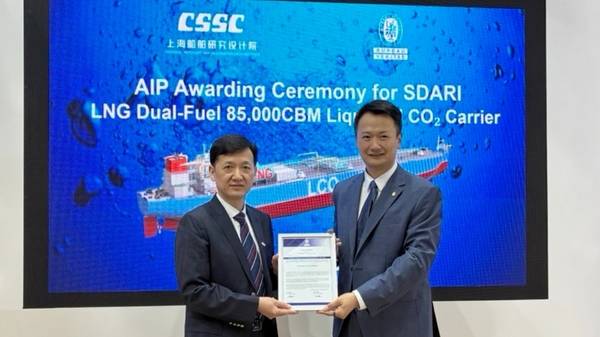
Bureau Veritas grants AiP to SDARI’s LNG dual-fuel liquefied CO₂ carrier design
Classification society approves 85,000-cbm vessel concept designed to support the growing carbon capture and storage sector. |
|
|
|
||

|
JuWonOil looking to strengthen with two Houston hires
Texas-based firm is recruiting a marine lubricants sales executive and a marine fuels and distillates trader. |
|
|
|
||
|
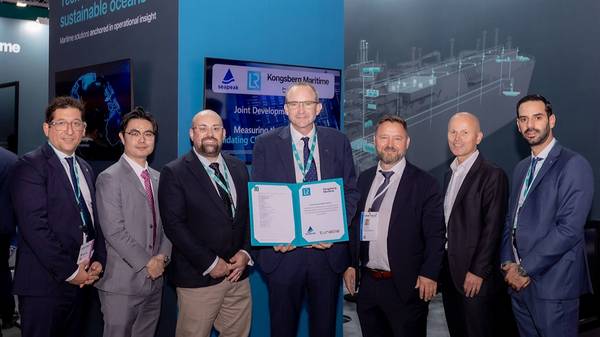
Four firms partner to trial continuous emissions monitoring on LNG carrier
LR, Seapeak, Kongsberg Maritime and Tunable will test onboard CO₂ monitoring against engine data and default emissions factors. |
|
|
|
||
|
Bunker Holding reshuffles commercial leadership across brand portfolio
Appointments announced across KPI OceanConnect, Glander International Bunkering and its digital sales operations. |
|
|
|
||
| Nuclear propulsion edging closer to commercial shipping, says Lloyd's Register [News & Insights] |
| Shipping industry warned nuclear power is essential to meet 2050 net zero targets [News & Insights] |
| Lloyd's Register publishes first nuclear shipping guidance [News & Insights] |
| ABB and Blykalla sign agreement to develop nuclear reactors for ships [News & Insights] |
| Lloyd's Register confirms suitability of Daphne Technology's emissions monitoring system [News & Insights] |
| IMO issues shipboard biofuel blend checklist developed by IBIA [News & Insights] |
| Bureau Veritas grants AiP to SDARI’s LNG dual-fuel liquefied CO₂ carrier design [News & Insights] |
| Four firms partner to trial continuous emissions monitoring on LNG carrier [News & Insights] |
| Bureau Veritas grants approval in principle for methanol-fuelled catamaran concept [News & Insights] |
