Fri 28 Sep 2018, 10:42 GMT

Brightoil backlog: Release of 2018 annual results also delayed


Annual results and report will not be released by Sep 30 and Oct 31, respectively.


Image credit: Pixabay
Brightoil Petroleum (Holdings) Ltd said on Friday that it will be unable to publish its annual results for the year ended June 30, 2018, which were due to be released by September 30 under the listing rules of the Stock Exchange of Hong Kong (SEHK).

Furthermore, it will not be releasing its annual report for the year ended June 30, 2018, by October 31, the bunker seller confirmed.

The latest development follows the announcement made by Brightoil earlier this month, where the company explained that its Audit Committee had "encountered a number of difficulties" with regard to the work being carried out by an independent adviser to review previous transactions made by the company; that it was "deeply concerned" expenses associated with the independent review could get "out of control"; and that it was looking at alternative solutions in an effort to control the costs of the review.

Trading in shares of Hong Kong-listed Brightoil was halted almost a year ago, on October 3, with the company requesting a suspension until the publication of its financial results for the year ended June 30, 2017.

Since then, Brightoil's interim results for the six months ended December 31 and interim report for that period have also been due, but are yet to be submitted to SEHK.

And Friday's announcement that the release of its 2018 annual results and report will also be delayed means that Brightoil now has an even bigger backlog of financial paperwork to hand in.

Brightoil's so-called 'resumption plan' - to be re-listed on SEHK - is for the Audit Committee to first complete the aforementioned review; then for the audit to be completed; and then for the 2017 annual results and report, 2018 interim results and report, and 2018 annual results and report to be released.

Changes to listing rules

On August 1, SEHK implemented a number of changes to its Listing Rules, which include: being able to delist an issuer after a trading suspension of 18 continuous months; and being able to delist the issuer immediately in "appropriate circumstances".

Furthermore, following the delisting framework amendments, SEHK is able to publish a delisting notice stating its right to delist an issuer if the issuer fails to resume trading within the period specified in the notice. It has also removed a three-stage delisting procedure for issuers without sufficient operations or assets, which is no longer needed now that the new delisting process is in effect.

Prior to the amendments - and unlike markets such as London, New York and Tokyo - Hong Kong did not have an effective mechanism in place to forcibly expel listed companies, which resulted in firms suffering serious losses not being expelled, for example.

Delistings from leading global exchanges can be for a number of reasons, including failure to meet an exchange's minimum requirements for price, capitalisation or liquidity; failure to file reports; and also, in extreme cases, fraud.

Brightoil explained in July that, as the company's shares will have been suspended from trading for less than 12 months prior to the August 1 implementation date, SEHK may, under Rule 6.01A(2)(b)(i), cancel the company's listing if trading in the company's shares remains suspended for 18 continuous months after August 1 - on January 31, 2020.

Additionally, Brightoil noted that it will need to meet SEHK's list of conditions for the resumption of trading, received in December, in order to avoid a delisting.


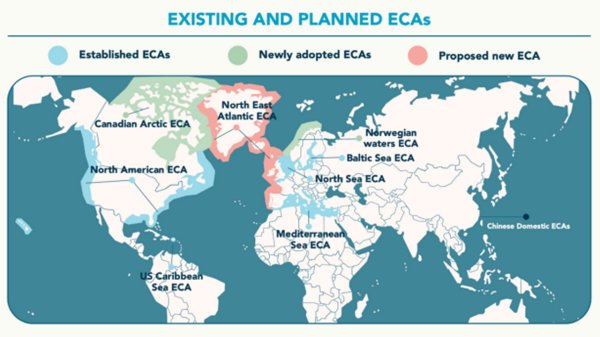
Map showing existing and planned Emission Control Areas (ECAs). IMO adopts Northeast Atlantic ECA covering waters from Portugal to Greenland  

New ECA to enter into force in September 2027, connecting existing European zones with Canadian Arctic waters.

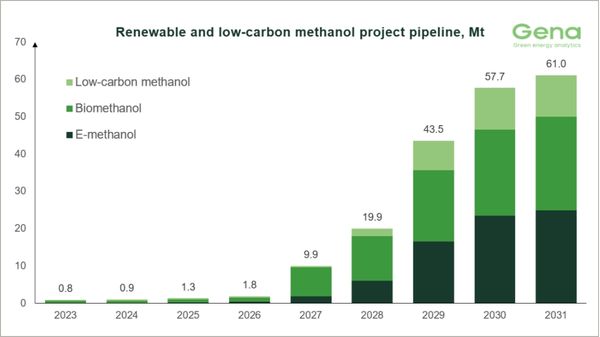
Renewable and low-carbon methanol project pipeline chart as of April 2026. Renewable methanol project pipeline reaches 61 MMT as China groundbreakings accelerate  

GENA Solutions reports pipeline growth despite concerns over construction readiness for Chinese projects.

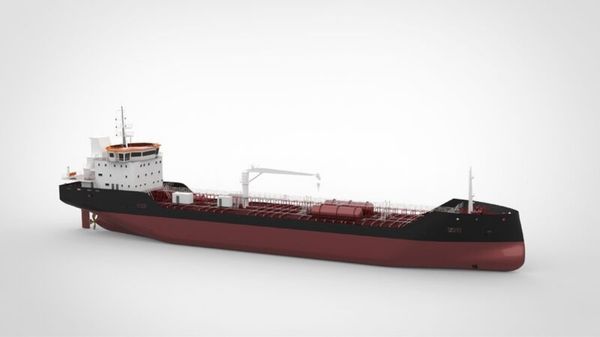
Rendering of a diesel-electric chemical tanker. Berg Propulsion to supply propulsion system for Akdeniz-built chemical tanker  

Turkish shipyard Akdeniz orders diesel-electric propulsion package for an 8,000-dwt vessel destined for Transka Tankers.

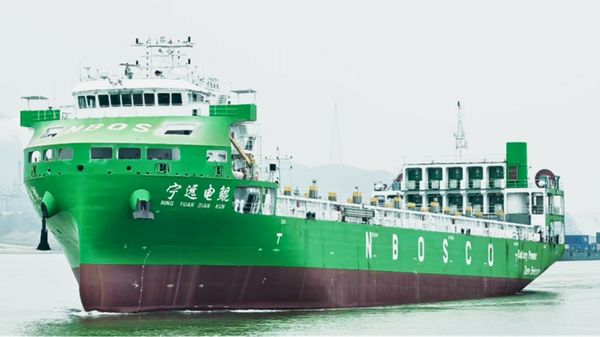
Ningyuan Diankun vessel. China Classification Society certifies 740-teu pure-electric container ship  

Ning Yuan Dian Kun features battery-swapping capability and is claimed to eliminate 1,462 tonnes of CO2 annually.

UK ETS and FuelEU Maritime event graphic. Lloyd’s Register to host UK ETS and FuelEU Maritime briefing in London  

Event on 12 May will examine maritime emissions regulations ahead of UK ETS expansion.

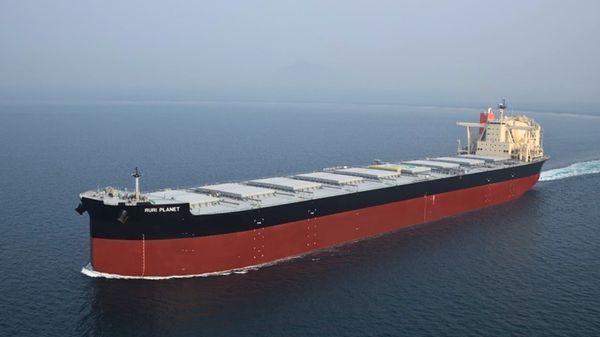
Ruri Planet vessel. Japanese shipbuilder delivers dual-fuel LNG bulk carrier Ruri Planet  

The 209,000-tonne Capesize vessel can run on heavy fuel oil or LNG.

L&T Energy GreenTech and Itochu agreement signing. L&T Energy GreenTech signs 300,000-tonne green ammonia supply deal with Itochu  

Indian firm to supply Japanese trading house from planned Kandla facility for marine fuel applications.

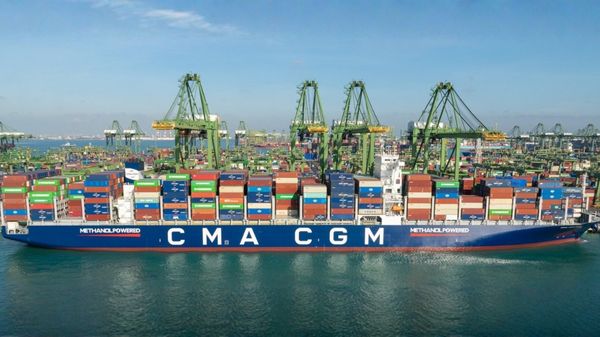
CMA CGM Iron vessel. Methanol-powered container ship is named CMA CGM D’Artagnan  

French shipping group adds vessel to methanol fleet as part of net-zero target.

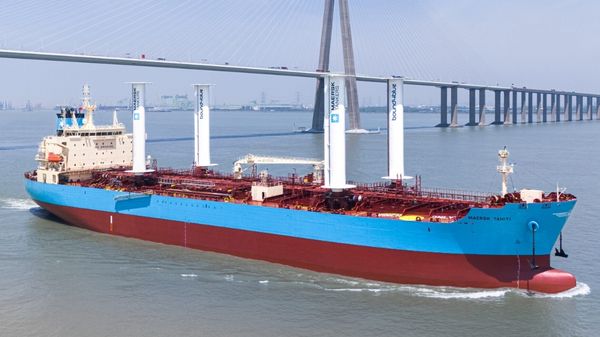
Maersk Tahiti vessel. Bound4blue completes second suction sail installation for Maersk Tankers  

Four 24-metre eSAIL units fitted on Maersk Tahiti at Chinese shipyard in April.

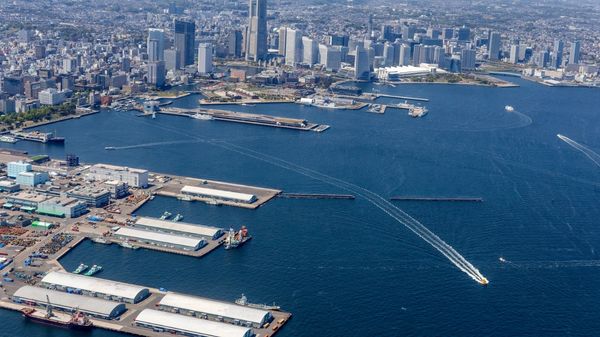
Aerial view of Port of Yokohama. Asia-Pacific ports advance cross-sector hydrogen and e-fuel infrastructure  

Accelleron report highlights a coordinated approach combining energy, industry and shipping demand to stimulate market development.