Fri 4 May 2018, 00:45 GMT

Finnlines orders three hybrid ro-ro ships with scrubbers


Vessels are to use fossil fuel whilst sailing and electricity when in port.


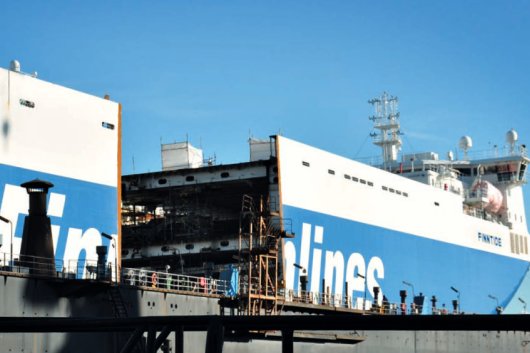
The Finntide was the first of Finnlines' Breeze-class ships to be lengthened at Remontowa shipyard in Gdansk.
Image credit: Finnlines
Finnlines has announced that it has signed an order for three bunker-saving ro-ro vessels that are to be fitted with emission abatement equipment.

The 238-metre-long ships are to be built at the Jinling shipyard in China, with delivery slated from 2020-2021. The total investment is expected to be more than EUR 200 million.

The design of the ships was carried out in cooperation with Nordic marine designer Knud E. Hansen.

According to Finnlines, the ships "will be among the most modern and environmentally friendly vessels in the Baltic". They are to be equipped with latest-generation engines that lower bunker consumption and CO2 emissions, and fitted with scrubbers to abate sulphur emissions and other particulate matter.

The ships will be hybrid ro-ro vessels that use fossil fuel whilst sailing and electricity while in port - hence guaranteeing zero emissions whilst in port.

They will be fitted with a lithium-ion battery bank that can be recharged during sailing and provide the electricity to the ship while at berth.

An air lubrication system under the keel will be used to create bubble layers that reduce friction and hydrodynamic resistance and consequently reduce fuel consumption and emissions as well.

Additionally, Finnlines says the energy efficiency of the ships will be optimised with the hull lines and propellers - including an advanced integrated propeller-rudder system.

Emanuele Grimaldi, CEO of Finnlines, remarked: "These green ro-ro vessels will be built taking all technological and environmental factors into account and thus will increase our energy efficiency further.

"These vessels will offer us the lowest possible fuel consumption and exhaust emissions and again, is in line with our investments in sustainable development.

"We are proud that these exceptional technologies on board will make the vessels the most innovative and efficient vessels in the world."


Flag of Brazil. Petrobras resumes bunkering operations at Rio Grande Terminal after power restoration  

Brazilian supplier restarts marine fuel supply after completing an inspection following an electricity outage.

Stena E-Flexer vessel render. Stena RoRo orders battery-ready E-Flexer 2.0 ferries from Chinese yard  

Vessels include diesel engines capable of running on biodiesel and are methanol-ready.

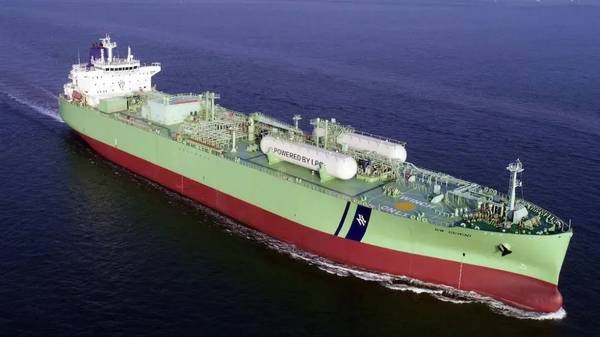
BW Gemini vessel. Nord Gas Solutions to supply cargo and fuel systems for eight BW LPG VLGCs  

Gas-handling systems specialist awarded contract for new 90,000-cbm vessels.

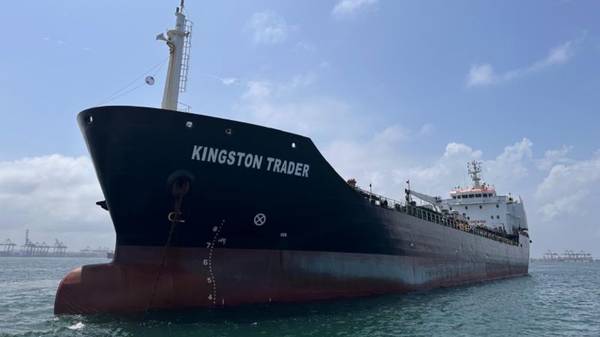
Kingston Trader vessel. TFG Marine fits mass flow meter to Jamaica-bound bunker barge  

Kingston Trader becomes the first Caribbean bunkering vessel with mass flow metering as TFG Marine’s fleet coverage nears 90%.

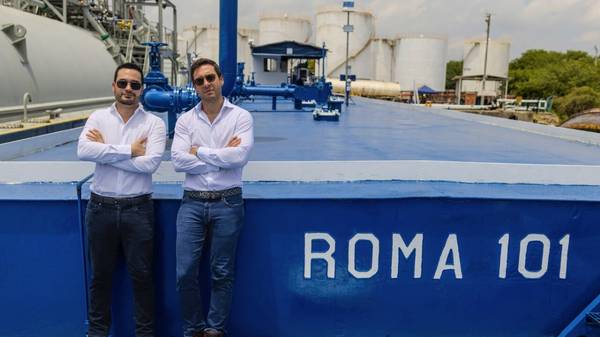
Sebastian Vasquez and Camilo Angulo Ferrand, Monjasa. Monjasa announces full-chain marine fuel operations in Cartagena  

Monjasa says it now covers the entire marine fuel supply chain in Colombia, from oil wells to ship-side deliveries.

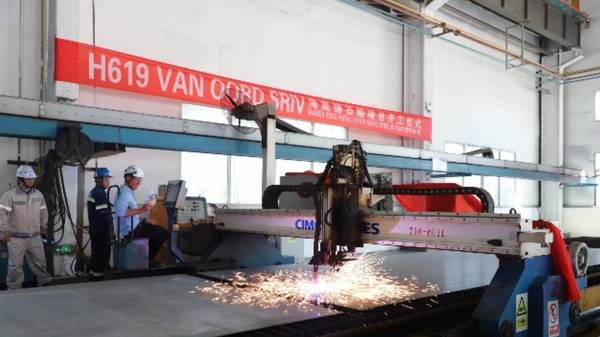
Steel-cutting ceremony for vessel with builder's hull no. H619. Ceremonies held for Van Oord’s methanol-hybrid rock installation vessels  

Two ships advance through parallel construction at China’s CIMC Raffles shipyard.

WK NatPower and AREL MoU signing. Wah Kwong NatPower signs MoU to explore Hong Kong marine electrification  

Venture will examine shore power, vessel charging and electric vessel deployment around Aberdeen’s waterfront.

Vard 4 39 design render. Dong Fang Offshore orders CSOV with battery-hybrid propulsion  

Vard secures fifth newbuild contract from Taiwanese firm, with delivery scheduled for 2028.

Rock Star vessel. CSL and OWL launch first subsea rock installation vessel for offshore wind  

MV Rock Star can run on MGO and methanol and is designed to support scour protection and cable burial for offshore wind projects.

François Michel and Andy McKeran. Lloyd’s Register study backs 200,000-cbm LNG carriers for fleet renewal  

Analysis finds larger LNG carriers could cut transport costs while retaining access to most major terminals.