Mitsui O.S.K. Lines, Ltd has confirmed that it has signed a deal for the
previously announced construction of an LNG-fuelled tugboat with
Kanagawa Dockyard Co., Ltd.
Construction is slated to begin in February, with completion expected to be 12 months later, in February 2019, and the launch date scheduled for April of the same year.
The vessel is to be operated by
Nihon Tug-Boat Co., Ltd. and deployed in
Osaka Bay. It will be equipped with dual-fuel engines supplied by
Yanmar Co., Ltd. and capable of running on either heavy fuel oil (HFO) or LNG.
As Bunker Index reported last year,
LNG bunker deliveries are to be performed by Osaka Gas Co., Ltd. using the truck-to-ship delivery method.
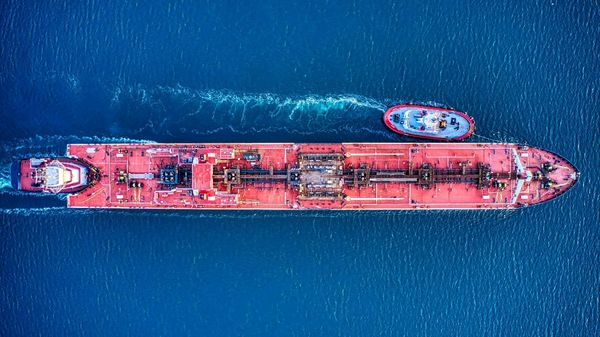
The project marks MOL's first ownership of an LNG-fuelled tugboat; it will also be Japan's first LNG-fuelled tugboat to conform to the International Code Of Safety For Ships Using Gases Or Other Low-Flash Point Fuels (IGF Code).
Additionally, the newbuild is the country's first LNG-fuelled tugboat with the LNG fuel tank mounted on the exposed deck at the stern of the ship. The fuel tank set-up is designed to make bunkering, maintenance, and inspection more convenient.
MOL says it will be moving ahead with research on an LNG fuel supply system with a detachable, portable LNG fuel tank, where the design will be adapted to the tugboat.
ISHIN Next - MOL Smart Ship Project
The tugboat is being built as part of the '
ISHIN Next - MOL Smart Ship Project', which was launched in November 2016 and focuses on "advanced support technologies for safer vessel operation" and "technologies for reducing environmental impact".
MOL said last year that knowledge and expertise gained from the tugboat's construction and operation will then be used for the development of various types of LNG-fuelled ships, including the
ISHIN-II ferry - a next-generation vessel concept that was completed in 2009.
Other projects
MOL also forms part of a joint study to develop
LNG-fuelled bulk carriers operating in a 'green corridor' transporting iron ore and coal between Australia and China. Other project partners are: BHP Billiton, DNV GL, Mitsui O.S.K. Lines (MOL), Rio Tinto, Shanghai Merchant Ship Design and Research Institute (SDARI) and Woodside Energy.
This project has also involved exploring optimal solutions for the location of the LNG fuel tank. In the end, the project partners have opted for two LNG fuel tanks placed directly above the engine room and submerged a few metres below the main deck - thus offering protection for the fuel tanks, enhancing fire protection, and not reducing the cargo carrying capacity - even for volumetric cargoes such as coal.
Also in 2017, MOL and Samsung Heavy Industries received approval from DNV GL for the design of a series of four LNG-powered 20,000-TEU containerships.
Last month, meanwhile, MOL, Tohoku Electric Power and Namura Shipbuilding earned an approval in principle (AIP) from Lloyd's Register for the design of an LNG-powered coal carrier which has been designed to ensure that there is sufficient cargo capacity without making the hull larger by installing the LNG fuel tank at the stern.