Tue 22 Nov 2016, 11:05 GMT

Martek awarded drone emission monitoring contract


Drone uses onboard gas analyser to determine possible breaches in EU law on the sulphur content of a ship's fuel.


Maritime technology firm, Martek Marine, has been awarded a framework contract by the European Maritime Safety Agency (EMSA) which deals with Remotely Piloted Aircraft System (RPAS) services in the maritime environment.

The contract won by UK-headquartered Martek is specifically for ship engine emission monitoring by RPAS (drone). The EMSA's requirement is for an RPAS to sample gases from a vessel's emissions plume by using a sophisticated payload of electro-optical, infrared imaging, gas emission and AIS detection sensors.

According to Martek, its RPAS can be flown over 50 kilometres from the ground station beyond visual line of sight (BVLOS), with instant and continuous video being streamed back to the ground station and member states. An onboard gas analyser draws samples of air and monitors SOx, NOx and CO2 levels to determine possible breaches in EU law on the sulphur content of a ship's fuel.

Martek says it has developed "a team of highly skilled technical experts, experienced pilots and a bespoke maritime unmanned helicopter specifically adapted to suit this application".

Development is said to be also underway to incorporate satellite command and control and payload data streaming, so the RPAS can operate in what is known as beyond radio line of sight (BRLOS), over 100 kilometres away. In order to operate effectively in the harsh maritime environment, the RPAS can withstand storm force wind and heavy rain, snow and salt spray, Martek Marine says.

Paul Luen, Martek Group CEO, explained: "We've worked hard and invested big to pioneer the maritime application of drone technology in the last three years. This EMSA contract allows us to combine our original 'world first' of ship SO2/CO2/NOx monitoring, with our unique drone platform to deliver another world first. We're determined to change the world using drones and this is the first of many applications which we intend to pioneer.

"We have made a real commitment to drone technology and envisage them bringing huge benefits to maritime operations and this tender allowed us to marry this capability with our world leading emissions monitoring pedigree."

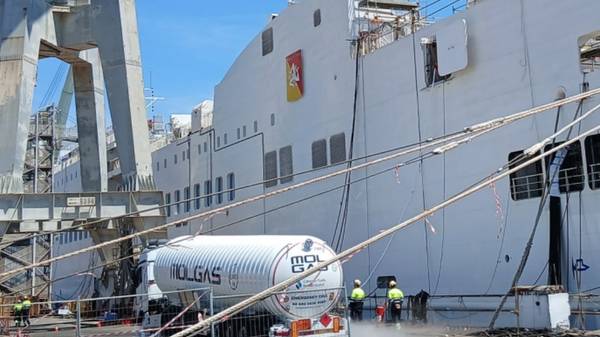
Truck-to-ship (TTS) LNG bunkering at Port of Palermo. Molgas completes first LNG bunkering operation at Palermo  

Spanish energy firm carries out maiden LNG delivery at Sicilian port.

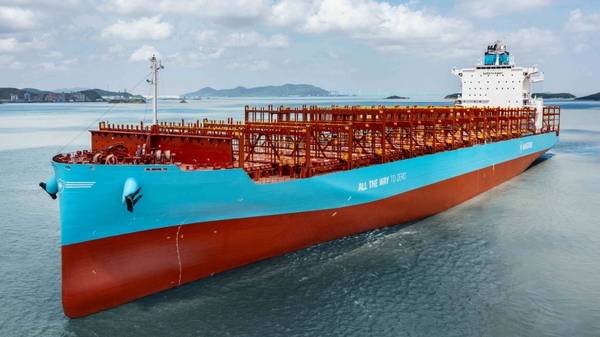
Maersk 5,900-teu vessel. Tsuneishi China delivers third methanol dual-fuel boxship in series  

Zhoushan shipbuilder hands over another 5,900-teu Maersk container vessel.

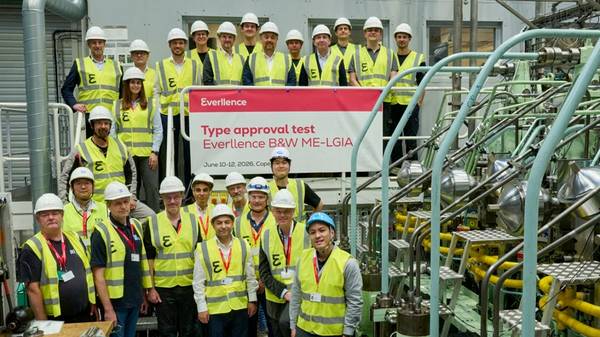
Type approval test (TAT) for ME-LGIA ammonia engine. Everllence completes type approval test for ammonia engine ahead of sea trials  

Eight classification societies oversee testing of ME-LGIA ammonia engine at Copenhagen research centre.

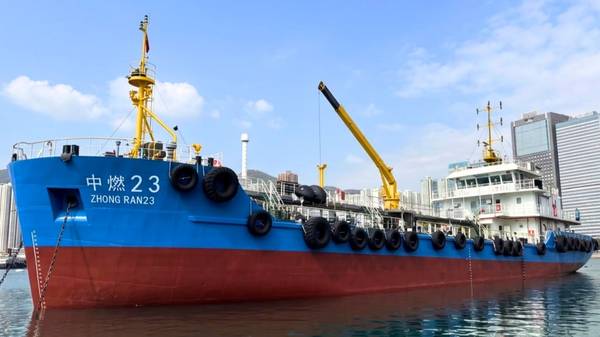
Zhong Ran 23 vessel. CPN bunker barge becomes first vessel listed under Hong Kong’s new quality bunkering scheme  

Zhong Ran 23 achieves listing under the Marine Department’s voluntary mass flow metering initiative.

Peder Moller, Bunker Holding. Bunker Holding posts $73m pre-tax profit amid geopolitical headwinds and board overhaul  

Marine fuels exceeds its own expectations despite 4% revenue decline.

Oilmar Board of Directors graphic. Oilmar formalises governance structure with establishment of board of directors  

Dubai-based marine fuels trader Oilmar appoints three-member board.

Henrik Andersen, Vestas Wind Systems A/S. Vestas Wind Systems CEO appointed vice chair of Bunker Holding  

Henrik Andersen joins the board of the marine fuels group with more than two decades of international business experience.

Tina Revsbech, Maersk Tankers. Maersk Tankers CEO Tina Revsbech joins Bunker Holding board  

Danish USTC Group appoints shipping veteran to subsidiary’s board of directors.

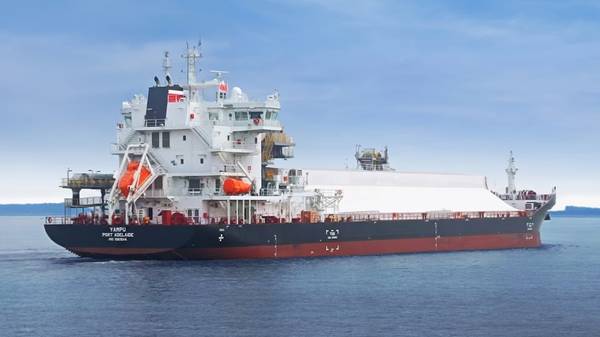
Yampu vessel. CSL delivers world’s first battery-powered self-unloading bulk carrier  

MV Yampu will transport limestone for Adbri in Australia, with full electric operation targeted by 2031.

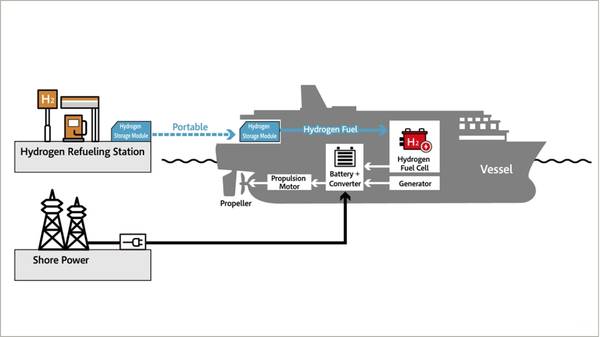
Illustration of hydrogen fuel cell system. NYK, Yanmar and Eneos to install hydrogen fuel cell system on new Tokyo dining cruise vessel  

Three Japanese companies are collaborating to bring hydrogen propulsion to a dining cruise ship due to enter service in 2027.