
 |
Distillate Price Volatility Makes B100 (FAME) a Viable Option
The 2026 Middle East conflict, including the closure of the Strait of Hormuz, through which 25% of the world’s oil & 20% of LNG flows, has triggered one of the largest global energy supply disruptions in modern history. This narrow waterway is the world’s most critical energy chokepoint, with over 80% of its oil and natural gas shipments bound for Asia.
The closure of the Strait has caused supply shortages and transport paralysis with tanker traffic nearly halted. Although the Middle East conflict situation remains fluid, if this continues to worsen, then commentators have suggested that crude oil could reach record levels.
Marine distillates are particularly exposed, with roughly 1.15 million b/d of middle distillates being impacted by the Hormuz disruption, coupled with further price drivers such as insurance premiums making distillate supply a premium.
With distillates now at historically high levels, this has given rise to attractively priced alternative marine fuel sources, which are not as directly affected by Middle East crude disruptions. As Biodiesel pricing is driven in part by agricultural feedstocks, the pricing gap between B100 FAME and distillates has reduced. Thus, even if B100’s nominal price per tonne remains slightly higher than distillate, the effective cost per voyage is now materially lower or near-parity. The added environmental and legislative benefits of CO2 reduction by using B100 also leads to reduced carbon taxation due to emissions pooling under FuelEU maritime regulation.
Effectively Shipowners now see a smaller economic penalty – and in some cases a net benefit for switching to B100.
Recommended Approach for Introducing B100 FAME
VPS is seeing an increase in B100 FAME usage, although fossil fuels remain the dominant marine fuels. The use of B100 has however increased in response to the aforementioned dynamics. As the standard blend configuration, we see Bio-blends in the form of B30 being used with 70% fossil fuels, such as distillate, very-low-sulphur fuel oil (VLSFO) and heavy fuel oil (HSFO). These fuel blends present limited risk in terms of operational use and handling. However, biofuels including B100, require specific fuel management considerations, which VPS has highlighted in past articles available at: Articles | VPS.
These challenges include:
That said, B100 (FAME) is already in use by many clients, and we have seen very few technical issues. This indicates that with appropriate fuel management and handling practices, B100 can be successfully used as a drop-in fuel.
To support successful implementation and operation, VPS recommends the following:
Ideally, B100 should be introduced after tanks have been drained and flushed to minimise the presence of water that could promote, fuel instability and microbial activity. Where possible thorough tank cleaning is recommended, as there is a likelihood that tanks may contain unpumpable residues from previous fossil fuel bunkers. These residues can become mobilised due to the relatively high solvency properties of FAME, lifting tank-bottom deposits when first introduced and potentially overloading purifiers during the initial stages.
Where possible, VPS recommends compatibility (spot) analysis prior to use. Onboard blending is not recommended. However, if operationally unavoidable, B100 should be bunkered and stored in a separate tank, blended in small portions, with performance and fuel quality being evaluated before progressing to higher ratios.
Verify compatibility of the fuel system components, including seals, gaskets, hoses & coatings. Pay particular attention to elastomers and painted surfaces. Confirm suitability with the OEM for main and auxiliary engines. Ensure any required changes are reflected in the Ship Technical File (SEEMP).
When B100 must be bunkered directly into tanks containing existing MGO, the following guidance should be followed:
Operational Guidance for Changeover from MGO to B100 (100% FAME)
VPS Support through Additional Protection Service - APS-FAME
VPS additional protection service was established to provide greater understanding and insight of marine biofuel quality. Whilst the introduction of ISO8217:2024 now caters for biofuel & Bio-blends, it is still not an all-encompassing test slate, as it places the onus on suppliers to ensure that the FAME component used for blending, or supplied as B100, complies with EN14214 or ASTM D6751. APS-FAME is therefore recommended to provide a more comprehensive assessment of fuel quality.
APS-FAME – Key Analytical Parameters Overview for B100/FAME
APS-FAME provides deeper insight beyond the ISO8217:2024 specification with respect to the quality, stability, and suitability of FAME-based marine biofuels through the following parameters:
The ongoing Middle East conflict is giving rise to serious concerns for many shipowner-operators. The significant volatility in marine gas oil and distillate pricing, as well as a potential impact on product availability, are factors driving vessel operators to seek alternative solutions.
In this environment, the commercial case for B100/FAME is expected to strengthen. Supported by a narrowing fuel price differential, plus a positive contribution towards both emerging and existing regulatory requirements, this drop-in fuel is gaining momentum as a viable marine fuel option.
While the use of B100/FAME requires more cautious fuel handling and operational considerations in order to mitigate operational risks, customers can rely upon VPS to provide insightful support throughout this transition. Our market-leading experience and expertise in marine fuel testing provides detailed fuel quality analysis, supported by sound scientific and marine engineering advice. All of this will help our customers make more informed decisions and operate with more confidence.
By Paul Houther – VPS UK Sales Manager
|
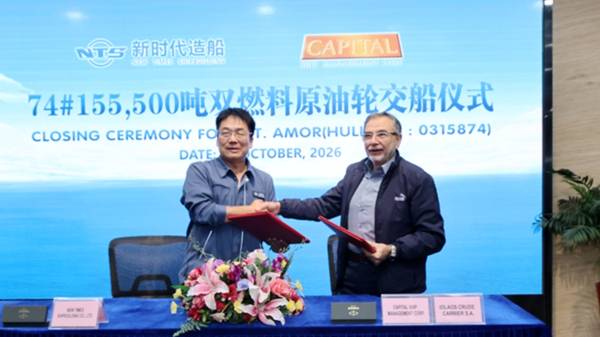
LNG dual-fuel crude tanker handed over to Capital
Jiangsu New Times Shipbuilding delivers the 155,500-DWT LNG dual-fuel crude oil vessel Amor. |
|
|
|
||

|
Gasum names Lowina Lundström as vice president, biogas
Former EIT InnoEnergy executive joins Gasum's management team to lead biogas business development from 1 December. |
|
|
|
||
|
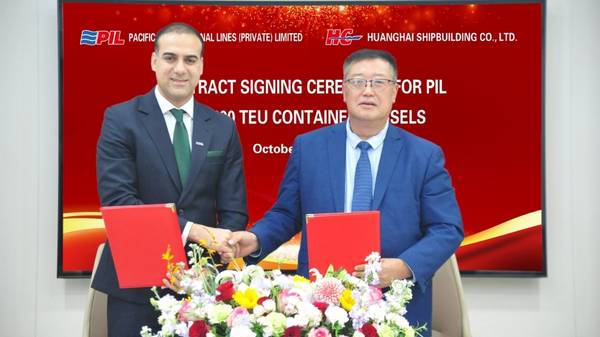
PIL orders seven methanol-ready feeder vessels from Huanghai Shipbuilding
Singapore carrier's 1,400-TEU newbuilds will boost intra-Asia capacity and support its 2050 net zero target. |
|
|
|
||
|
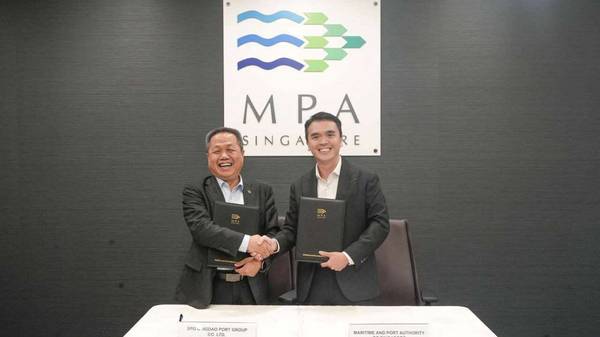
Singapore and Qingdao sign work plan to advance green and digital shipping corridors
MPA and Shandong Port Group’s Qingdao Port have agreed to pursue methanol bunkering pilots and data-sharing initiatives between the two ports. |
|
|
|
||
|
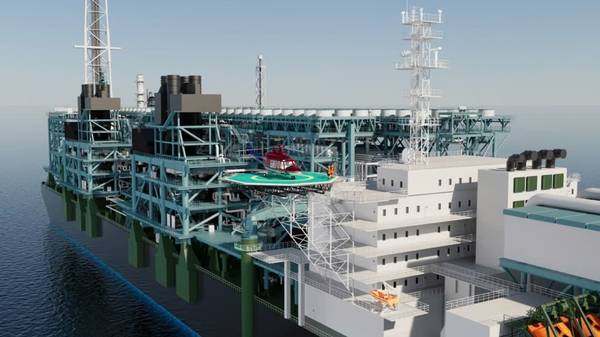
Wärtsilä to supply dual-fuel engines and thrusters for Delfin Midstream's FLNG vessel
Finnish technology group lands propulsion order for first floating LNG vessel built for US Gulf export project. |
|
|
|
||

|
Uni-Fuels advertises for senior bunker trader in Dubai
Nasdaq-listed firm recruiting for its trading team as it aims to drive growth. |
|
|
|
||
|
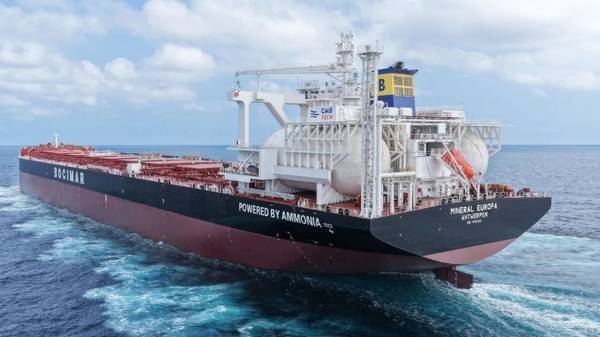
Green ammonia bunkered to ammonia-powered bulk carrier in Australian first
Pilbara Ports, Fortescue and CMB.Tech complete a ship-to-ship ammonia transfer at Port Hedland, supporting plans for a clean fuel bunkering hub in the region. |
|
|
|
||
|
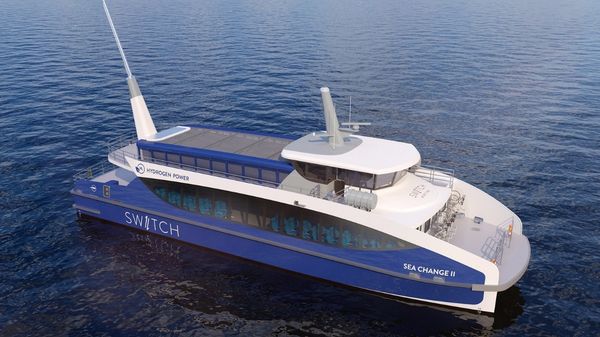
US Coast Guard agrees design framework for hydrogen-fuelled New York ferry
Switch Maritime and Incat Crowther reach regulatory agreement for a 150-passenger hydrogen fuel cell-electric fast ferry intended for New York's waterways. |
|
|
|
||
|
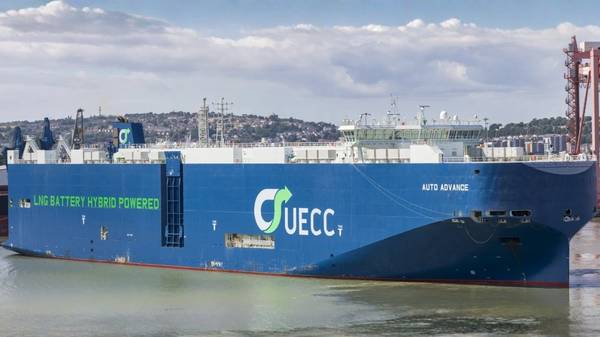
UECC fits WE Tech hybrid power systems on newbuild ro-ro vessels
Norwegian short-sea operator says battery and shaft generator technology from WE Tech Solutions has cut fuel use and auxiliary engine reliance on three newbuilds. |
|
|
|
||
|
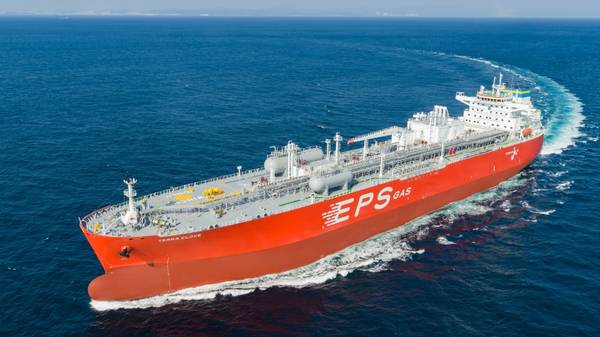
Envision's green ammonia used to bunker world's first VLAC
Chinese energy group supplies vessel owned by Eastern Pacific Shipping as it links production and marine fuel supply chains. |
|
|
|
||
| US Coast Guard agrees design framework for hydrogen-fuelled New York ferry [News & Insights] |
| EmissionLink urges EU to channel ETS revenues into shipping carbon capture trials [News & Insights] |
| VPS to host Athens seminar on fuel efficiency and carbon reduction [News & Insights] |
| LR publishes retrofit guidance covering alternative fuels and energy-saving devices in one framework [News & Insights] |
| Singapore launches series of measures at SIBCON 2026 [News & Insights] |
