Source: Port of Antwerp
But now that the
LNG Master Plan has come to an end the LNG story is not finished. Far from it: this was just the start, paving the way for promising new projects. Specifically, the port of Antwerp is getting ready to build an LNG bunker station for barges, with the concession agreement due to be signed at the beginning of 2016.
Master Plan objective
The Rhine-Main-Danube LNG Master Plan was formally brought to a close on 16 December 2015 in Rotterdam. Together with 32 other partners from all over Europe the port of Antwerp had contributed towards the objective of making LNG a reality for barge transport, as a clean fuel. This objective fell into two parts: on the one hand to encourage barge operators to use LNG as their fuel, and on the other to get barges to carry LNG to inland waterway ports throughout the European hinterland so that it can be available for industry and other modes of transport.
Pioneering role
Antwerp Port Authority has pioneered the use of LNG for several years now, with three important milestones being passed on the way to the imminent breakthrough.
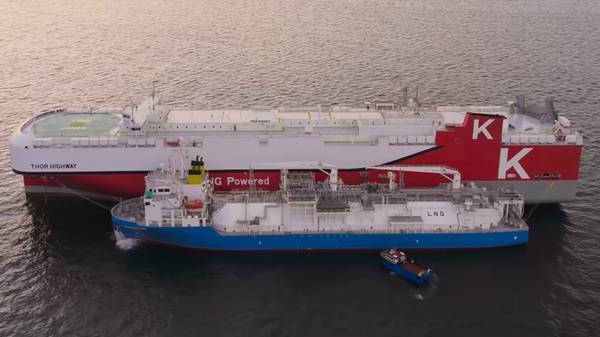
The first truck-to-ship bunkering for barges was carried out in December 2012. Since then barges have regularly bunkered with LNG in the port at quay 526 which has been specially equipped for this.
Then at the beginning of 2014 procedures with checklists for truck-to-ship, ship-to-ship and terminal-to-ship bunkering with LNG were included in the Port Police Regulations, so that LNG bunkering became formally a part of everyday operations in the port. These official procedures should help to make the bunkering procedures safe, simple, efficient and consistent. In the meantime the Port Authority has undertaken to help ports in other countries draw up harmonised regulations. Indeed the Antwerp checklists served as the basis for those developed by the LNG working party of the International Association of Ports and Harbours (IAPH), which have now become the de facto world standard.
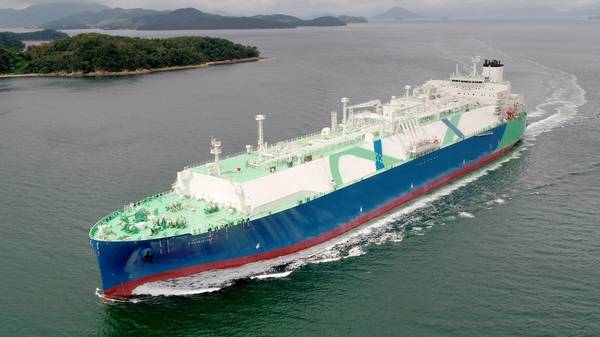
After much experience with LNG for barges, a new milestone was reached in September 2015 when a seagoing ship - the
Sefarina - carried out truck-to-ship bunkering in the port of Antwerp.
Permanent availability
With the construction of a bunker station in 2017, LNG will become permanently available in the port at all times. Within the framework of the LNG Master Plan the Port Authority, with the financial support of the European Commission, carried out the necessary study work that resulted in an environmental permit and a construction permit for the planned installation, so that the future concession-holder will be able to get off to a flying start with the new project!