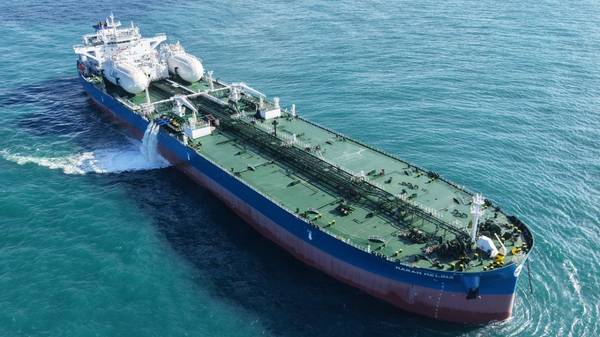
Bunker supplier
Aegean Marine Petroleum S.A has provided an insight into the key ingredients of its global strategy, which has seen the firm record 14 consecutive quarters of profitability and 29 profitable quarters out of 30 since becoming a public company.
Speaking in an earnings call last week,
E. Nikolas (Nick) Tavlarios, President, said: "The key components of our success and strong results include our vigilant focus on opportunistically streamlining expenses, our market-leading ability to leverage our assets and our continual efforts to expand our global market share, all of which support our unique and dynamic business model. This model has allowed Aegean to opportunistically capture additional revenue opportunities and drive profitability while simultaneously operating in challenging market environments. Moving forward, and if the markets begin to normalize, we will be well positioned towards marketing increased market demand and expand into new markets where appropriate.
"While the maritime industry has faced tremendous headwinds for more than five years, Aegean has continued to thrive. We established sustainable internal growth drivers, including our new East Coast bunkering business, which we acquired as of the end of 2013 and our soon-to-be-launched Fujairah storage facility. We are confident that even if the market challenges persist, we are well positioned to continue creating value for our shareholders. That said, should we see strong market improvement, we will likely see benefits in our financial results.
"Throughout the second quarter, we’ve continued to refine our operating infrastructure to enhance our ability to respond to current and future market demand. Part of this strategy includes the ongoing opportunistic sales of noncore vessels, which brought in cash proceeds and reduced our expense structure during the quarter. To-date, in 2014, we have sold noncore vessels reducing operating expenses by approximately 8 million per annum and our (indiscernible) of identifying a few additional sales opportunities. These actions are targeted to streamline our expense structure and improve the agility of our infrastructure.
"The sale of older noncore vessels allows us to over time increase utilization of our remaining fleet and reduce maintenance CapEx. We expect that rationalizing our expenses by selling older noncore vessels will remain a key part of our operating strategy for the foreseeable future. By the end of August, we will also sell our floating storage vessel, Fujairah, which is replaced by our onshore storage capacity in that region.
"In the second quarter, we continue to identify opportunities to increase efficiencies and drive profitability as capacity came out of the market. Despite the competitive landscape, this strategy is considered to deliver strong results. Similar to quarters past, we capitalized on significant built-in fleet capacity and took advantage of economies of scale to successfully leveraging our fixed cost to drive improvement on the bottom line. We believe we have built the strong foundation for profitable growth and expect to continue on the positive trajectory.
"Our goal is to further expand our geographic diversification and our revenue streams. As part of this strategy, we are considering a number of target opportunities to geographically expand on some integrated marine fuel logistics chain. In our efforts to pursue profitable revenue growth, we remain focused on expanding only to geographies that we believe will yield the greatest returns while simultaneously closing ports that have not yielded profitable results.
"In Fujairah, we are excited to capitalize on the emerging opportunities in the region as we commence commercial operations at our storage facility in the near future. This of course assumes that we achieved all necessary approvals and complete successful testing of all the systems. We also believe that we appraised our organic growth stream with our new facility in Barcelona and our operation at the Port of Algeciras Bay, both of which allow us to participate in the compelling Mediterranean market.
"In our U.S. operations, we are experiencing benefits from U.S. East Coast bunkering business. Now fully integrated into our business, this asset is profitable and we believe it will be a growth driver for the long term. Overall, we are pleased with the performance of our assets and are confident they’ll continue to drive significant growth and profitability.
"Marine fuel sales volume for the second quarter were 2,659,620 metric tons. In the month of July, we recorded sales of 945,000 metric tons. Throughout the second quarter, we continue to build volume and market share in our lubricants business, continue to diversify our revenue streams. For the second quarter, we announced lubricants volumes of 8,500 metric tons. This is a smaller lower-volume business for Aegean, but it continues to yield higher operating margins. We remain focused on expanding our volumes in the lubricants business as the means to drive additional revenue diversification going forward.
"Moving on to our capital allocation priorities, we are proud of our ability to generate significant levels of free cash flow. In the past, we have reinvested this capital back into our business to enhance operations and created strong platforms for long-term sustainable growth. As our business continues to grow free cash flow, the Board and management team will, as always, continue to access our capital allocation priorities. Our focus remains on deploying our cash to drive the most significant stockholder returns. As such, we will consider all options to achieve this objective including ongoing reinvestment, share repurchases and dividend increases as well as other opportunities to deliver shareholder value."