Singapore's
National Metrology Centre (NMC) - a measurement science and technology institute, operating under the
Agency for Science, Technology and Research (A*STAR) - has announced opening of a new liquid flow metrology lab that will provide key measurement services for the oil and gas and pharmaceutical industries.
NMC also announced the signing of a research collaboration agreement (RCA) with
Mogas Flow Lab (MFL), a local calibration services provider, on the establishment of Primary Liquid Flow Standard (PLFS) and a reseach and development (R&D) lab for mass flow measurement of bunker fuel.
The R&D lab and the Heavy Hydrocarbon Calibration Rig (HHCR) are expected to occupy about 5,000 square meters and will commence construction in late 2014. The lab will be the first of its kind to use actual bunker fuel as the flow medium.
When completed, the facility will give the local maritime industry a head start in allowing locally-calibrated bunker mass flow meters (MFM) to have a direct traceability to the standard mass, which is the kilogram in the International System of Units (SI units).
In bunker fuel trading, fuel is sold by mass but delivered by volume. Volume is affected by changes in pressure and temperature, unlike mass. The use of mass flow meters will allow the fuel to be measured by mass directly. Hence, accurate mass flow measurements serve to enable quantity certainty during transfers, and enhance transparency during transactions.
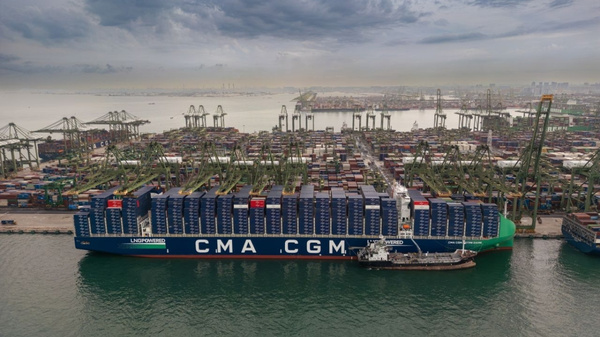
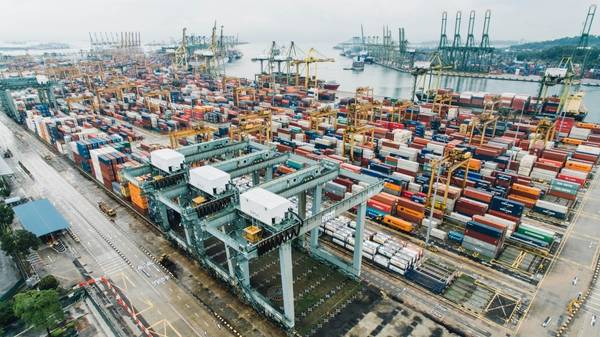
This is seen as important due to the large quantity and high costs of fuel involved. Last year, over 42 million tonnes of bunker fuel were sold in Singapore. Coupled with Singapore's standing as the leading bunker port globally, it is considered important to maintain measurement standards with direct traceability to internationally-recognised standards, which are needed to assure business partners of quality standards, promote fair trade and enable local companies to access the global market.
Enhancing R&D Infrastructure for Industry
As a national measurement institute that establishes and maintains measurement standards, NMC provides scientific metrology services to ensure that the measurement instruments and devices used by industry players are metrologically traceable to the SI units.
The newly opened liquid flow metrology lab has the capability to measure the mass flow rates of water-based synthetic fluids, using the gravimetric method, down to a measurement uncertainty of 0.05 percent. NMC will conduct R&D on flow measurement involving water-based liquids with different viscosities, and under varying temperature and pressure. This allows for the scope of study to be expanded to understand the behaviour of various liquids. The insights gained are set to benefit not just the maritime sector, but also others like the oil and gas, or pharmaceutical sectors, where precise measurements are indispensable.
Developing Future Standards to Meet Industry Demands
In addition to the new liquid flow metrology lab, NMC is also collaborating with MFL to provide scientific metrology expertise and consultancy for the establishment of a primary liquid flow standard (PLFS) and the construction of a heavy hydrocarbon rig (HHCR), as well as to conduct R&D in flow measurements for bunker fuel. The HHCR rig will have a flow measurement capacity of up to 1,500 metric tonnes per hour. It is built for conformance assessment and calibration of mass flow meters and will be designed to meet custody transfer of bunker fuel to vessels using the MFM system.
Co-located with the HHCR will be the NMC PLFS laboratory for bunker fuel. Both facilities will have integrated sensors, flow microprocessors, computing and diagnostics capabilities making them suitable for R&D purposes. The infrastructure will be able to measure 2-phase flow for assessing the meter performance under air entrained conditions and allow for precise control of temperature, pressure and process flow to support empirical tests for very low Reynolds Number flow regimes. Calibration will be conducted in a controlled fluid conditions setting where factors such as temperature, pressure and viscosity that would normally affect accuracy can be managed.
Dr Thomas Liew, Executive Director of NMC said: "The NMC liquid flow metrology lab will provide the capabilities to enhance the measurement quality in industries such as oil and gas, pharmaceutical, and F&B. We are also very excited with the opportunity to establish a one of its kind primary liquid flow standard using bunker fuel as the flow medium. At the same time, we are delighted to help a local SME like MFL to upgrade their capability to provide calibration services for mass flow meters."
Mr Teoh Seng Eng, Managing Director of MFL, remarked: "We are looking forward to the new facility. This will be a world class, high capacity, metrologically compliant and ISO17025 accredited liquid flow calibration infrastructure, which is specially designed for MFM systems. With our best-in-class infrastructure MFL is better able to support Singapore's initiative to implement mass metering system for bunker and also to make available conformity assessment services of MFM locally. Through the R&D lab with NMC, local companies like MFL are able to contribute towards enhancing the calibration service value chain."