Mon 7 Apr 2014, 14:37 GMT

Patent issued for glycerol hybrid fuel


Researchers are developing eco-hybrid fuel technology for the marine, rail and power generation industries.


Maine Maritime Academy faculty member, Dr. George Harakas, has co-authored a patent with colleague and business partner, Scott Eaton, for glycerol-containing fuel aimed at reducing emissions in large diesel engines.

The two are members of SeaChange Group LLC a private company formed in 2009 to develop low-emissions fuels. They recently received notice from the U.S. Patent and Trademark Office that patent # 8,679,202 was formally issued.

SeaChange Group (SCG), headquartered in Brunswick, is an entrepreneurial high-tech start-up with strong ties to Maine Maritime Academy. The company is developing eco-hybrid fuel technology, a low-cost, low-emissions 'drop-in' fuel for marine, rail and power generation industries. SCG has received funding from the Department of Energy, the National Science Foundation, the Maine Technology Institute, and seed money from industry.

"I did not envision that a patent would come out of this research, which began as a capstone project," said Dr. Harakas, who teaches general chemistry and chemistry for engineers at Maine Maritime Academy. "The interdisciplinary collaboration between engineering and chemistry is key to taking the research projects from the laboratory into the field."

Dr. Harakas earned his Ph.D. in Inorganic Chemistry at Texas Tech University. He is also Co-Principal Investigator on the Department of Transportation / UTC grant which is funding METEL, the Marine Engine Testing and Emissions Laboratory, at Maine Maritime.

"We are currently testing eco-hybrid fuels on work boats at Maine Maritime Academy,” said Dr. Richard Kimball, Professor of Engineering. "We’ll be evaluating fuel performance through sea trials as part of the METEL mission, which is to research and develop practical solutions for emissions reductions and efficiency for marine diesel engines."

Maine Maritime Academy is a co-educational, public college on the coast of Maine offering 18 degree programs in engineering, management, science and transportation.


Flag of Brazil. Petrobras resumes bunkering operations at Rio Grande Terminal after power restoration  

Brazilian supplier restarts marine fuel supply after completing an inspection following an electricity outage.

Stena E-Flexer vessel render. Stena RoRo orders battery-ready E-Flexer 2.0 ferries from Chinese yard  

Vessels include diesel engines capable of running on biodiesel and are methanol-ready.

BW Gemini vessel. Nord Gas Solutions to supply cargo and fuel systems for eight BW LPG VLGCs  

Gas-handling systems specialist awarded contract for new 90,000-cbm vessels.

Kingston Trader vessel. TFG Marine fits mass flow meter to Jamaica-bound bunker barge  

Kingston Trader becomes the first Caribbean bunkering vessel with mass flow metering as TFG Marine’s fleet coverage nears 90%.

Sebastian Vasquez and Camilo Angulo Ferrand, Monjasa. Monjasa announces full-chain marine fuel operations in Cartagena  

Monjasa says it now covers the entire marine fuel supply chain in Colombia, from oil wells to ship-side deliveries.

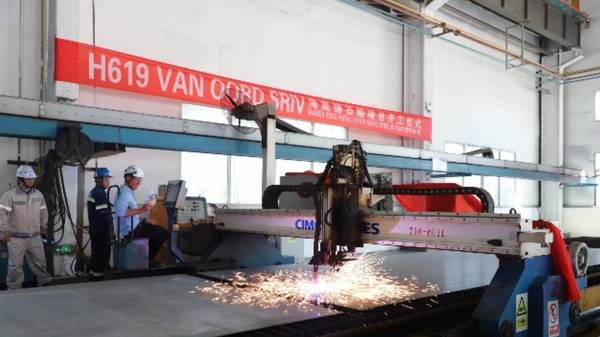
Steel-cutting ceremony for vessel with builder's hull no. H619. Ceremonies held for Van Oord’s methanol-hybrid rock installation vessels  

Two ships advance through parallel construction at China’s CIMC Raffles shipyard.

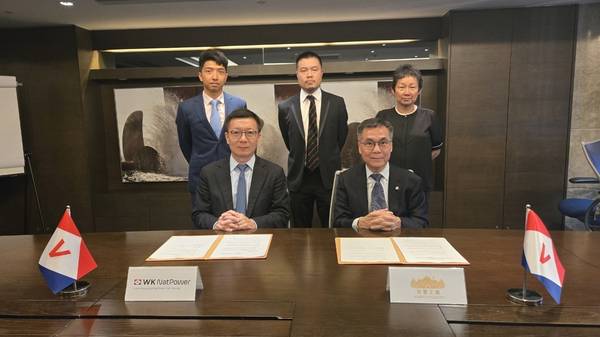
WK NatPower and AREL MoU signing. Wah Kwong NatPower signs MoU to explore Hong Kong marine electrification  

Venture will examine shore power, vessel charging and electric vessel deployment around Aberdeen’s waterfront.

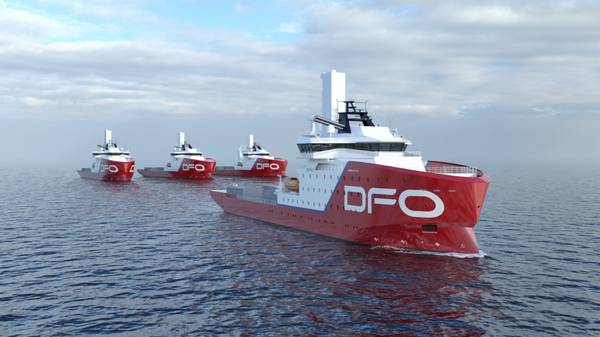
Vard 4 39 design render. Dong Fang Offshore orders CSOV with battery-hybrid propulsion  

Vard secures fifth newbuild contract from Taiwanese firm, with delivery scheduled for 2028.

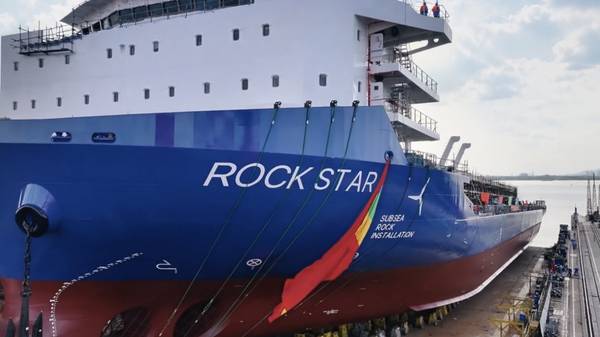
Rock Star vessel. CSL and OWL launch first subsea rock installation vessel for offshore wind  

MV Rock Star can run on MGO and methanol and is designed to support scour protection and cable burial for offshore wind projects.

François Michel and Andy McKeran. Lloyd’s Register study backs 200,000-cbm LNG carriers for fleet renewal  

Analysis finds larger LNG carriers could cut transport costs while retaining access to most major terminals.