Fri 26 Jul 2013, 05:42 GMT

Tri-fuel LNG carrier equipped for Northern Sea Route


Newbuild LNG carrier is powered by a tri-fuel diesel-electric propulsion system.


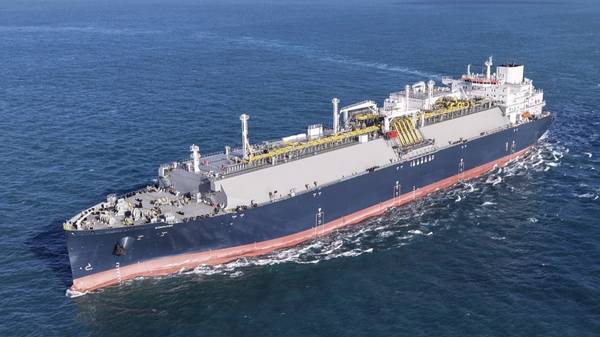
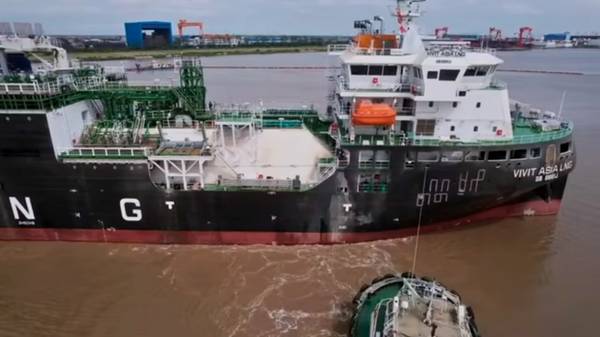
Gazprom Marketing and Trading (GM&T) is celebrating the completion and delivery of newbuild LNG carrier 'Yenisei River', which is powered by a tri-fuel diesel-electric propulsion system.

The vessel was delivered to GM&T by Hyundai Heavy Industries (HHI) and named 'Yenisei River' at a ceremony at the HHI shipyard in Ulsan, South Korea.

GM&T confirmed that it will time charter Yenisei River from Greek LNG tanker operator Dynagas for 'several years' and will use the vessel to support its growing global LNG trading portfolio.

The Yenisei River is the second vessel GM&T currently has on charter from Dynagas. The other ship, Ob River, was famous last year for being the world’s first LNG carrier to pass through the Northern Sea Route.

Attending the ceremony at the shipyard were senior officials from HHI, including Mr O.H. Kim, President & COO, Head of Shipbuilding / Offshore Engineering Division. Representing Dynagas were Mr George Procopiou, Founder, and Mr Tony Lauritzen, Commercial Director. GM&T was represented by a team including Vitaly Vasiliev, CEO; Nikolai Grigoriev, Managing Director, Shipping & Logistics and Jay Mistry, Director of Global LNG Trading.

Yenisei River is a highly sophisticated LNG carrier with membrane tanks, a cargo capacity of 155,000 cubic meters and is powered by a tri-fuel diesel-electric propulsion system.

The vessel's 1A ice class and winterisation equipment allows sailing in ice conditions, including in the Northern Sea Route during open navigation.

Yenisei River will be operated by an international crew, including graduates of the Admiral Makarov State University of Maritime and Inland Shipping (SUMIS), St. Petersburg, Russia.

Yenisei River is named after one of the three great Siberian rivers that flow into the Arctic Ocean - the other two being the Ob River and the Lena River.

RINA employee on board vessel. RINA unveils Mermaid propulsion concept to navigate uncertain decarbonisation landscape  

Fuel-agnostic design claims savings of more than 1,000 tonnes per year in some applications.

Adinkerke and Aalter naming ceremony. Exmar names third and fourth dual-fuel ammonia-powered vessels  

Midsize gas carriers Adinkerke and Aalter named at formal ceremony.

Professor Lynn Loo, GCMD. GCMD outlines practical approach to quantity assurance in marine biofuel supply chains  

New report addresses verification of both total fuel volume and renewable content in biofuel transactions.

Steel-cutting ceremony of London Express class vessel. Hapag-Lloyd cuts steel for first vessel of new London Express class  

16,800-TEU LNG dual-fuel vessel is first of 12 newbuildings in the class.

Vessels at sea. DNV report warns regulatory uncertainty complicates fleet investment decisions  

CEO urges greater clarity to provide the confidence needed for long-term investment.

Blue Whale NxtGen Energy battery system. Corvus Energy launches LFP battery system developed with BYD Energy Storage  

Blue Whale NxtGen Power targets tugs, ferries and workboats with high power demand.

Welcome ceremony of Yampu vessel. World’s first battery-powered self-unloading bulk carrier enters service in Australia  

MV Yampu connects South Australia’s limestone trade with a battery-electric propulsion system.

Skipanes vessel. E-methanol-ready ro-ro vessel delivered to Smyril Line  

190-metre vessel is built for year-round North Atlantic operations and designed for future e-methanol conversion.

Belgium flag. Sunoil Biodiesel secures approval to supply biofuels in Belgium  

Dutch biofuel supplier expands its European footprint with Belgian market entry.

Tacoma Maersk naming ceremony. Maersk takes delivery of dual-fuel methanol-capable Tacoma Maersk in China  

9,000-TEU vessel is one of six mid-sized dual-fuel ships joining Maersk's fleet.