Mon 22 Jul 2013, 13:22 GMT

First newbuild cruise ships to install 'world's smallest scrubber'


Cruise line says its newbuilds will be the first to feature scrubber technology developed by Green Tech Marine.


Norwegian Cruise Line (NCL) has announced that its two new Breakaway Plus class ships will be the first newbuilds in the cruise industry to feature scrubber technology developed by Green Tech Marine (GTM), a leading marine scrubber supplier, which claims that its GTM scrubber is the world's smallest.

The two new vessels will be built by Meyer Werft GmbH in Germany and delivered to the fleet in 2015 and 2017 respectively.

Green Tech Marine is contracted to provide five scrubbers per ship for the engines, which range from 14.4 to 16.8 megawatts. According to NCL, the installation will be the largest scrubber plant in the world with a total engine power of 76.8 megawatts.

"Norwegian Cruise Line has a history of innovation along with a commitment to utilizing green technology whenever possible," said Kevin Sheehan, Norwegian Cruise Line's chief executive officer. "Installing scrubbers from Green Tech Marine on our new Breakaway Plus vessels is a smart decision and one that will ensure these ships are as eco-friendly as possible."

The GTM-R scrubbers are compact, making it possible for the builds to avoid the loss of cabin space or other service areas. GTM uses one smaller scrubber for each engine instead of a large multi inlet scrubber serving several engines, and the scrubber also replaces the silencer, which NCL says is very suitable for cruise ships.

The GTM-R scrubbers are said to hold all the necessary certificates to ensure the vessels are compliant with the 0.1% sulphur limit in Emission Control Areas (ECA), beginning in 2015.

GTM has previously delivered scrubbers to NCL's Pride of America, which sails all year round in Hawaii. The scrubbers were installed during the ship's dry dock refurbishment in March and are scheduled to be fully operational later this year.

"We are thrilled to see a large ship owner such as Norwegian Cruise Line and a respected ship builder like Meyer Werft being early adapters of green technology," said President and CEO of GTM, Peter Strandberg.

Image: NCL's Norwegian Breakaway.


UEC60LSJ ammonia-fuelled engine render. J-ENG secures orders for four ammonia-fuelled engines under Japanese PCTC project  

Vessels form part of plan to build four ammonia-fuelled car carriers, a dedicated bunkering vessel and supply chain.

Hanwha Power receives ABS AiP for battery-powered containership design. ABS grants AIP to Hanwha Power for 1,700-TEU battery-powered container ship  

Design uses roughly 151 MWh of swappable battery storage for fully electric propulsion on a container vessel.

Peter Krahenbuhl, WinGD. WinGD signs first licence deal with HD Hyundai Marine Engine to expand Korean production  

Mid-bore engine portfolio gains new production route into Korea's bulk carrier and tanker newbuild markets.

ONE Symphony naming ceremony. Ocean Network Express names ammonia- and methanol-ready newbuild ONE Symphony  

Vessel features conventional diesel main engine, with concept designs approved for possible future conversion to methanol or ammonia.

Sing Fuels logo. Sing Fuels seeks Asia-based supply trader to bolster bunker procurement team  

Singapore bunkering firm is recruiting a supply trader to manage marine fuel purchasing across Asia.

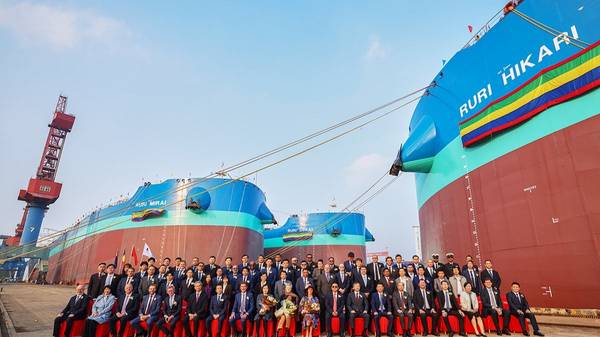
MOL joint naming ceremony. MOL names world's first ammonia-fuelled Capesize bulk carriers  

Naming of Ruri Mirai, Ruri Sekai and Ruri Hikari signals ammonia's arrival as a marine fuel for large bulk carriers.

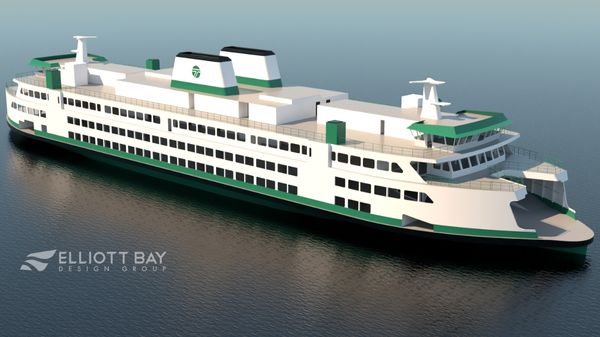
Washington State Hybrid-Electric 160-Auto Ferry vessel render. ABB wins Washington State Ferries' third hybrid-electric vessel order  

ABB extends its role in the US ferry operator's electrification programme, which targets emission-free operations by 2050.

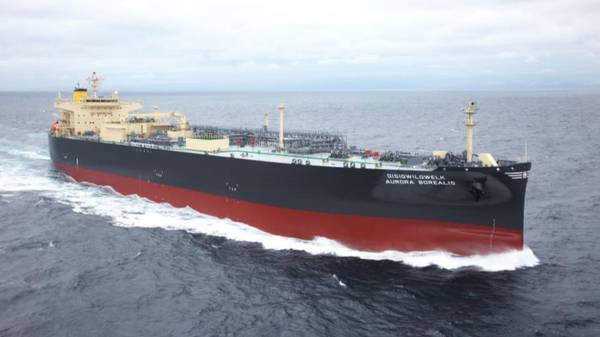
Aurora Borealis vessel. Kawasaki Heavy Industries delivers LPG-fuelled carrier Aurora Borealis  

Ship could also be modified in future to allow for ammonia-fuelled operation.

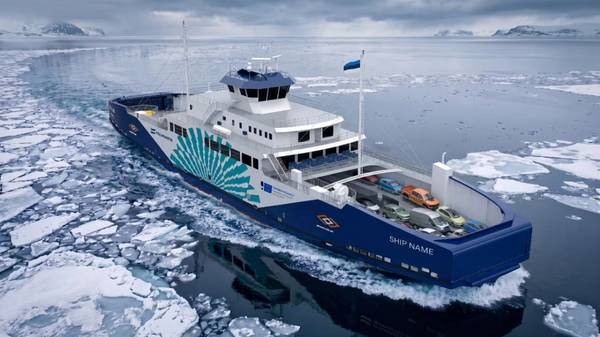
Rendering of Estonia's first shore-charged electric ferry. Estonian State Fleet's shore-charged electric ferry completes model testing in Germany  

Hull and propulsion tests show the vessel's energy consumption remains within contracted limits with room to spare.

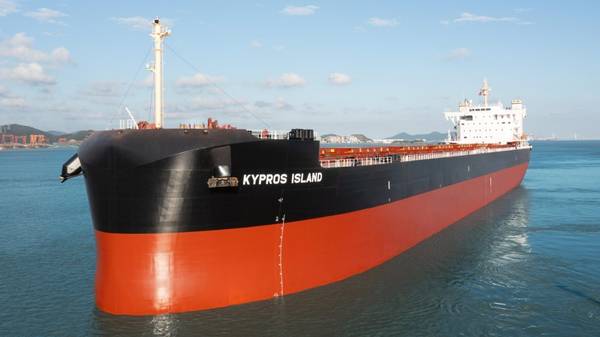
Kypros Island vessel. Tsuneishi delivers first methanol dual-fuel Kamsarmax bulk carrier from Chinese yard  

Shipbuilder claims progress towards establishing a mass-production system for vessels designed to reduce environmental impact.