Tue 5 Apr 2011, 12:33 GMT

Vessel achieves 'record' fuel efficiency in trials


Zyvex Technologies has announced that its 54' vessel named Piranha completed sea trials yesterday near Puget Sound in the Pacific Ocean, demonstrating 'record' fuel efficiency.

After six months of extensive testing, the Piranha completed its final sea trial - an approximate 600 nautical mile (nm) rough-weather sea test off the shores of Washington and Oregon. Piranha finished the tests in time to travel for its debut at the Sea Air Space show near Washington, DC, on April 11th.

A conventional aluminum or fiberglass boat would have consumed 50 gallons or more per hour at cruise speed, while test results prove that Piranha consumed only 12 gallons of fuel per hour while cruising at 25 knots.

"The Piranha demonstrates Zyvex Technologies' ability to produce products with nano-enhanced materials that are 40 percent stronger than metals, such as aluminum, and result in significant weight reduction and increased fuel efficiency," Zyvex Technologies said.

Made with 21st century advanced carbon fiber infused with carbon nanotubes (CNTs), the Piranha is said to be the first boat built with CNTs. Weighing only 8,400 pounds, compared to boats of similar size that typically weigh 40,000 pounds, the Piranha is 75 percent lighter, thus making it easier to transport and more cost effective to operate, according to Zyvex Technologies

"Our chemists molecularly engineer better materials and our designers and engineers make the world's strongest materials more useful," said Lance Criscuolo, president of Zyvex Technologies. "Metal boats have come a long way over the past 150 years, but it's only possible to reach new standards of performance using next-generation advanced composite materials."

Piranha can travel 2,800 nm without refueling and has operated in open-ocean conditions with waves exceeding 12 feet. Russell Belden, vice president of Zyvex Technologies, noted that other similar sized vessels built from heavier materials can only travel 450 nm without refueling.

"The lightweight Piranha delivers significantly better fuel efficiency and capability than any vessel this size. The most expensive part of operating a boat can be the fuel costs. Since the Piranha gets 2.5 miles per gallon going 25 knots, its operators would only spend one fourth as much on operating costs," said Belden.

The Piranha will begin demonstrations on the East Coast with an appearance at the Sea Air Space exposition. With initial sea trials complete, defense contractors are evaluating the Piranha for use as an unmanned platform with a variety of mission applications, including anti-piracy, harbor patrol, and oceanographic surveying. While in Norfolk, VA, Zyvex Technologies will also continue further integration of unmanned systems on the Piranha.

"Zyvex Technologies is redefining standards for building and designing stronger and lighter products for civilian and defense uses. Our technology, demonstrated by the Piranha, is a great option for better maritime vessels, manned and unmanned. There's nothing else on the water that has this combination of speed, efficiency, payload, and range. More and more structures will be built with our nano-enhanced advanced composites, taking industries such as marine, defense, and infrastructure to entirely new levels," said Criscuolo.


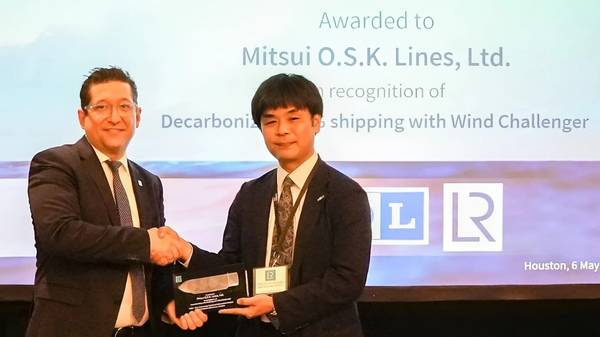
Panos Mitrou and Yoshikazu Kondo. MOL wins LR technology award for wind-assisted propulsion on LNG carriers  

Lloyd’s Register honours Mitsui O.S.K. Lines for its Wind Challenger decarbonisation work.

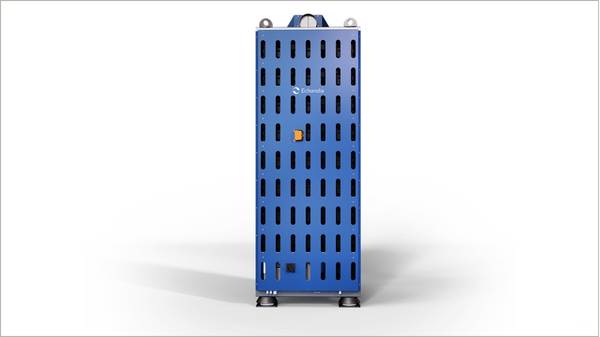
Echandia Core marine battery system. Echandia to supply battery system for Incat’s new 78-metre hybrid ferry  

Swedish battery maker Echandia wins first order from Australian high-speed ferry builder Incat.

Martin Vorgod, Global Risk Management. Global Risk Management posts $9.4m pre-tax profit amid low-volatility energy markets  

Danish hedging firm grows client base and broadens product range despite subdued market conditions.

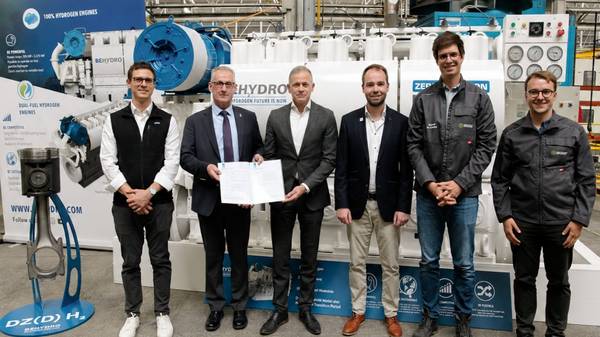
Lloyd's Register grants approval for BeHydro hydrogen engine. Lloyd’s Register grants first type approval for 100% hydrogen marine engine  

BeHydro’s spark-ignited engine, tested in Ghent, operates entirely on hydrogen without pilot fuel.

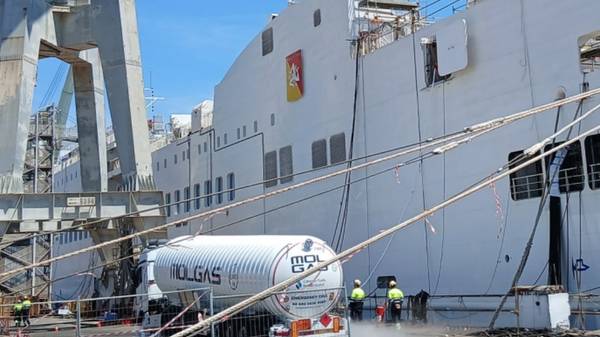
Truck-to-ship (TTS) LNG bunkering at Port of Palermo. Molgas completes first LNG bunkering operation at Palermo  

Spanish energy firm carries out maiden LNG delivery at Sicilian port.

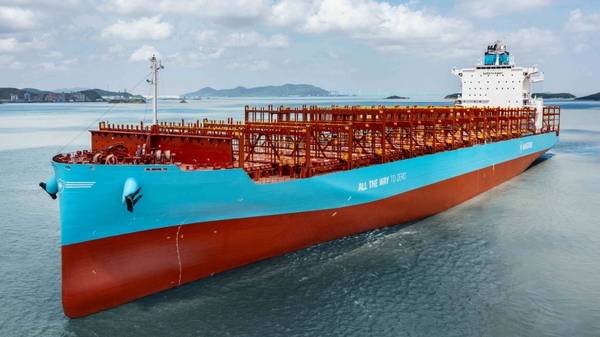
Maersk 5,900-teu vessel. Tsuneishi China delivers third methanol dual-fuel boxship in series  

Zhoushan shipbuilder hands over another 5,900-teu Maersk container vessel.

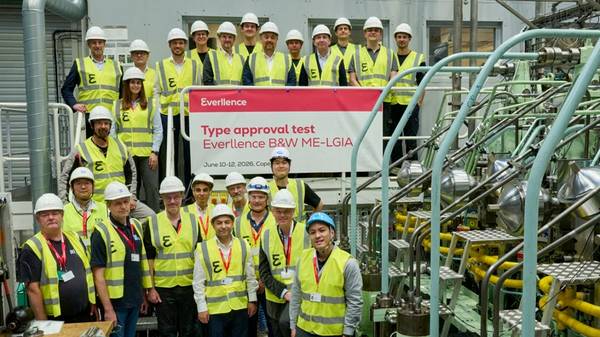
Type approval test (TAT) for ME-LGIA ammonia engine. Everllence completes type approval test for ammonia engine ahead of sea trials  

Eight classification societies oversee testing of ME-LGIA ammonia engine at Copenhagen research centre.

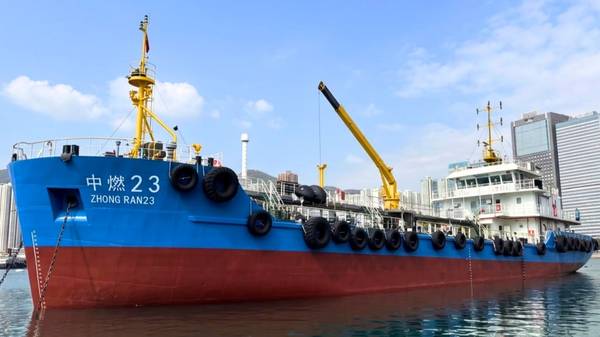
Zhong Ran 23 vessel. CPN bunker barge becomes first vessel listed under Hong Kong’s new quality bunkering scheme  

Zhong Ran 23 achieves listing under the Marine Department’s voluntary mass flow metering initiative.

Peder Moller, Bunker Holding. Bunker Holding posts $73m pre-tax profit amid geopolitical headwinds and board overhaul  

Marine fuels exceeds its own expectations despite 4% revenue decline.

Oilmar Board of Directors graphic. Oilmar formalises governance structure with establishment of board of directors  

Dubai-based marine fuels trader Oilmar appoints three-member board.