Mon 14 Mar 2011, 16:12 GMT

Global Vision Market Report


Technical indicators: neutral to bearish immediate term / bullish medium term

Oil prices came under significant selling pressure this morning and traded down to their lowest level since March 1st. Some traders suggested that a slight easing in the North African and Middle East conflict eased supply concerns, while the potential repercussions from the Japanese earthquake could limit economic growth prospects and reduce crude oil demand.

Oil prices declined on Friday strongly after earthquakes in Japan. A hydrogen explosion rocked the earthquake-stricken nuclear plant in Japan where authorities have been working desperately to avert a meltdown, but the core container was reported to be intact. Over the weekend engineers dumped sea water on three reactors at the Fukushima Daiichi nuclear power complex to prevent about 600 tonnes of uranium that make up the core of each reactor from overheating and melting their containers. The desperate action will effectively destroy the reactors, permanently taking them offline, and put more demand on LNG, oil and coal-fired installations as the country rebuilds. "Short-term oil prices will decline because Japan is one of the world's largest oil importers and the Japanese economy will be severely and negatively impacted," said analysts. Troops of embattled Libyan leader Muammar Gaddafi battled rebel fighters for control of the strategic Libyan oil town of Brega on Sunday, as France promised to push harder for a UN-backed no-fly zone over what used to be Africa's third-largest oil producer, before a civil war slashed output by at least two-thirds.

ICE Gasoil contract for March delivery settled at 958.75 dollars Friday night. This was +5.50 dollars above Thursday's settlement. Volume with some 112,500 deals well above average.

The Stochastic for Brent starts giving a buying signal to the markets today. The Stochastic of WTI is still slightly bearish and restrains NYMEX C.Oil in his upward movement. Nevertheless, the trend canals remain intact. The first support for the WTI crude is seen at 103.90 dollars, the first resistance at 105.50 dollars. The Brent's first resistance is seen at 117.00 dollars, the first support is at 112.15 dollars.

U.S.

Nymex Access losing. Oil prices dropped to near 99 US dollars a barrel Monday in Asia after a massive earthquake and tsunami devastated northeastern Japan and threatened to send the world's third-largest economy into recession. Officials estimate a 10-meter (33-foot) wall of seawater triggered by an 8.9 magnitude quake off the coast of northern Japan on Friday killed at least 10,000 people and severely damaged the country's energy infrastructure. The traded volume is above average.

Houston (ex-wharf indications 11-3)

380 cst $618
180 cst $638
MDO $974

Very tight avails for 180 cst

New Orleans (ex wharf indications 11-3)

380 cst $620
180 cst $641
MDO $977

Singapore (correct as of 1430hrs LT - delivered indications)

Crude is bearish still with WTI -$2.18 Singapore paper is losing less, and mixed with -$2.18 for 180 cst and +/-$0.00 for 380 cst for March, and for Apr 180 cst +$1.00 and 380cst +$0.30 with MGO March contracts at -$0.17 and for Apr at -$ 0.15 The cargo market is slowly starting to react to crude with 180cst -$4.20, 380cst -$3.07 and MGO -$1.17.

The fuel oil markets were down more than $3.00/mt on the Platts window last Friday. The Singapore heavy residual inventories reported a draw of -0.46 to 18.89 mbbl soaked up by the robust bunker market. The bunker delivered premiums slipped to $8.00- 9.00 above cargo price last Friday. Bunker fuel swaps gained app. 3.00/mt in the front while loosing some 50 cents in the backend of the forward curve both in Rotterdam and Singapore. Both markets remain in backwardation, with Singapore Cal12 papers trading at a discount of more than $20.00/mt compared to spot prices (a bit more than $15.00/mt discount in Rotterdam). This morning both markets are trading lower.

High premiums for prompt deliveries.

380 cst $639
180 cst $651
MDO $970

Fujairah (delivered indications 14-3)

380cst: $634
180cst: $665
MGO: $990

Rotterdam

Indications for delivered bunkers:

380cst: $604
(1.0%): $665
180cst: $682
(1.0%): $704 (very low avails)
MGO 0.1%S: $963


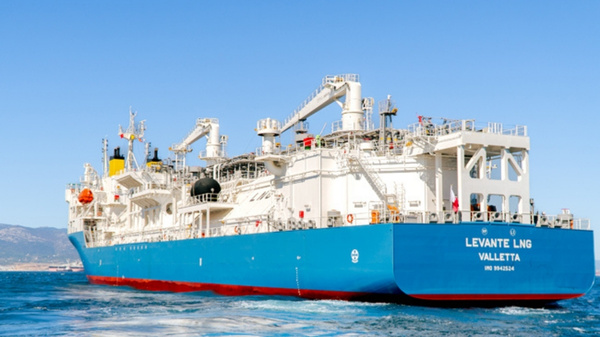
Truck-to-ship (TTS) LNG bunkering at Port of Palermo. Molgas completes first LNG bunkering operation at Palermo  

Spanish energy firm carries out maiden LNG delivery at Sicilian port.

Maersk 5,900-teu vessel. Tsuneishi China delivers third methanol dual-fuel boxship in series  

Zhoushan shipbuilder hands over another 5,900-teu Maersk container vessel.

Type approval test (TAT) for ME-LGIA ammonia engine. Everllence completes type approval test for ammonia engine ahead of sea trials  

Eight classification societies oversee testing of ME-LGIA ammonia engine at Copenhagen research centre.

Zhong Ran 23 vessel. CPN bunker barge becomes first vessel listed under Hong Kong’s new quality bunkering scheme  

Zhong Ran 23 achieves listing under the Marine Department’s voluntary mass flow metering initiative.

Peder Moller, Bunker Holding. Bunker Holding posts $73m pre-tax profit amid geopolitical headwinds and board overhaul  

Marine fuels exceeds its own expectations despite 4% revenue decline.

Oilmar Board of Directors graphic. Oilmar formalises governance structure with establishment of board of directors  

Dubai-based marine fuels trader Oilmar appoints three-member board.

Henrik Andersen, Vestas Wind Systems A/S. Vestas Wind Systems CEO appointed vice chair of Bunker Holding  

Henrik Andersen joins the board of the marine fuels group with more than two decades of international business experience.

Tina Revsbech, Maersk Tankers. Maersk Tankers CEO Tina Revsbech joins Bunker Holding board  

Danish USTC Group appoints shipping veteran to subsidiary’s board of directors.

Yampu vessel. CSL delivers world’s first battery-powered self-unloading bulk carrier  

MV Yampu will transport limestone for Adbri in Australia, with full electric operation targeted by 2031.

Illustration of hydrogen fuel cell system. NYK, Yanmar and Eneos to install hydrogen fuel cell system on new Tokyo dining cruise vessel  

Three Japanese companies are collaborating to bring hydrogen propulsion to a dining cruise ship due to enter service in 2027.