Fri 29 Oct 2010, 08:13 GMT

Dual-fuel engines for Spanish vessel


Newly-delivered LNG carrier is able to run on both gaseous and liquid fuels.


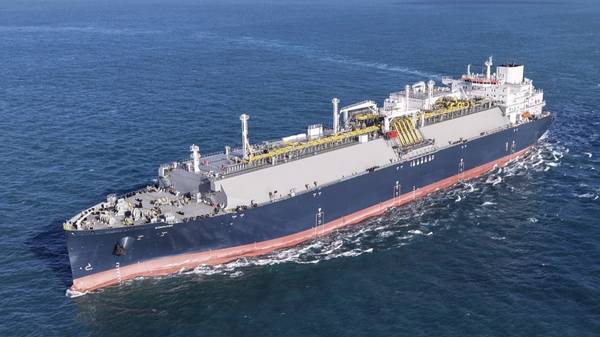
STX Offshore & Shipbuilding, the South Korean shipbuilder, recently delivered the Castillo de Santisteban to Empresa Naviera Elcano, the globally active Spanish shipping group. Five MAN dual-fuel 8L51/60DF engines will power the 300-metre long LNG carrier with each delivering 8,000 kW at 514 rpm.

The newbuilding has been assigned by her charterer, Spanish energy company Repsol - Gas Natural LNG (Stream), to the Peruvian Camisea/Pampa Melchorita gas project, the first natural-gas liquefaction plant in South America. The carrier has a carrying capacity of 173,600 m3 LNG.

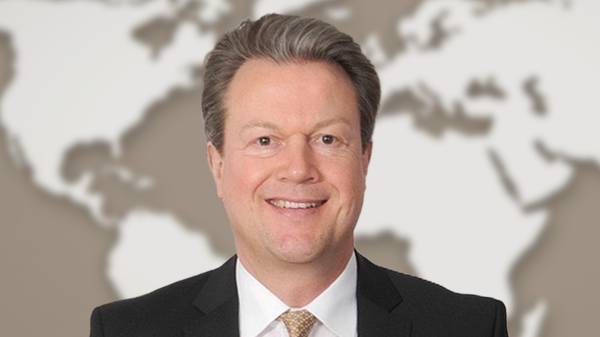
Klaus Deleroi, Senior Vice President, MAN Diesel & Turbo SE, said: "When it comes to ship-propulsion technology, the future is gas. Not only for LNG carriers, but also for cargo vessels, ferries and even cruise liners. Knowing this, it is important for MAN Diesel & Turbo to have a strong reference already at sea with our new 51/60 dual-fuel engine, and that is exactly what we have with the Castillo de Santisteban."

The Castillo de Santisteban recently passed extensive gas and sea trials before the hand-over to its owner. Its entry into active service represents a milestone for MAN Diesel & Turbo in that the order for the ship's dual-fuel engines, registered in 2007, was the very first received for this engine type. The engine is especially designed for propulsion systems for LNG carriers and gas-fuelled ships, and is said to focus on the safety requirements stipulated by classification societies for gas operation.

"The LNG Carrier's new propulsion system is designed to give the vessel a higher degree of redundancy in terms of maintenance while sailing, and takes advantage of the 51/60DF engine's multiple fuelling options," MAN Diesel & Turbo said.

The 8L51/60DF engines were built at MAN Diesel & Turbo's own works in Germany. They can run on gaseous (for example, vaporised LNG) or liquid fuels of a wide range of qualities (HFO/MDO/MGO) and have low emission levels.

At 1.5 g/kWh (IMO cycle E2) in gaseous-fuel operating mode, the 51/60DF already complies with future IMO Tier-III limits for NOx by a considerable margin without the need for exhaust-gas treatment or any other countermeasures.

The MAN 51/60DF engine

MAN Diesel & Turbo's 51/60DF dual-fuel engine offers a 1,000 kW/cylinder output at 514 rpm for 60-Hz generator sets in both its gaseous and liquid-fuel operating modes. For marine applications, it is offered in inline versions with 6, 7, 8 and 9 cylinders and V- configuration versions with 12, 14, 16, and 18 cylinders in a power range from 6,000 to 18,000 kW.

MAN's new engine model uses the ‘common-rail' micro-pilot fuel-injection system for liquid fuel that is necessary when running on gas to ignite the air-gas mixture. This system is said to ensure independent control of injection timing, injection pressure and injection volume.

When running on liquid fuel, the 51/60DF works with a conventional fuel-injection system, injecting the fuel oil through a separate main fuel injector in a camshaft-actuated pump-line-nozzle system. The fuel injection control is integrated within the engine's SaCoSone (Safety and Control System).

Image: View of the engine room of the Castillo de Santisteban with its dual-fuel engines


American Bureau of Shipping (ABS) logo. ABS introduces nuclear-ready notation for marine and offshore assets  

The classification society has released what it describes as an industry-first notation to support future nuclear conversion of vessels and offshore assets.

AiP handover ceremony for NEXTGEN Energy Hub (NGEH) design. ABS grants approval in principle for Seatrium’s NEXTGEN Energy Hub design  

The hub concept integrates ammonia bunkering, power generation and electric vessel charging in a single unit.

Jumbo Maritime crew aboard vessel. Jumbo orders two methanol-ready L-Class heavy lift vessels from Dajin Heavy Industry  

Dutch heavy lift specialist Jumbo signs newbuilding contract for two 25,000-dwt vessels.

China flag. Zhoushan completes first bonded bunker operation at Majishan port area  

The operation marks full fuel supply coverage across all general cargo terminals in Zhoushan's port system.

US dollar banknotes. Port of Long Beach launches $1m methanol bunkering challenge for oceangoing vessels  

A $1m prize aims to kick-start commercial methanol bunkering at one of North America's busiest ports.

Core Power, Athlos Energy, Deon Policy Institute and ABS logos. Greece floating nuclear study finds no fundamental barriers to implementation  

A PESTLE assessment of floating nuclear power plants in Greece identifies framework gaps, not feasibility barriers.

Northern Pathliner alongside Bergen LNG vessel. Molgas completes LNG cool-down and bunkering for Northern Pathliner at Northern Lights terminal in Norway  

Operation carried out at Øygarden facility, with K Line and Integr8 Fuels in the supply chain.

Rendering of a G2 Ocean OHGC vessel. G2 Ocean expands fleet with six future-fuel ready gantry crane vessels  

Open hatch specialist adds vessels and jet sail technology as part of a broad fleet renewal programme.

CMA CGM Adventure vessel at Port of Mombasa. LNG-powered CMA CGM Adventure makes first call at the Port of Mombasa  

Kenya Ports Authority receives its first large LNG-fuelled container vessel.

Liam Blackmore, Lloyd's Register. Maritime trio shapes IMO safety guidelines for ammonia as marine fuel  

Real-world operational experience feeds directly into new IMO ammonia fuel safety framework.