Tue 2 Mar 2010, 07:34 GMT

Vopak terminal to raise capacity by 6m barrels


Terminal operator plans to spend around $350 million to further expand its operational capacity.


Vopak Terminal (Bahamas) is said to be in the process of completing contract negotiations for the further expansion of its facilities in Grand Bahama, according to Managing Director Bahamas, Raymond Jones.

Speaking at the 12th annual Grand Bahama Business Outlook conference, Jones said "We already went out to bid on the project, and we are actually doing bid evaluation now, looking at the operability of the design to see how we can best operate it safely, and also for the benefit of customers in terms of the service we can offer."

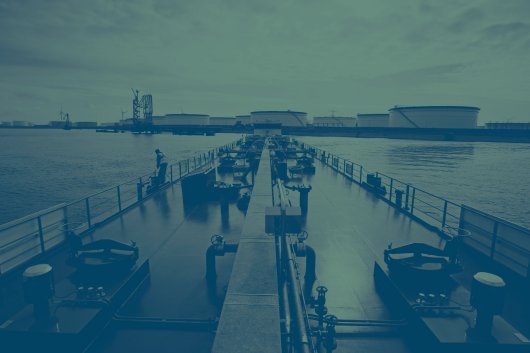
The Vopak terminal, located in Freeport, Bahamas, just 80 miles of the coast of Florida, is the largest storage terminal in the Caribbean offering blending, transhipment and bunkering services from a strategically positioned location.

First Reserve and Vopak completed their acquisition of the Bahamas Oil Refining Company (BORCO) terminal - renamed Vopak Terminal Bahamas - in April 2008.

Vopak is the world's largest independent tank terminal operator specializing in the storage and handling of liquid and gaseous chemical and oil products, whilst First Reserve Corporation is the leading private equity firm that specializes in the energy industry.

Following the acquisition of the Freeport terminal in 2008, the new owners pledged to expand the existing operational capacity in the near term.

Jones said the BORCO terminal had already grown from a 14 million to 21 million-barrel storage facility with an investment of around $250 million.

He added that the cost of the next expansion phase will be another $350 million, which will raise the terminal facility's storage capacity by an additional six million barrels.

"We hope within the next couple of weeks we will be able to complete negotiations with the contractor and go back to our board with the entire economic package, and say: 'Here is the proposal, here is what we can achieve, how we can do it, here is the return', and hopefully successfully get approval from our board to go ahead and do it, and get the contract signed" he said.

Jones said that he was confident that contract negotiations would be completed before the end of May and that the facility would be completed within 24 months, with the first tanks becoming available by the end of December 2011.


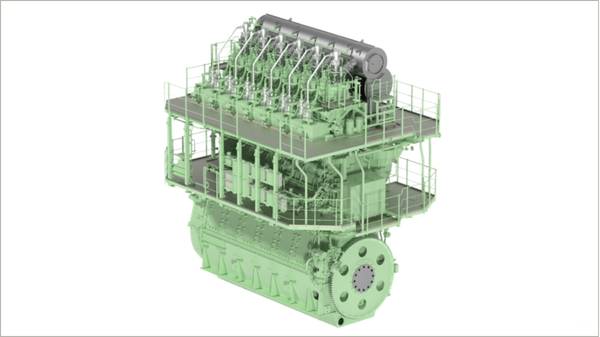
UEC60LSJ ammonia-fuelled engine render. J-ENG secures orders for four ammonia-fuelled engines under Japanese PCTC project  

Vessels form part of plan to build four ammonia-fuelled car carriers, a dedicated bunkering vessel and supply chain.

Hanwha Power receives ABS AiP for battery-powered containership design. ABS grants AIP to Hanwha Power for 1,700-TEU battery-powered container ship  

Design uses roughly 151 MWh of swappable battery storage for fully electric propulsion on a container vessel.

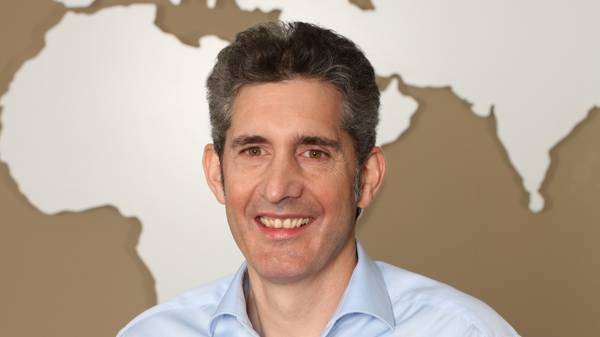
Peter Krahenbuhl, WinGD. WinGD signs first licence deal with HD Hyundai Marine Engine to expand Korean production  

Mid-bore engine portfolio gains new production route into Korea's bulk carrier and tanker newbuild markets.

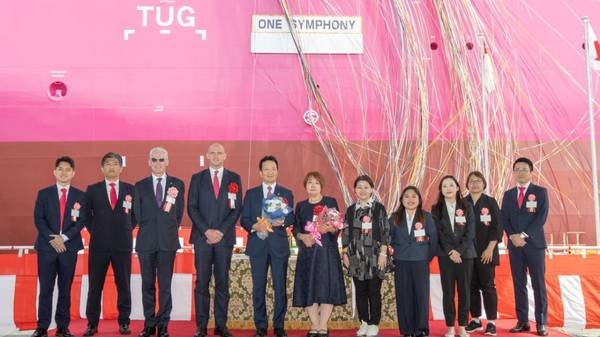
ONE Symphony naming ceremony. Ocean Network Express names ammonia- and methanol-ready newbuild ONE Symphony  

Vessel features conventional diesel main engine, with concept designs approved for possible future conversion to methanol or ammonia.

Sing Fuels logo. Sing Fuels seeks Asia-based supply trader to bolster bunker procurement team  

Singapore bunkering firm is recruiting a supply trader to manage marine fuel purchasing across Asia.

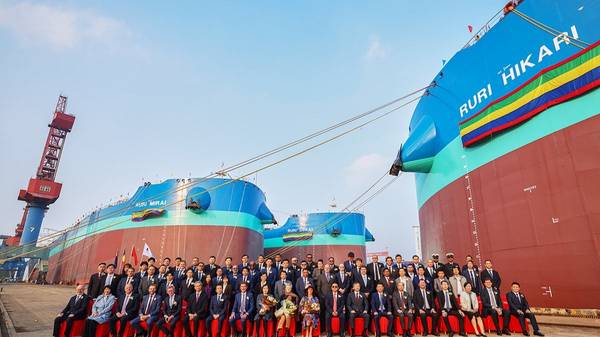
MOL joint naming ceremony. MOL names world's first ammonia-fuelled Capesize bulk carriers  

Naming of Ruri Mirai, Ruri Sekai and Ruri Hikari signals ammonia's arrival as a marine fuel for large bulk carriers.

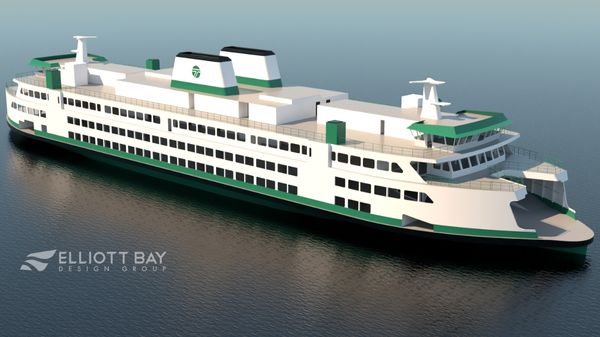
Washington State Hybrid-Electric 160-Auto Ferry vessel render. ABB wins Washington State Ferries' third hybrid-electric vessel order  

ABB extends its role in the US ferry operator's electrification programme, which targets emission-free operations by 2050.

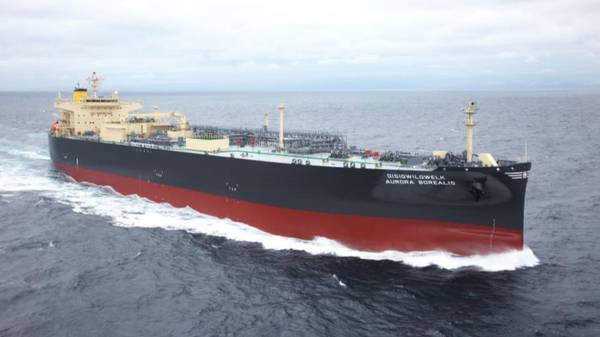
Aurora Borealis vessel. Kawasaki Heavy Industries delivers LPG-fuelled carrier Aurora Borealis  

Ship could also be modified in future to allow for ammonia-fuelled operation.

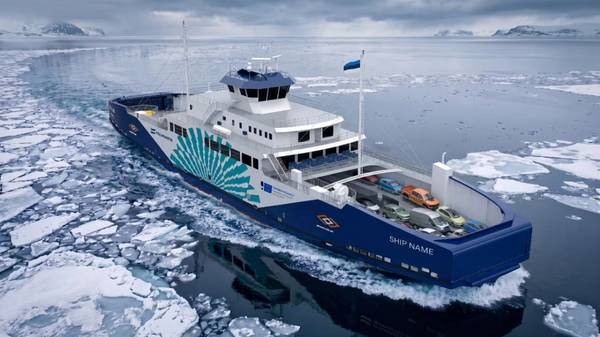
Rendering of Estonia's first shore-charged electric ferry. Estonian State Fleet's shore-charged electric ferry completes model testing in Germany  

Hull and propulsion tests show the vessel's energy consumption remains within contracted limits with room to spare.

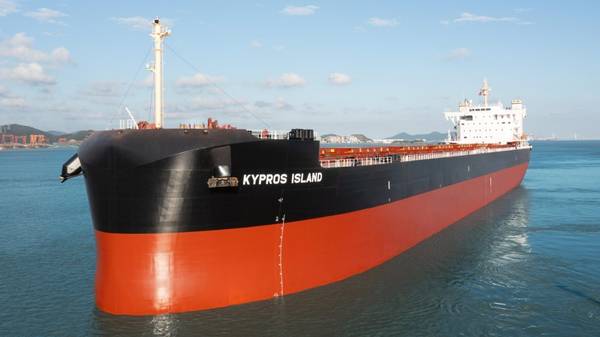
Kypros Island vessel. Tsuneishi delivers first methanol dual-fuel Kamsarmax bulk carrier from Chinese yard  

Shipbuilder claims progress towards establishing a mass-production system for vessels designed to reduce environmental impact.