Fri 21 Aug 2009, 11:02 GMT

New VLCC complies with fuel oil tank regulations


Separate normal and low-sulphur systems will allow for SOx emissions management.


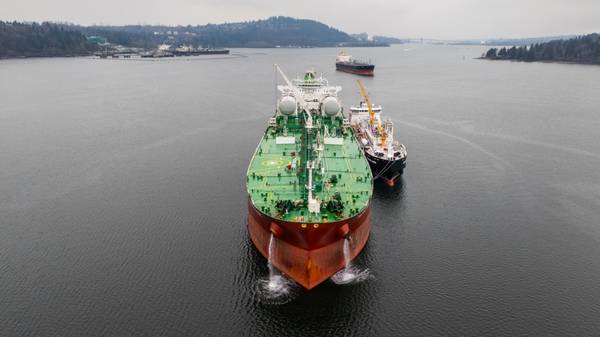
The naming ceremony for the very large crude oil carrier Athenian Victory took place yesterday at the Hyundai Heavy Industries shipyard in Ulsan, South Korea. The vessel complies with the regulations for fuel oil tank protection as required by MARPOL Annex I Reg. 12 A.

The delivery to its owner, the Greek shipping company Athenian Sea Carriers, is scheduled for the 27th of August. The vessel with the hull number 2002 is the first of a series of four 318,000-dwt VLCC tankers.

The Athenian Victory has a length of 333 m, a breadth of 60 m and a draft of 22.6 m. It is a single screw VLCC oil tanker, with 17 cargo oil tanks including two slop tanks and twelve segregated water ballast tanks. The main engine has 29,000 kw. The double hull oil tanker has been designed and assessed according to North Atlantic conditions. The hull has been designed to IACS Common Structural Rules for Tanker (CSR).

Compliance with requirements of MARPOL Annex IV (Sewage) and Annex VI (Air Pollution) is ensured. Separate Normal and Low-Sulphur Heavy Fuel Systems (double storage tanks, settling tanks and service tanks) allow for SOx emissions management. Under the flag of Marshall Islands it will take up its first voyage to Singapore.

Its environmental properties will be documented in the "Environmental Passport". The voluntary class notation issued by Germanischer Lloyd is a certified documentation of mandatory and voluntary environmental characteristics of the vessel. This will include aspects such as engine and incinerator emissions, vapour emission control systems, refrigeration systems, fire-fighting systems, pollution by oil and noxious liquid substances, pollution by sewage and garbage, ballast water management and anti-fouling systems.

The "Athenian Victory" complies with the regulations for fuel oil tank protection as required by MARPOL Annex I Reg. 12 A, although it is not mandatory.


Oriental Aquamarine vessel. HMM deploys Korea's first MR tanker with wing sail technology  

Oriental Aquamarine equipped with wind-assisted propulsion system expected to cut fuel consumption by up to 20%.

BC Ferries vessel render. ABB to supply hybrid-electric propulsion for BC Ferries' four new vessels  

Technology will enable ferries to run on biofuel or renewable diesel with battery storage.

Alternative marine fuels port graphic. LNG-fuelled boxships sustain alternative fuel orderbook share despite market slowdown  

Alternative fuels maintained 38% of gross tonnage orders in 2025, driven by container segment.

Conceptual diagram of the MOL–ITOCHU strategic alliance. MOL and ITOCHU sign MoU for cross-industry environmental attribute certificate partnership  

Japanese shipping and trading firms to promote EACs for reducing Scope 3 emissions in transport.

CPN as China's No. 1 marine biofuel supplier in 2025 graphic. Chimbusco Pan Nation delivers 170,000 tonnes of marine biofuel in China in 2025  

Supplier says volumes quadrupled year on year, with a 6,300-tonne B24 operation completed during the period.

V.Group and Njord logo side by side. V.Group acquires Njord to expand decarbonisation services for shipowners  

Maritime services provider buys Maersk Tankers-founded green technology business to offer integrated fuel-efficiency solutions.

Container vessel manoeuvring in port. Has Zhoushan just become the world's third-largest bunker port?  

With 2025 sales of 8.03m tonnes for the Chinese port, Q4 data for Antwerp-Bruges will decide which location takes third place.

Monjasa Oil & Shipping Trainee (MOST) trainees. Monjasa opens applications for global trainee programme  

Marine fuel supplier seeks candidates for MOST scheme spanning offices from Singapore to New York.

Singapore's first fully electric harbour tug. Singapore's first fully electric tug completes commissioning ahead of April deployment  

PaxOcean and ABB’s 50-tonne bollard-pull vessel represents an early step in harbour craft electrification.

Fuel for thought: Hydrogen report cover. Lloyd's Register report examines hydrogen's potential and challenges for decarbonisation  

Classification society highlights fuel's promise alongside safety, infrastructure, and cost barriers limiting maritime adoption.


 Recommended